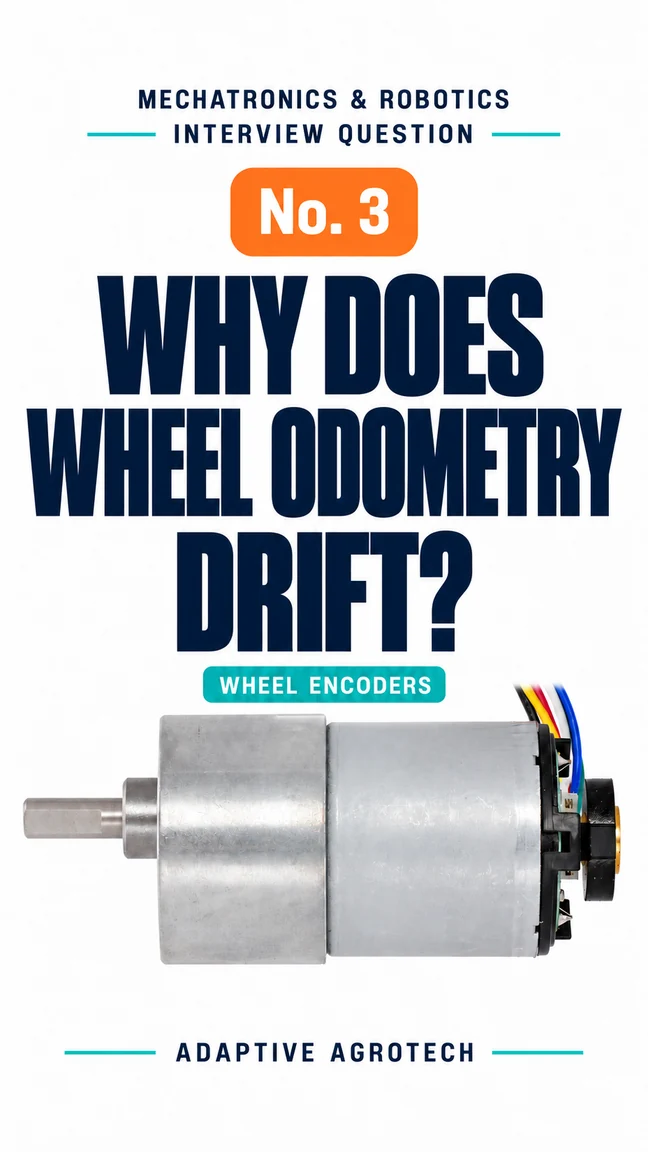
Wheel Encoders: Why Robots Lose Track of Position
Wheel encoders convert shaft rotation into counts and estimated travel. Quadrature reveals direction, but wheel slip separates rotation from ground displacement, causing odometry error that requires independent observations.
The key idea
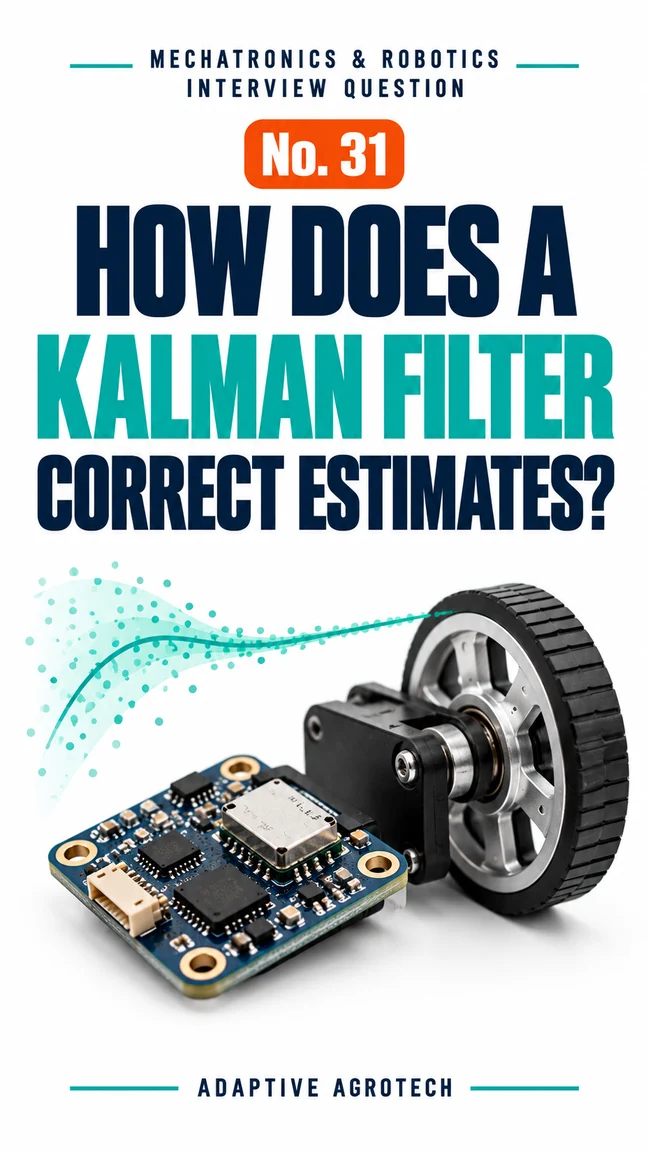
An encoder produces signals as its shaft rotates. In a quadrature encoder, the order of channels A and B indicates direction, while counted transitions quantify rotation. Converting counts to distance requires the effective counts per wheel revolution and wheel circumference. A motor-shaft encoder also requires the gearbox ratio. These calculations estimate wheel travel, not direct movement over the ground. A slipping wheel can accumulate counts while the robot barely advances. Calibrating wheel geometry helps, and comparing odometry with an independent position reference helps correct accumulated drift.
What to remember
- Quadrature channel order indicates rotation direction.
- Distance conversion needs consistent counts and wheel geometry.
- Wheel slip creates drift despite correctly counted rotation.
Check your understanding
Why can correct encoder counts still give incorrect position?
Show the explanation
They measure rotation; slipping wheels can rotate farther than the robot actually travels.