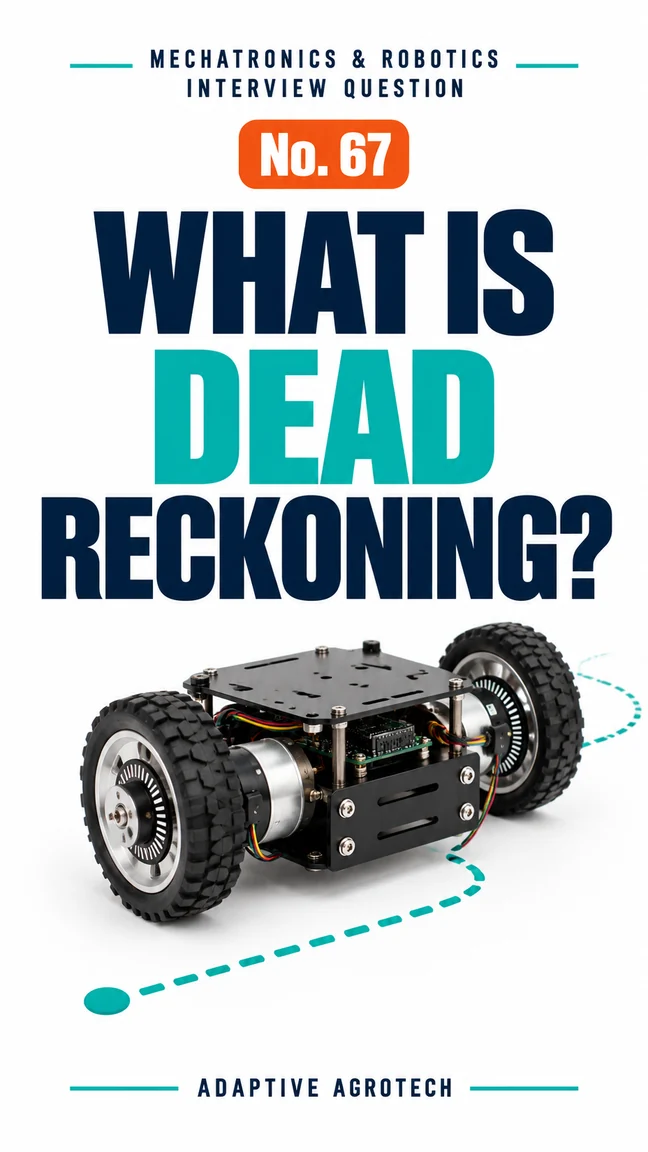
What is Dead Reckoning?
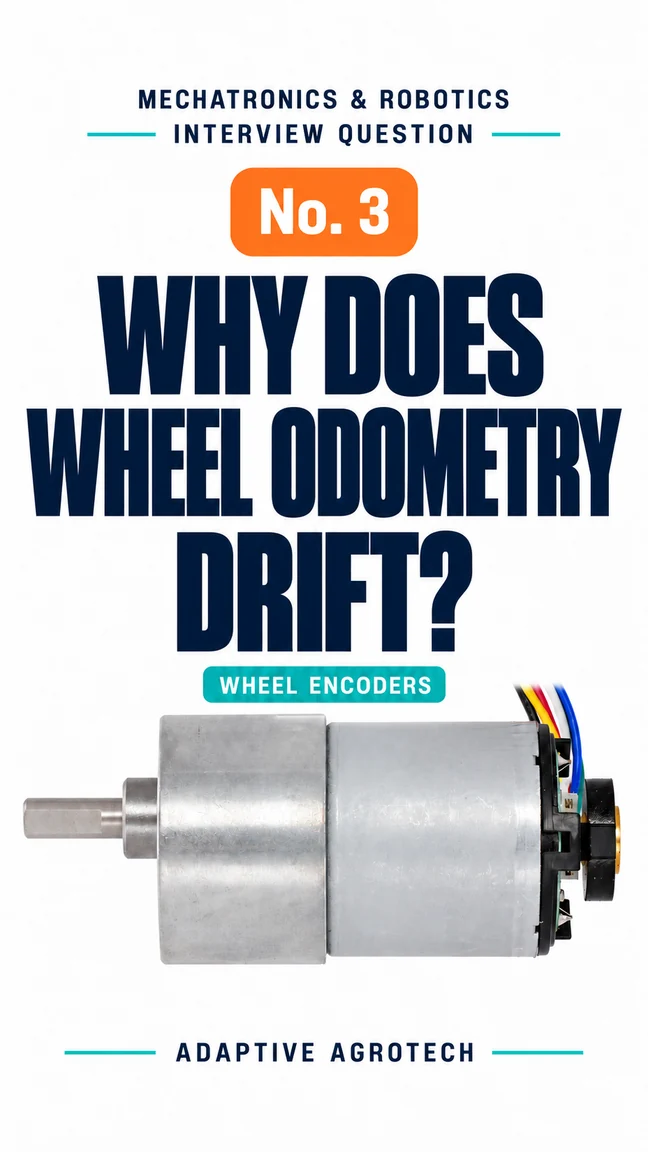
Dead reckoning updates a starting pose from measured motion. Wheel slip and heading error accumulate across steps, making the method useful between external fixes while requiring trusted references to limit long-term drift.
The key idea
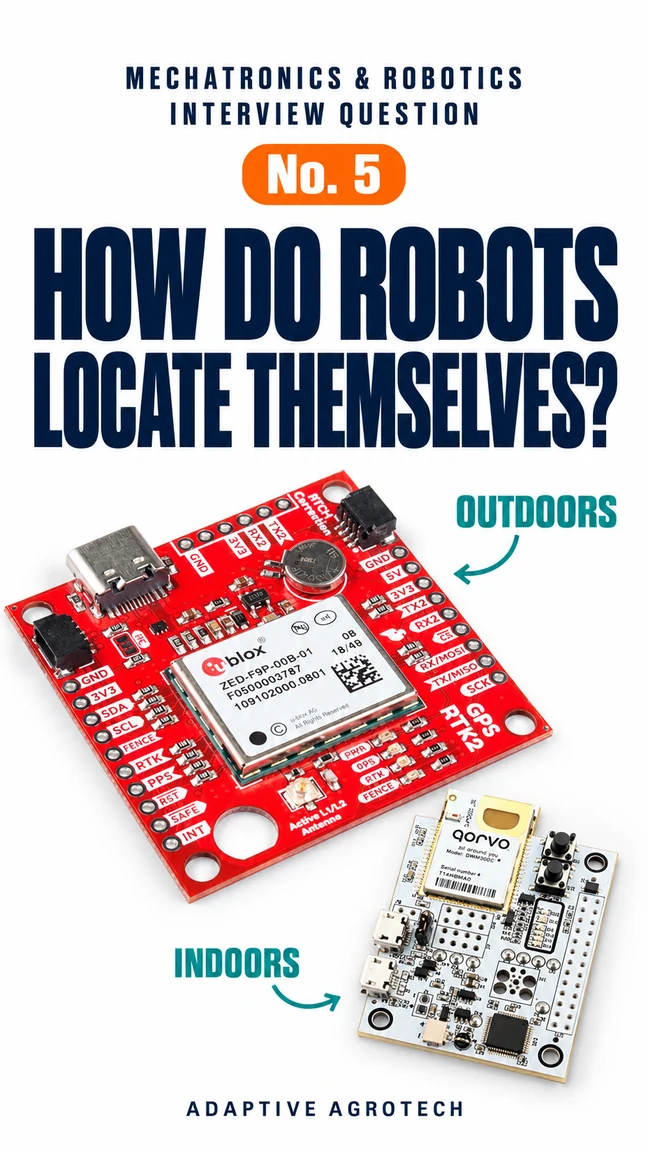
Dead reckoning begins with a known pose and adds measured motion to estimate the current position and heading. A mobile robot can use wheel travel and heading to extend its path step by step. Each increment contains error. Slip changes inferred distance, and a small heading error directs later travel sideways relative to the true path. Without outside observations, these effects accumulate rather than automatically cancelling. Dead reckoning is therefore valuable as a short-term bridge between satellite or landmark updates. Trusted external measurements provide the correction needed to limit longer-term drift in the reconstructed trajectory.
What to remember
- A known starting pose and incremental motion produce a new pose.
- Heading error affects subsequent position increments.
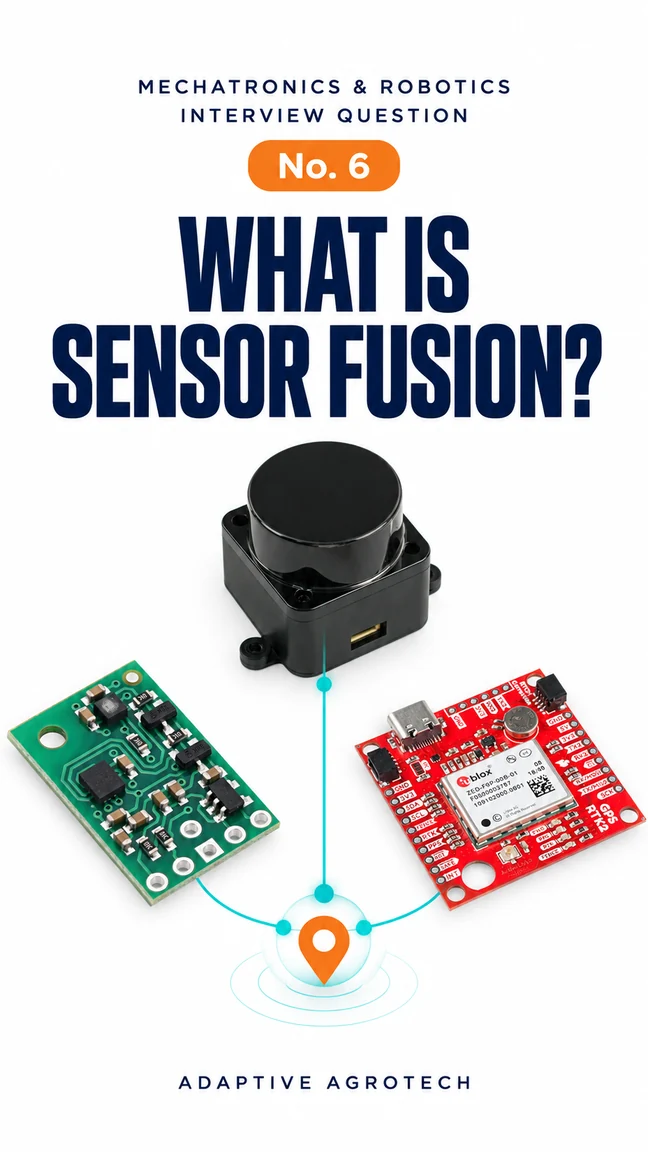
- External references help constrain accumulating drift.
Check your understanding
Why can a small heading error eventually cause large position error?
Show the explanation
Every later motion increment is projected in the wrong direction, accumulating sideways displacement.