What is Loop Closure?
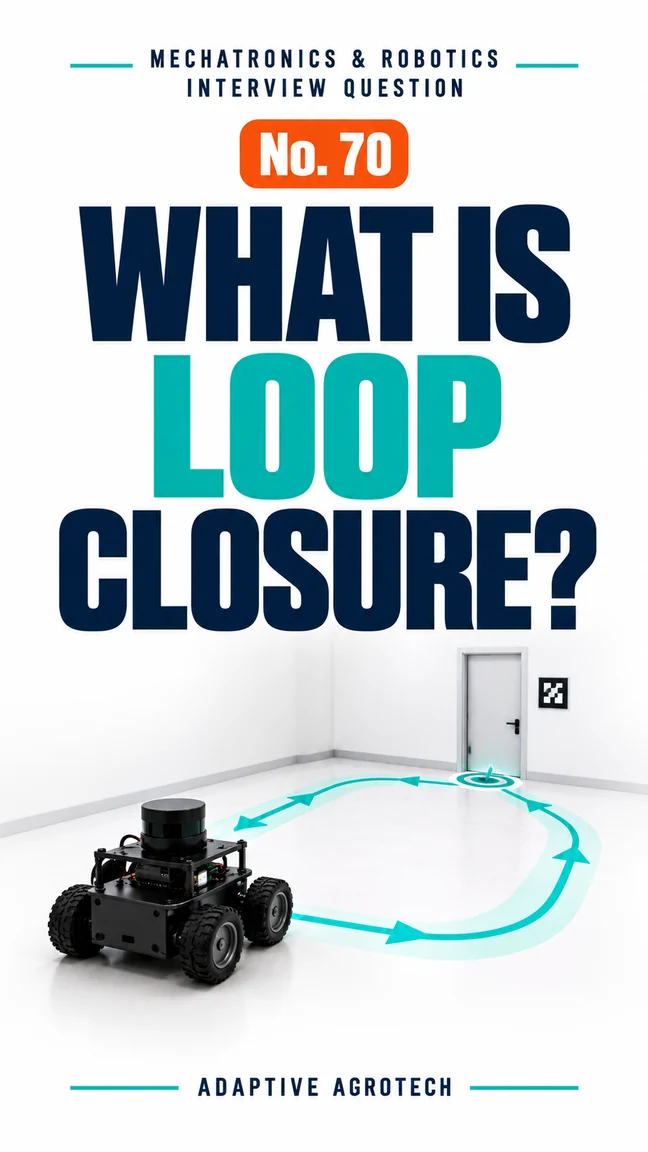
Loop closure links a current pose to a previously visited place. Optimization spreads correction across connected poses and features, but geometric verification is essential because one false match can distort a useful map.
The key idea
A robot revisiting an earlier place can add a link between its current pose and a past pose. This loop-closure information may expose drift accumulated along the intervening route. An optimizer then adjusts connected poses and map features so the earlier trajectory and new observation agree within their modeled uncertainties. The correction is distributed rather than applied only to the latest pose. Similar-looking corridors can create false candidates, so the geometry must be verified before the constraint enters the model. A confident but incorrect closure can reshape and distort a map that was otherwise useful.
What to remember
- A verified revisit connects separated parts of the trajectory.
- Optimization distributes correction according to modeled uncertainty.
- Geometric validation helps prevent destructive false loops.
Check your understanding
Why is an incorrect loop closure particularly damaging?
Show the explanation
Its false constraint can spread through optimization and distort many connected poses and map features.