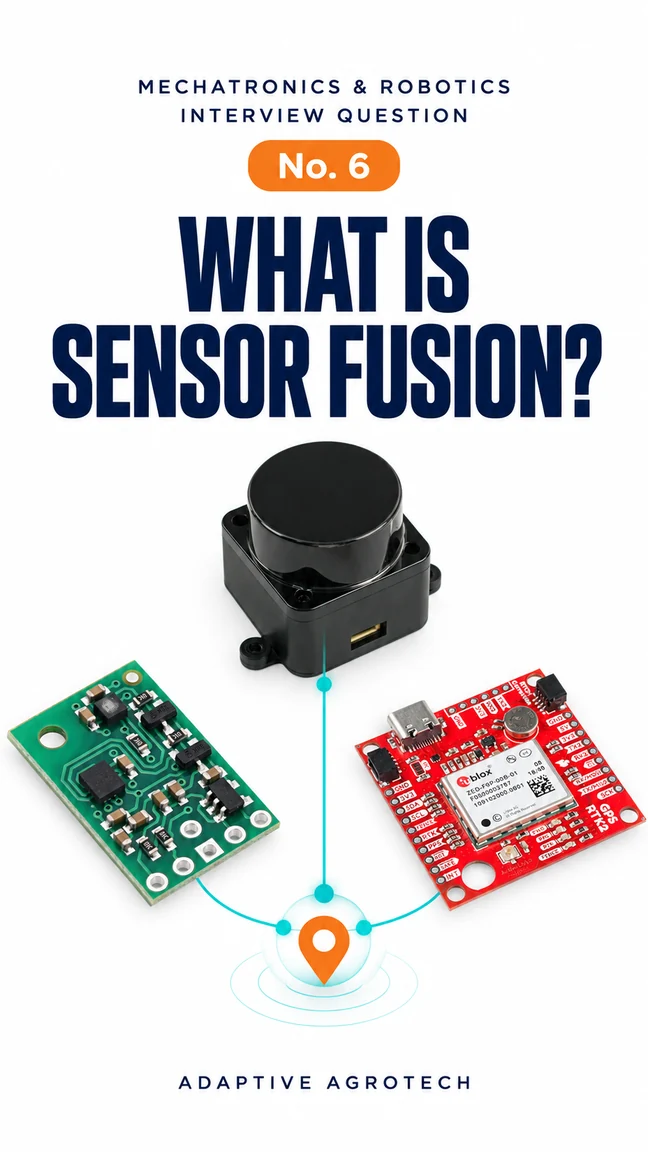
What is Time Synchronization in Sensor Fusion?
Time synchronization makes sensor timestamps refer to shared clocks and capture instants. Delay becomes position error during motion, so aligning clocks and handling latency are separate requirements beyond pairing messages by arrival time.
The key idea
Fusion must compare observations with the robot state at the instant each measurement was captured. Time synchronization provides a shared clock reference and known measurement times, rather than relying only on message arrival. At one metre per second, a 0.1-second delay corresponds to ten centimetres of travel. Treating that old position fix as current can pull the estimate backward. Reliable capture timestamps, clock alignment, and compensation for known delays address distinct parts of the problem. Matching messages by arrival alone cannot remove changing network latency or repair a sensor clock that reports the wrong time.
What to remember
- Capture time identifies the state an observation describes.
- Motion converts timestamp error into spatial error.
- Clock alignment and latency compensation address different problems.
Check your understanding
How far does a robot travel during 0.1 s at 1 m/s?
Show the explanation
0.1 m, so treating such a delayed measurement as current creates a ten-centimetre timing-related displacement.