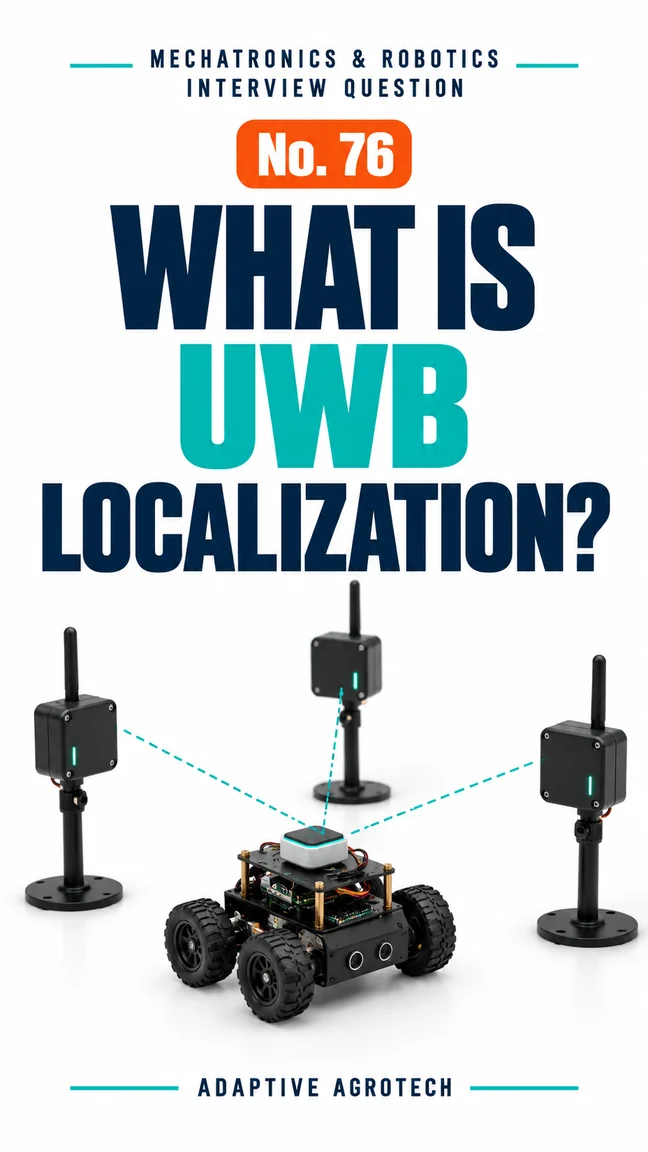
What is UWB Localization?
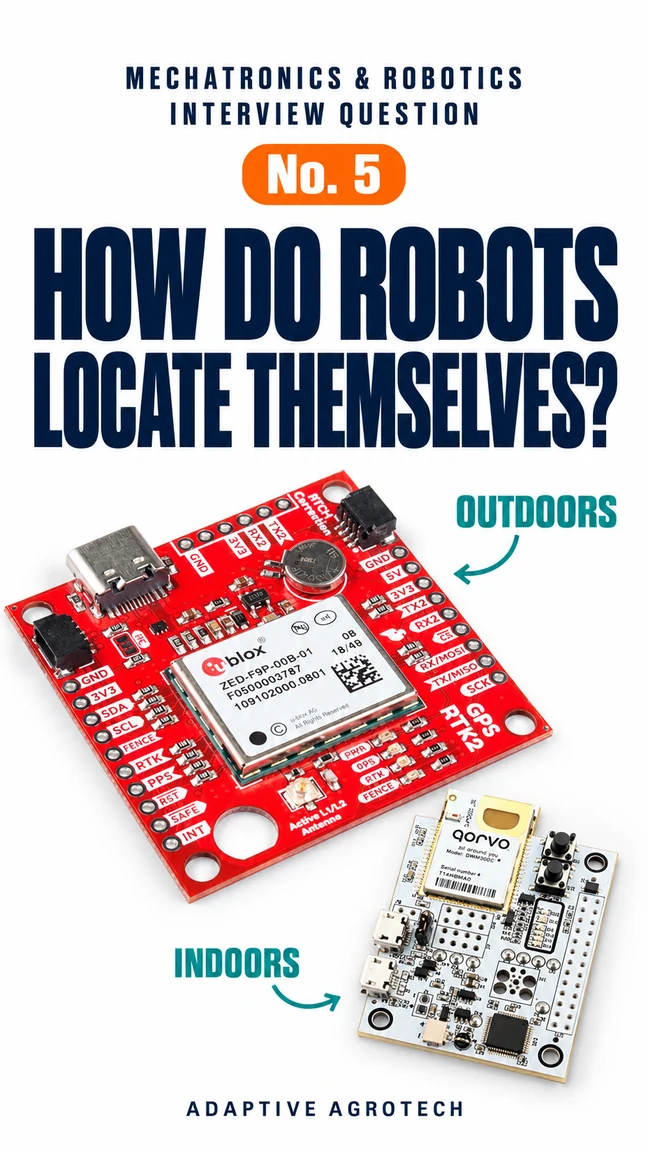
UWB ranging estimates distances from radio travel time to surveyed anchors. Several ranges constrain tag position, while anchor geometry and blocked direct paths affect reliability and motivate motion fusion and inconsistent-reading rejection.
The key idea
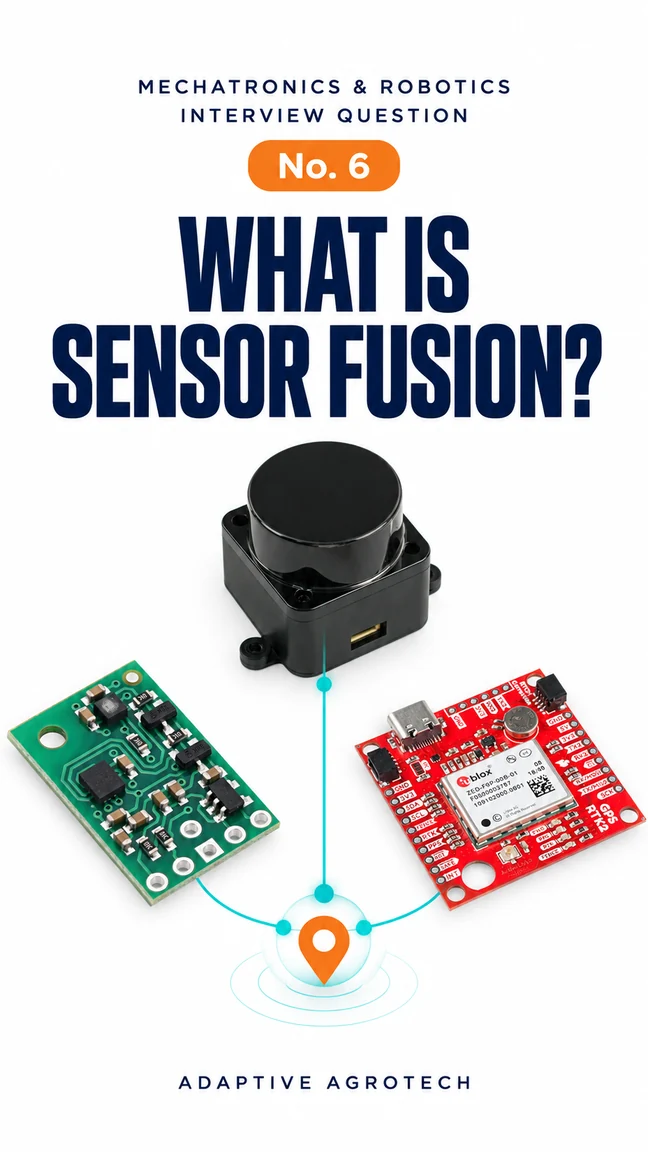
Ultra-wideband localization can use short radio exchanges to estimate distance between a robot tag and fixed anchors. With anchor positions known, multiple ranges constrain the tag's position. In the presentation's planar example, three well-spaced anchors help locate a tag whose height is known. The geometry and quality of these reference locations matter. Walls, metal, and blocked direct paths can bias range readings even when the values look plausible. Careful anchor surveying and rejection of inconsistent observations support reliability. Fusing motion measurements can bridge periods of weak radio coverage while the robot continues moving indoors.
What to remember
- Radio travel time provides range rather than position by itself.
- Surveyed anchors and useful geometry constrain position.
- Blocked paths can bias ranges and require consistency checks.
Check your understanding
Why can a wall degrade UWB positioning beyond simply losing a signal?
Show the explanation
A blocked direct path can bias the measured range, producing a plausible but incorrect distance.