
Video by Adaptive AgroTech. If the embedded player is unavailable, open the original video ↗.
Continue exploring
All interview topics →Related topics
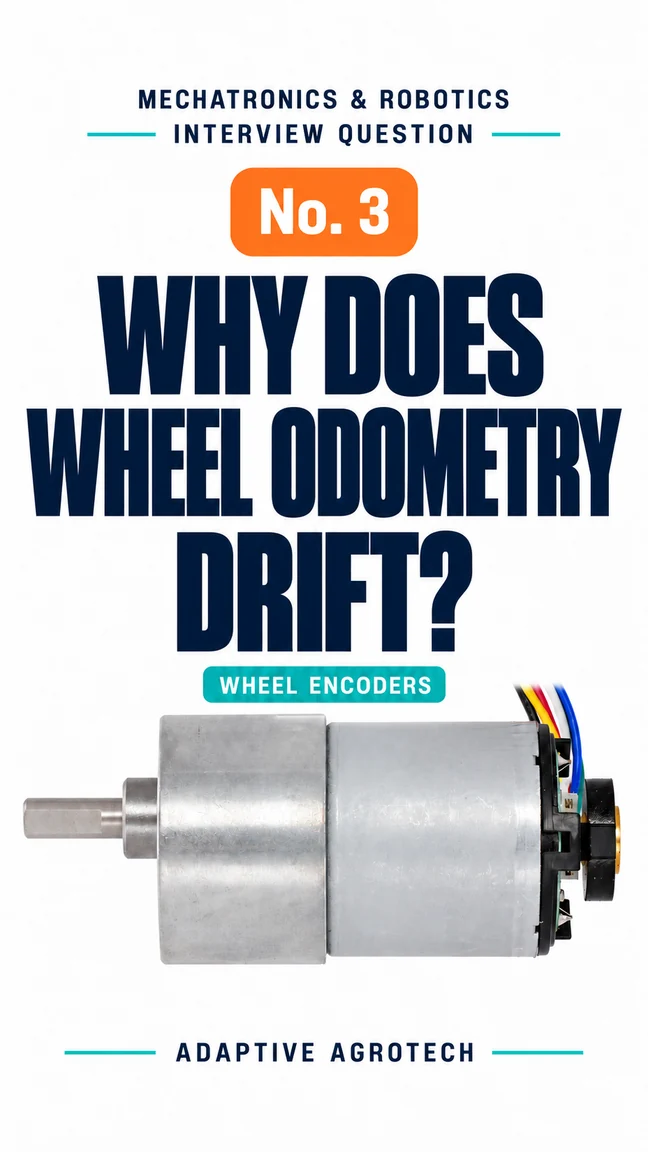
Wheel Encoders: Why Robots Lose Track of Position
Wheel encoders convert shaft rotation into counts and estimated travel. Quadrature reveals direction, but wheel slip separates rotation from ground displacement, causing odometry error that requires independent observations.
Watch & explore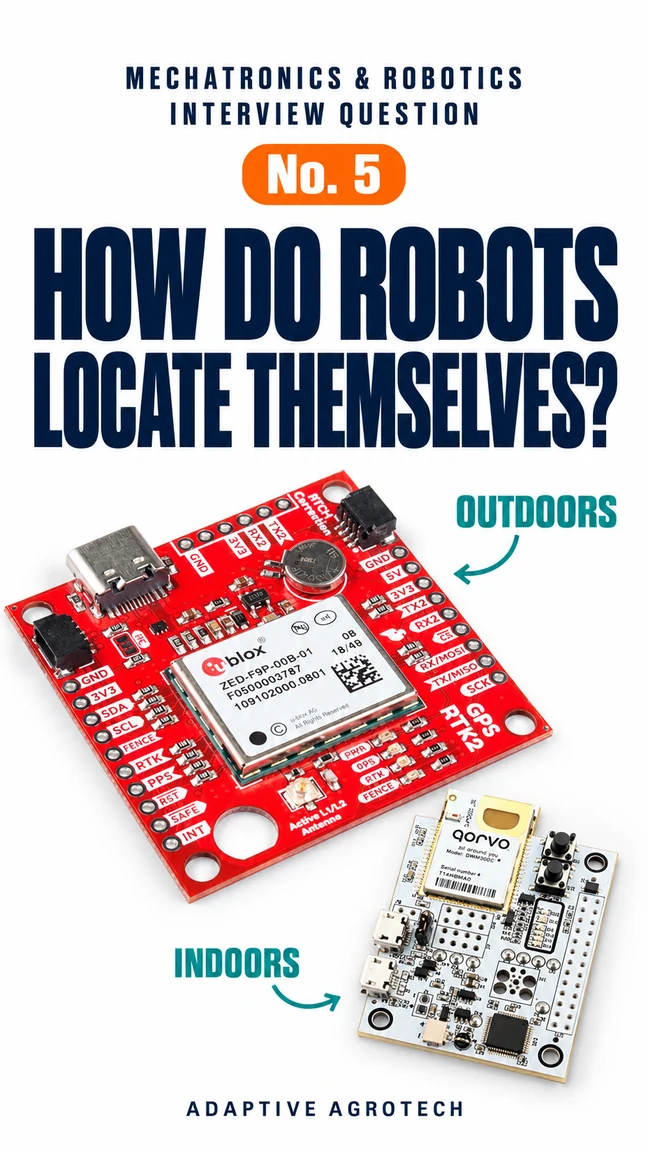
How Robots Locate Themselves Outdoors and Indoors
Robot localization combines fixed position references with relative motion. GNSS supports outdoor positioning, UWB anchors support indoor ranging, and consistent frames and timestamps connect those measurements to a usable pose.
Watch & explore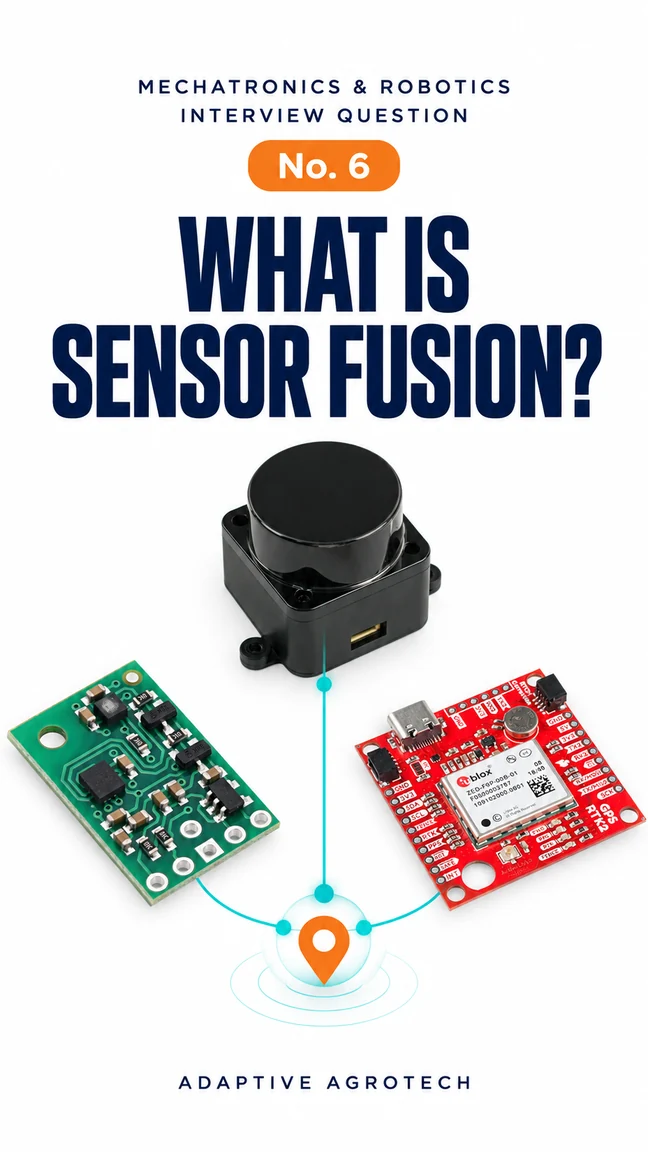
Sensor Fusion: Combining Measurements for Better Localization
Sensor fusion predicts motion and corrects it with observations, weighting information by modeled uncertainty. Complementary sensors improve localization only when their calibration, timing, and consistency are handled correctly.
Watch & explore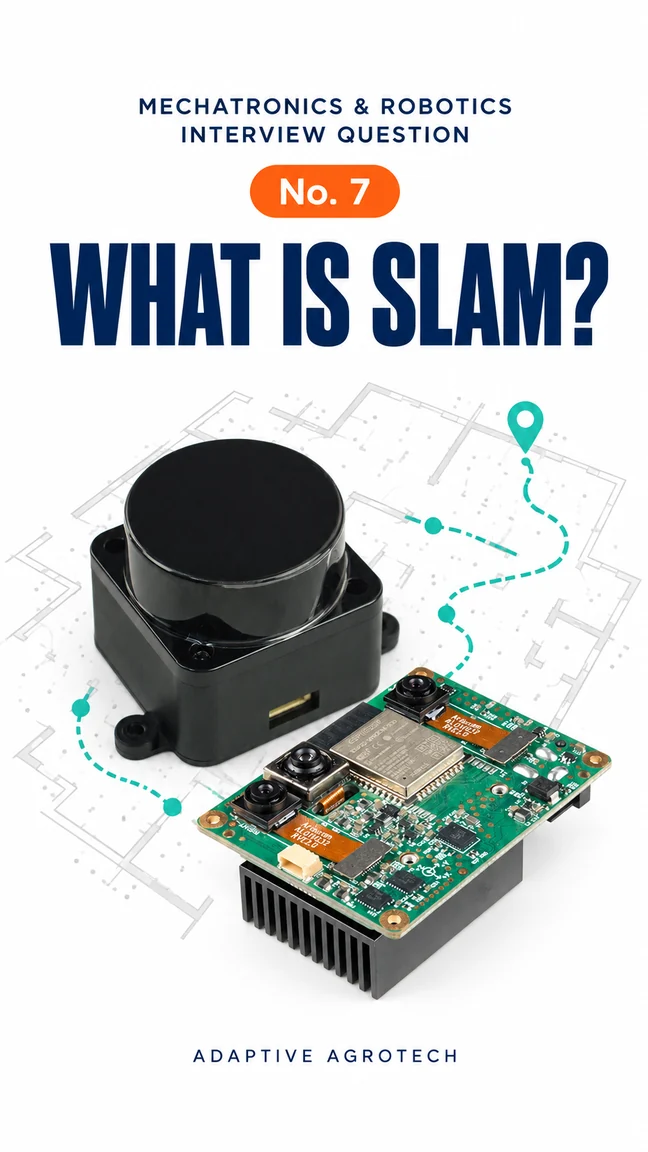
SLAM: Building a Map While Finding Your Position
SLAM estimates robot pose while building a map from overlapping observations. Scan matching connects views, occupancy mapping distinguishes unknown space, and validated loop closures can reduce accumulated trajectory drift.
Watch & explore