PID Control: Keeping Robot Speed on Target
PID speed control compares encoder feedback with a target and adjusts motor drive. Proportional, integral, and derivative actions address different error behavior, while output limits and anti-windup handle actuator saturation.
The key idea
A fixed motor command cannot guarantee wheel speed when load or supply conditions change. Encoder feedback supplies measured speed, and the controller computes target minus measurement as its error. Proportional action responds to current error; integral action accumulates persistent error; derivative action responds to change and commonly needs filtering for noisy measurements. Added resistance lowers speed, producing feedback that increases the drive command toward recovery. Real drivers have finite limits, so the output must be bounded. Anti-windup prevents excessive integral buildup during saturation, and tuning must cover expected operating conditions.
What to remember
- Feedback compares measured wheel speed with the target.
- P, I, and D respond to current, accumulated, and changing error.
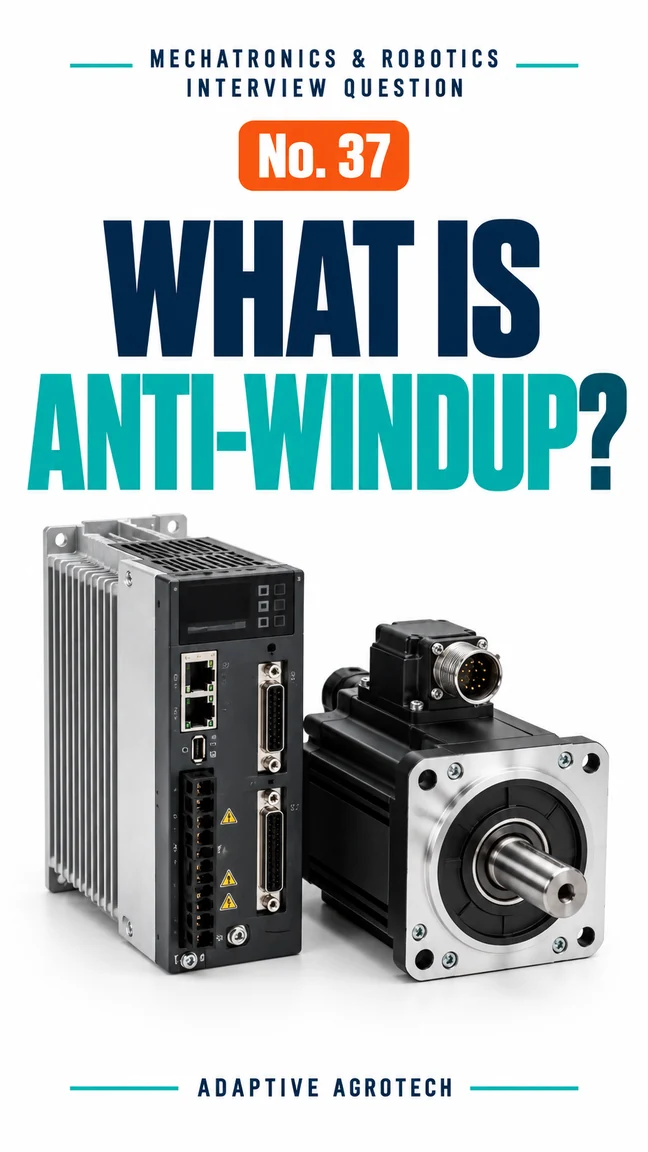
- Anti-windup addresses integral buildup at actuator limits.
Check your understanding
Why does a speed controller need anti-windup?
Show the explanation
To prevent excessive integral accumulation when actuator saturation stops the requested command from being applied.