How a Robot Finds and Docks at Its Charger
Automatic docking combines navigation, close-range pose sensing, slow alignment, and electrical confirmation. Successful motion alone is insufficient: charging feedback, timeouts, and bounded recovery attempts determine whether docking actually succeeded.
The key idea
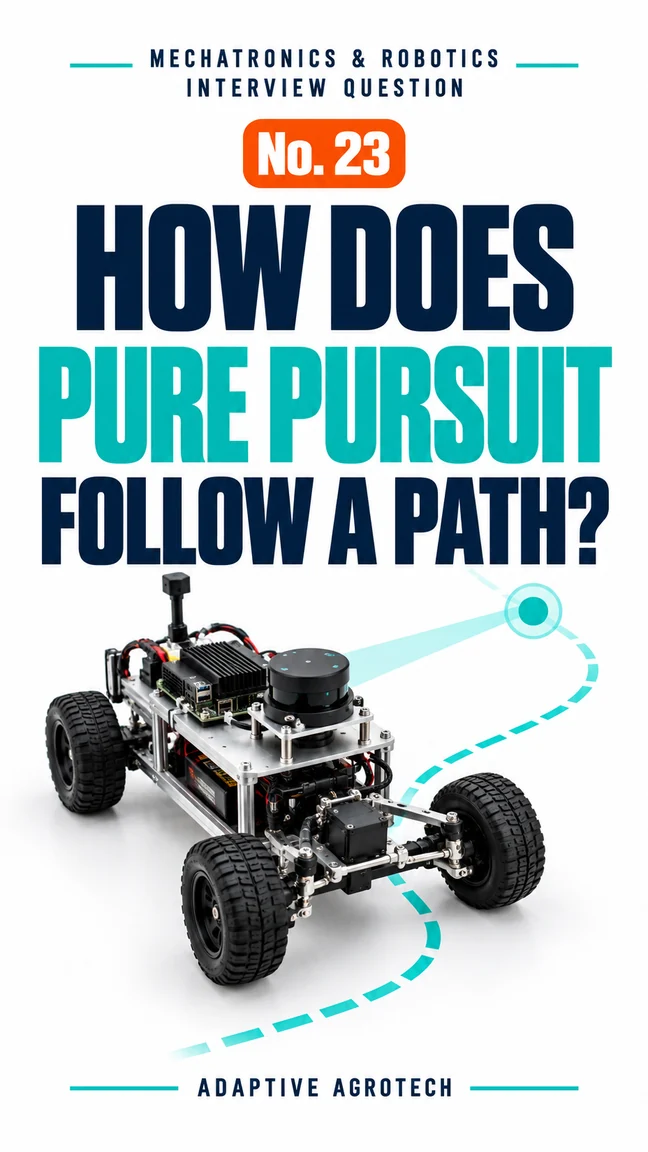
The robot first navigates to a staging pose near the charger, leaving space for detection and alignment. Close-range sensing, such as the presentation's visual-marker example, refines dock position and orientation. A slow feedback-controlled approach reduces lateral and heading error. Lost detection or obstruction triggers a stop and defined recovery. Reaching the expected pose or touching contacts does not prove charging: battery current or charging-state feedback must confirm it. Dirty contacts, misalignment, or an unpowered dock may prevent transfer. A timeout can initiate a bounded back-away and retry sequence, with persistent failure reported instead of unlimited attempts.
What to remember
- Staging and close-range sensing support accurate alignment.
- Electrical feedback must verify that charging began.
- Timeouts and limited retries define recovery behavior.
Check your understanding
What measurement distinguishes docking success from merely reaching the dock?
Show the explanation
Electrical confirmation of charging, such as charging state or battery current.