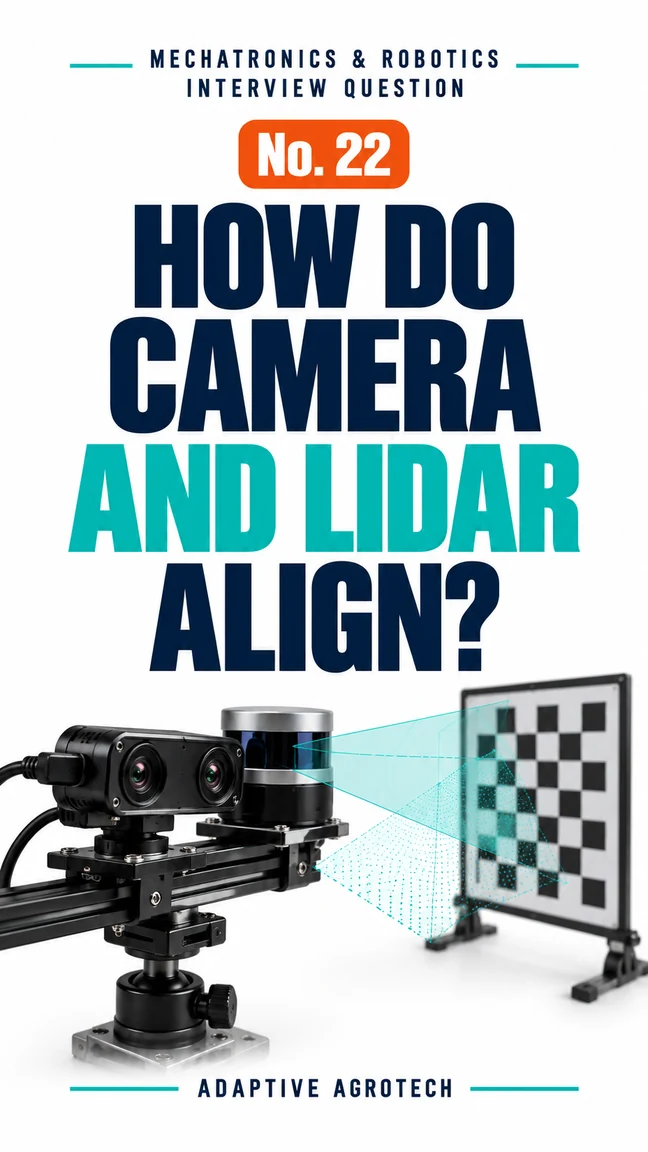
How Camera–LiDAR Calibration Aligns Two Sensors
Camera–LiDAR alignment needs calibrated rotation and translation plus camera projection geometry. Independent validation checks spatial alignment, while synchronization remains a separate requirement whenever the robot or scene moves.
The key idea
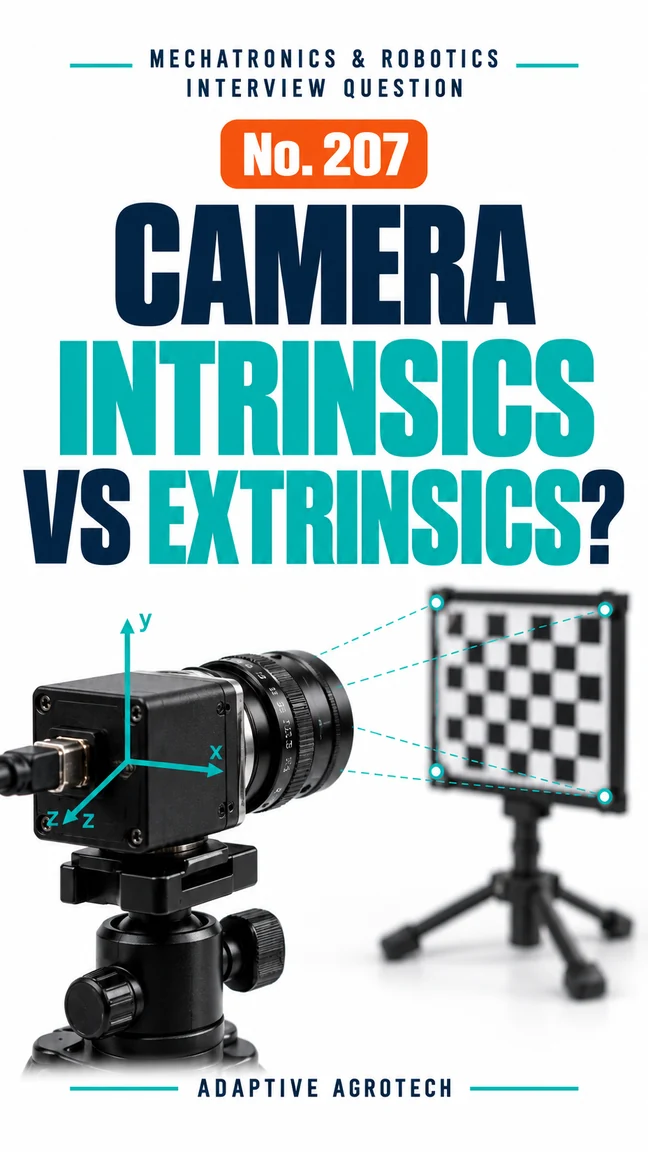
A camera provides pixels, whereas LiDAR provides geometric range observations in another frame. Extrinsic calibration estimates the rotation and translation between sensors. LiDAR points must first enter the camera frame, then camera intrinsics and distortion modeling project points in front of the camera onto image pixels. A small angular error can create substantial offsets at distance. Multiple calibration-target observations constrain the relationship, and separate observations are needed to validate it across the field of view. Correct geometry cannot repair measurements taken at different times during motion. Synchronization and renewed checks after mounting changes remain necessary.
What to remember
- Extrinsics connect the sensor coordinate frames.
- Intrinsics project camera-frame geometry onto image pixels.
- Timing errors require treatment separately from geometric calibration.
Check your understanding
Can correct extrinsic calibration remove errors caused by different capture times?
Show the explanation
No. Motion between captures creates a separate synchronization problem.