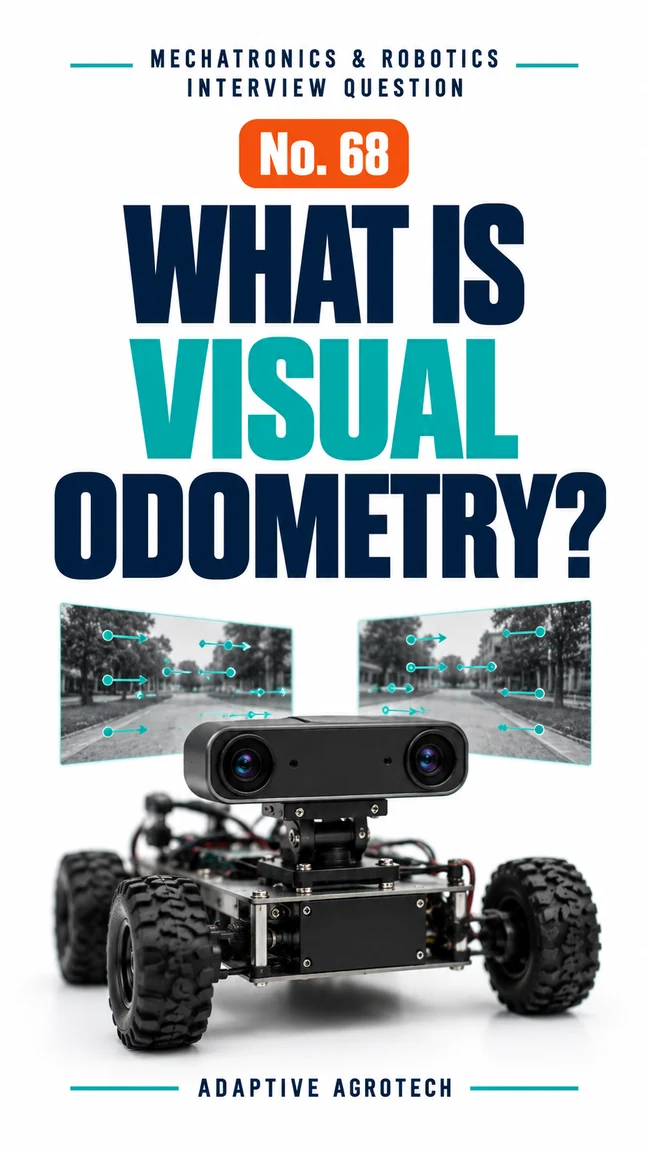
What is Visual Odometry?
Visual odometry estimates relative camera motion from image sequences. Feature or brightness changes constrain geometry, stereo provides metric depth, and monocular scale ambiguity and tracking failures limit its long-term position estimate.
The key idea
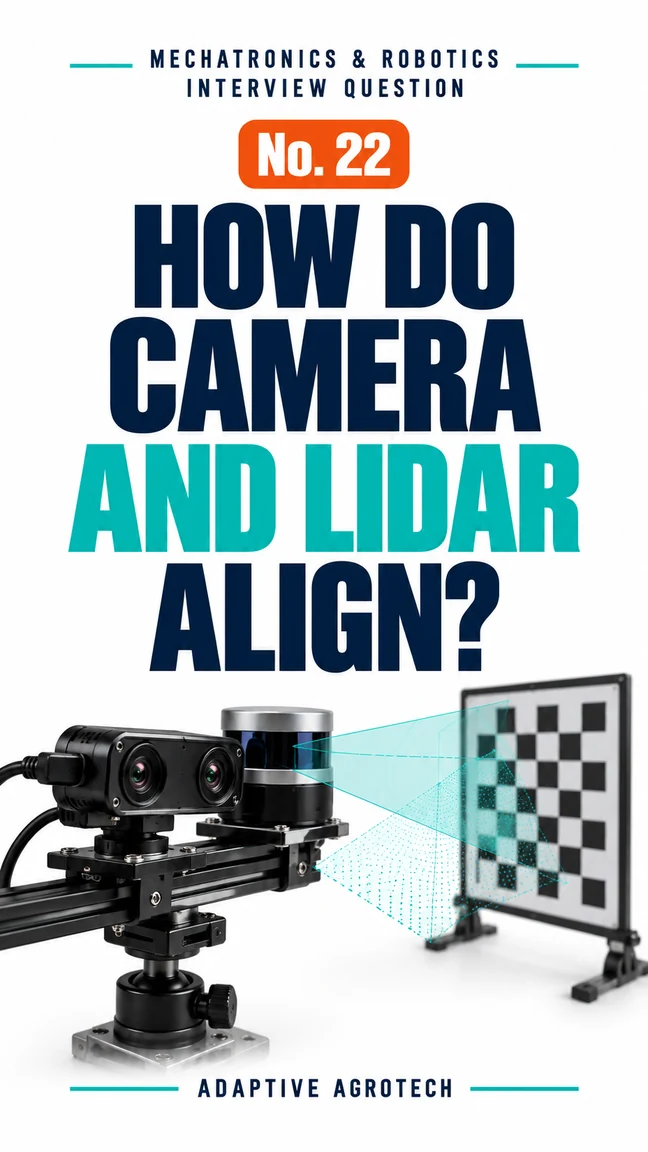
As a robot moves, visual odometry tracks image features or brightness patterns between views to estimate camera pose change. Matched points constrain relative rotation and translation. A stereo camera can provide metric depth, whereas a single camera generally leaves translation scale unknown without additional information. The method still depends on reliable image evidence: motion blur, weak texture, and changing light can interrupt or corrupt tracking. Even successful local motion estimates accumulate drift over time. Long-term navigation therefore requires further constraints rather than assuming that a sequence of consistent image-to-image estimates supplies a permanently accurate global position.
What to remember
- Image changes constrain relative camera motion.
- Monocular translation generally requires an external scale source.
- Blur, weak texture, illumination change, and drift limit reliability.
Check your understanding
What ambiguity generally remains with a single camera's translation estimate?
Show the explanation
Its metric scale is unknown without additional information.