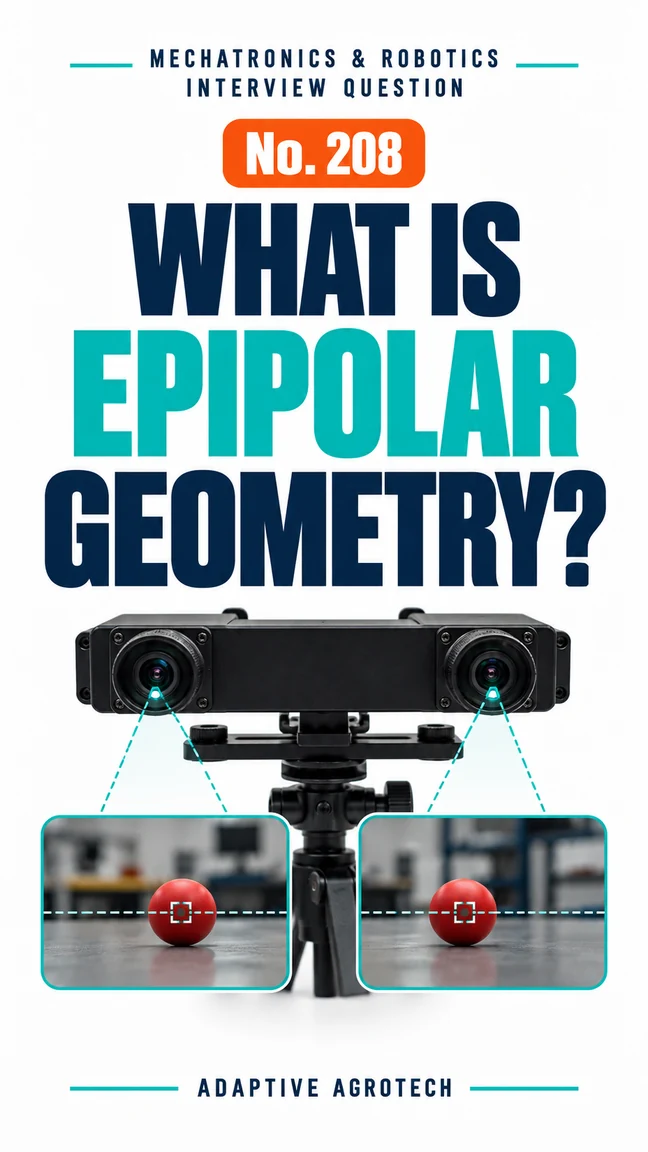
What Is Epipolar Geometry?
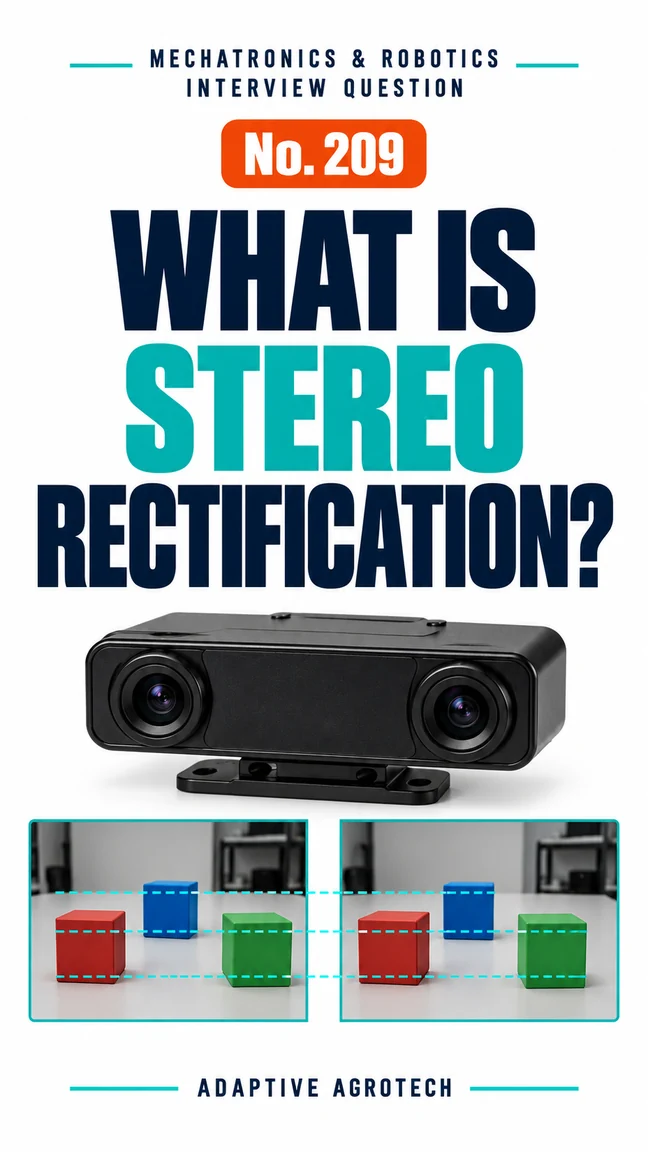
Epipolar geometry relates two views of the same three dimensional scene. Given a point in one image, its matching point in the other image lies on an epipolar line, when the camera geometry and correspondence assumptions hold.
The key idea
Epipolar geometry relates two views of the same three dimensional scene. Given a point in one image, its matching point in the other image lies on an epipolar line, when the camera geometry and correspondence assumptions hold.
A stereo robot camera uses this constraint to avoid searching the whole second image. The fundamental matrix relates pixel coordinates. A candidate match should lie near the corresponding line, with tolerance for noise and calibration error.
Repeated texture can produce several plausible candidates on the same line. Occlusion can hide the point completely. Depth recovery also needs usable camera translation, so a geometric constraint by itself does not guarantee a reliable distance.
What to remember
- A point in one image defines a line in the other
- The epipolar constraint narrows the matching search
- Appearance and visibility still matter
Check your understanding
Why does an epipolar line not determine one unique image match?
Show the explanation
Repeated textures can supply several candidates on the line, and occlusion can remove the true match. Appearance, calibration and usable camera translation still matter for depth recovery.