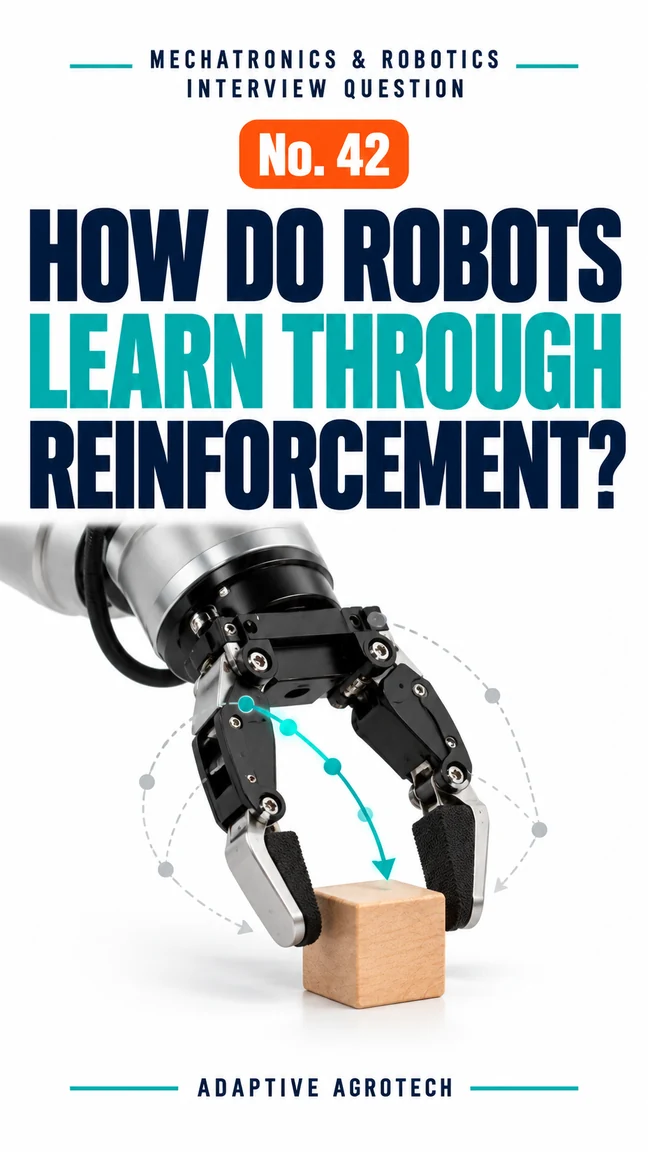
What is Reinforcement Learning for Robot Control?
Reinforcement learning trains a policy to choose actions for expected total reward. Reward design shapes robot behavior, but successful simulation training still requires validation of delays, model mismatch, and hardware action limits.
The key idea
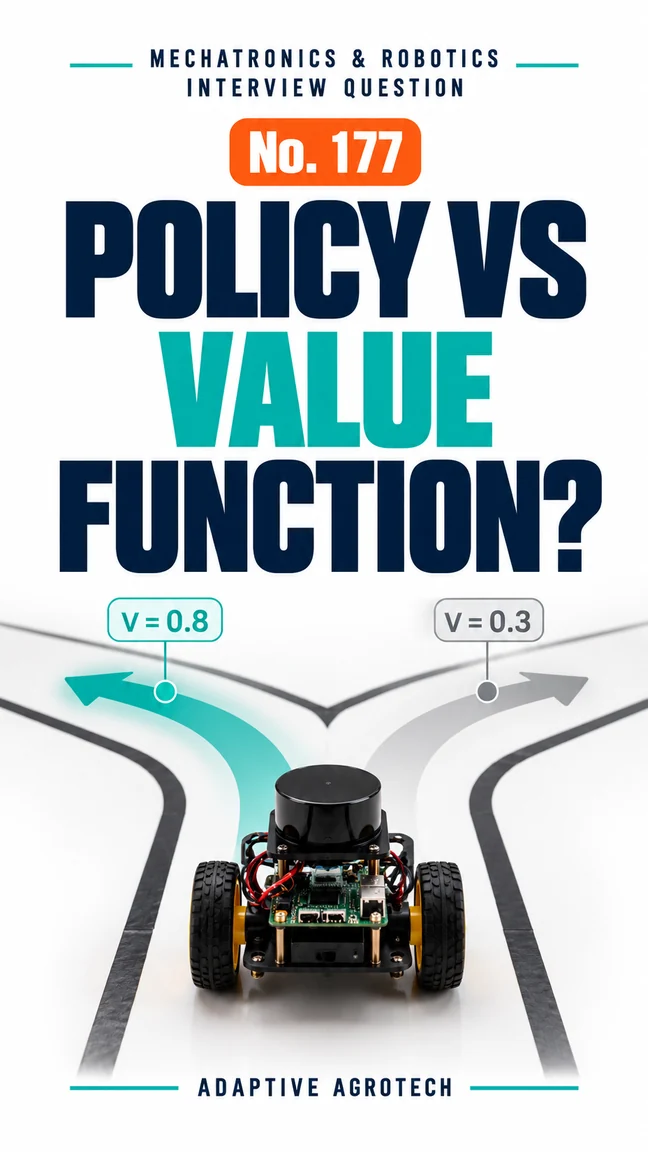
Reinforcement learning trains a policy through trials in which actions produce outcomes and rewards. In a robot-control example, joint angles can be observations and motor torques can be actions. A reward may favor target reaching while penalizing effort or falls in simulation. Training seeks improved expected total reward, and the resulting policy maps observations to actions. The chosen reward therefore influences what behavior is learned. A high simulation score does not establish safety on the physical robot: sensor delay, differences between simulated and actual dynamics, and allowable action limits must be tested before transferring the policy to hardware.
What to remember
- A policy maps robot observations to actions.
- The reward determines which trial outcomes are favored.
- Simulation success requires separate hardware validation.
Check your understanding
Why is a high simulation reward insufficient evidence for hardware deployment?
Show the explanation
The real robot may differ in dynamics, sensing delay, and action limits, which must be validated.