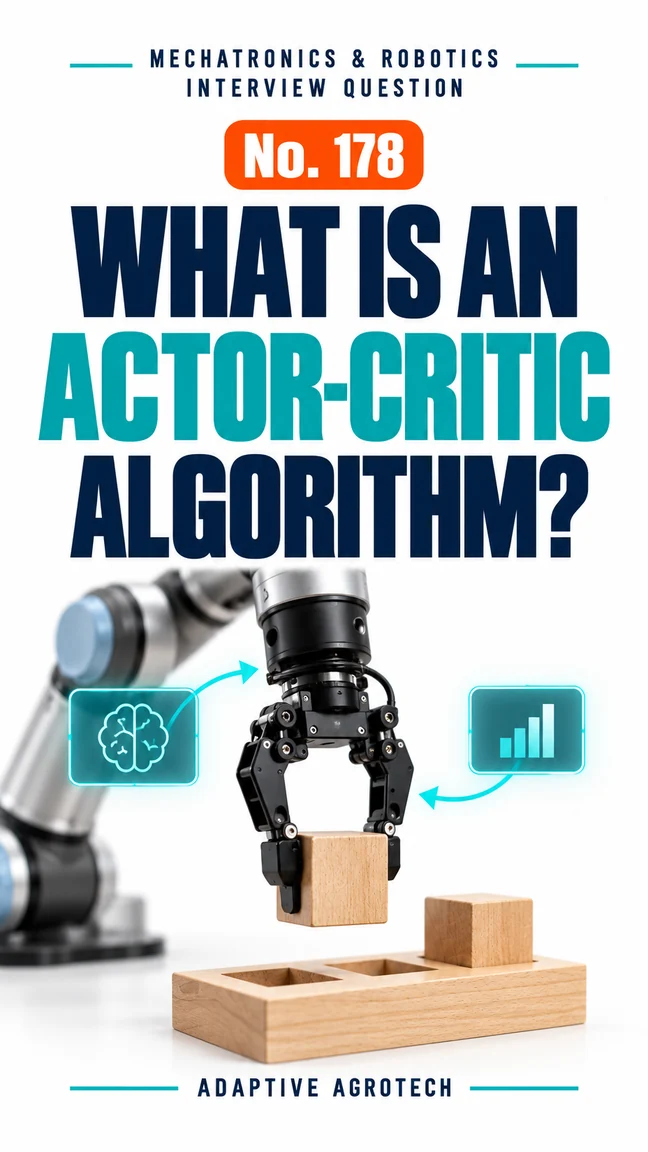
What Is an Actor–Critic Algorithm?
An actor critic algorithm learns a policy and a value estimate together. The actor selects actions. The critic evaluates expected return and provides a learning signal that helps improve the actor.
The key idea
An actor critic algorithm learns a policy and a value estimate together. The actor selects actions. The critic evaluates expected return and provides a learning signal that helps improve the actor.
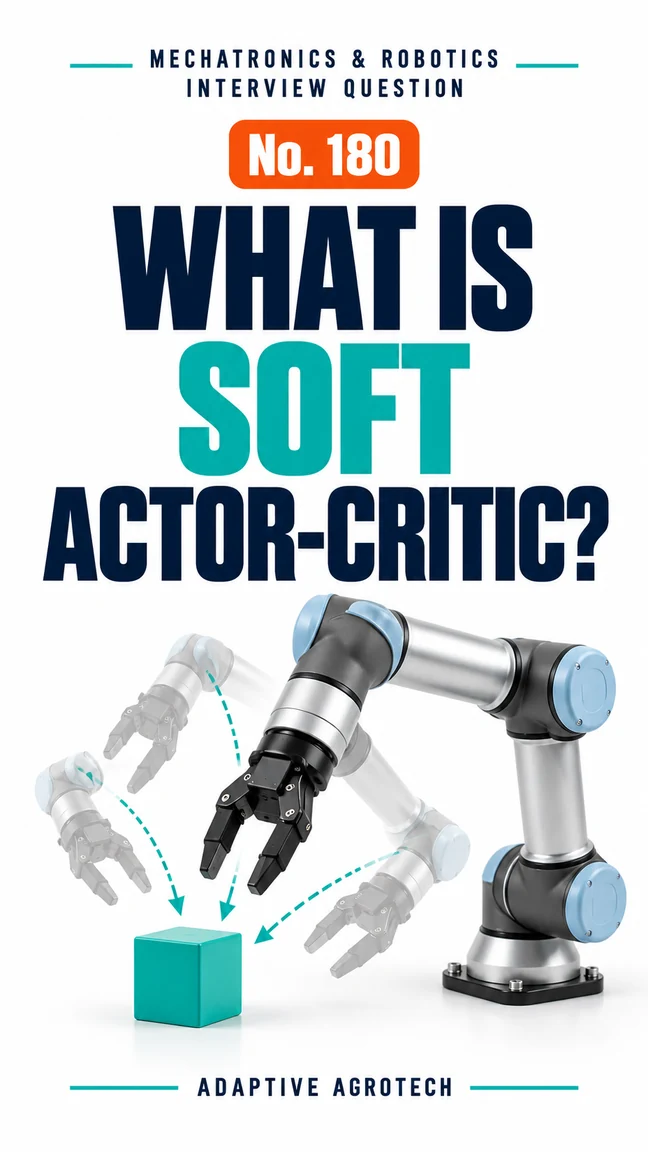
For a reaching arm, the actor proposes joint commands. After a transition, reward and the critic’s next state estimate form a target. The difference from its current estimate is a prediction error.
The actor uses an advantage estimate or an action value gradient, depending on the algorithm. An inaccurate critic can give poor advice. Actor critic describes a family of methods, rather than one update rule.
What to remember
- The actor acts. The critic evaluates
- Reward and next value update the critic
- The actor update depends on the algorithm
Check your understanding
What distinct jobs do the actor and critic perform?
Show the explanation
The actor selects actions; the critic estimates expected return and supplies a learning signal. An inaccurate critic can mislead policy updates, whose form depends on the algorithm.