What is a Pull-Up Resistor?
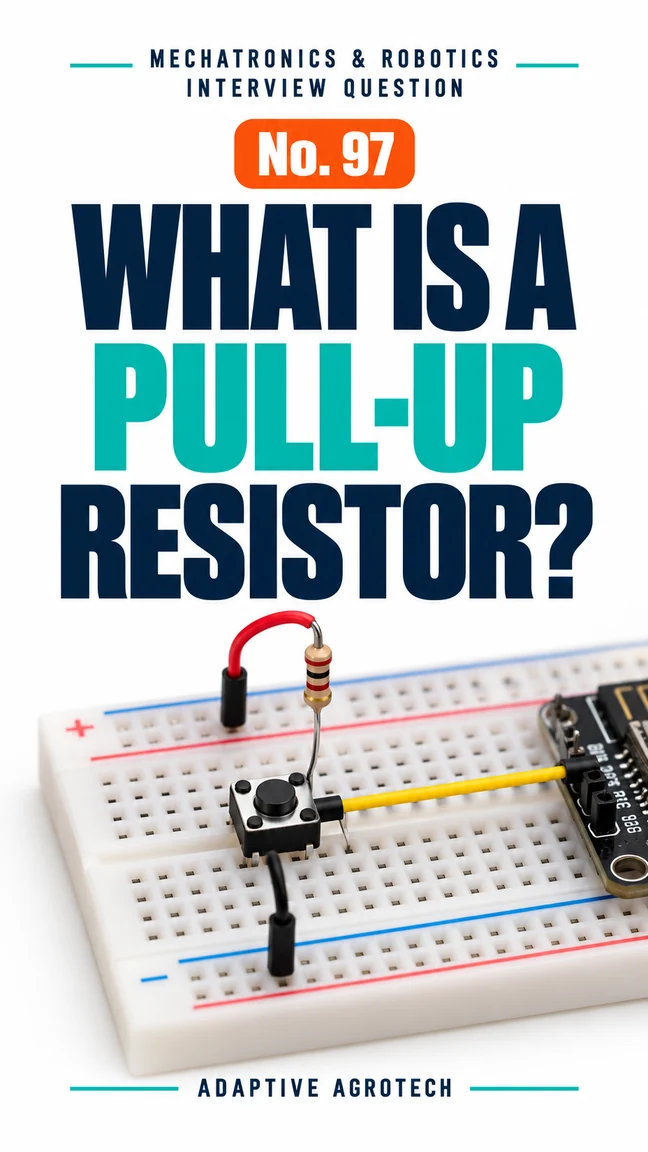
A pull-up resistor defines a digital input’s idle high state while allowing a switch to pull it low. Its resistance must balance leakage, signal rise time, current, and voltage limits.
Watch & exploreExplore one engineering idea at a time. Watch a short lesson, read the key concepts and test your understanding before your next interview, project or class.
Video · Key ideas · Check your understanding
A pull-up resistor defines a digital input’s idle high state while allowing a switch to pull it low. Its resistance must balance leakage, signal rise time, current, and voltage limits.
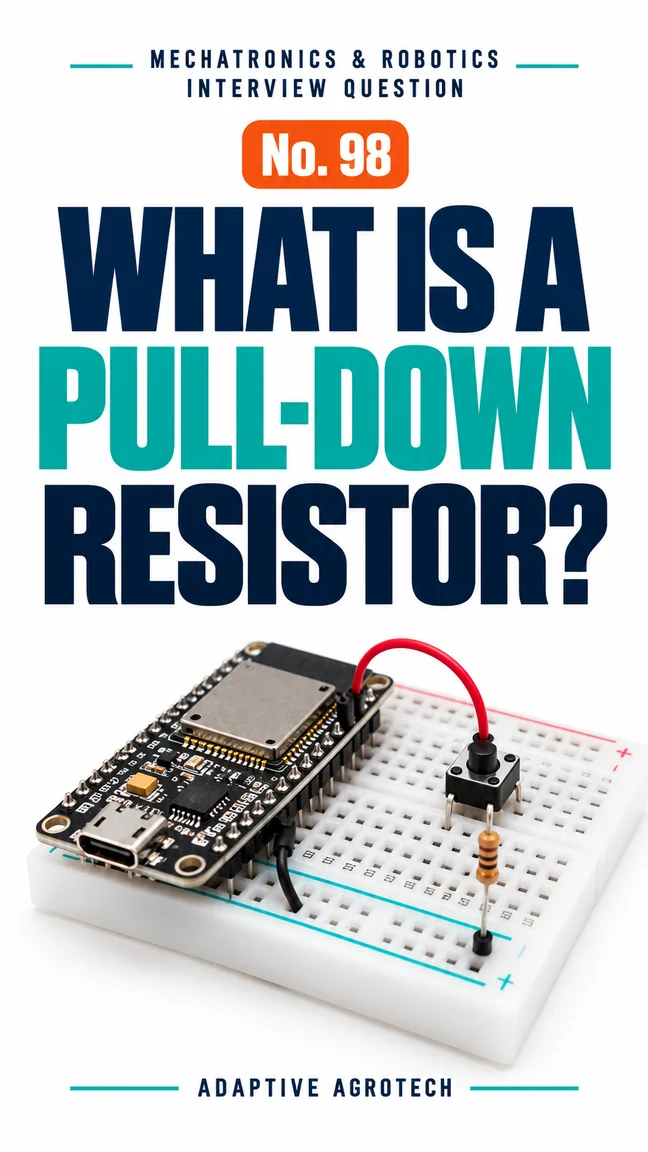
Watch & exploreA pull-down resistor holds an undriven digital input low and limits current when a switch drives it high. Reliable selection depends on input leakage, logic thresholds, and the circuit’s susceptibility to noise.
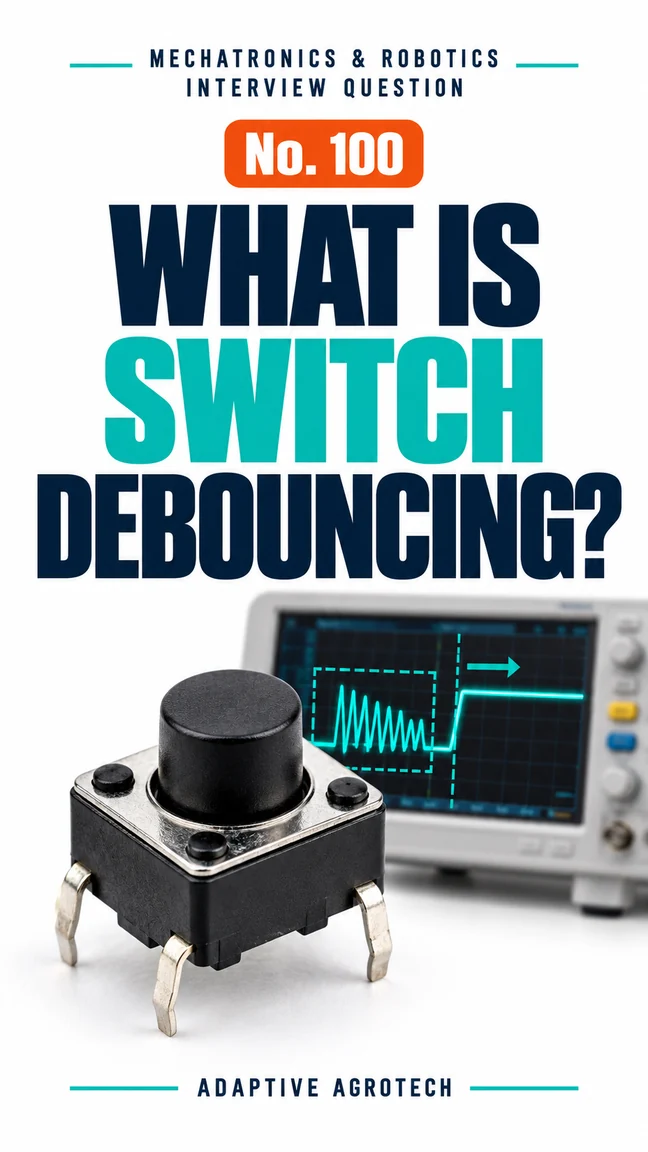
Watch & exploreSwitch debouncing prevents mechanical contact bounce from becoming multiple digital events. A stable state test or suitable hardware rejects brief transitions, while the chosen delay must preserve valid short presses.
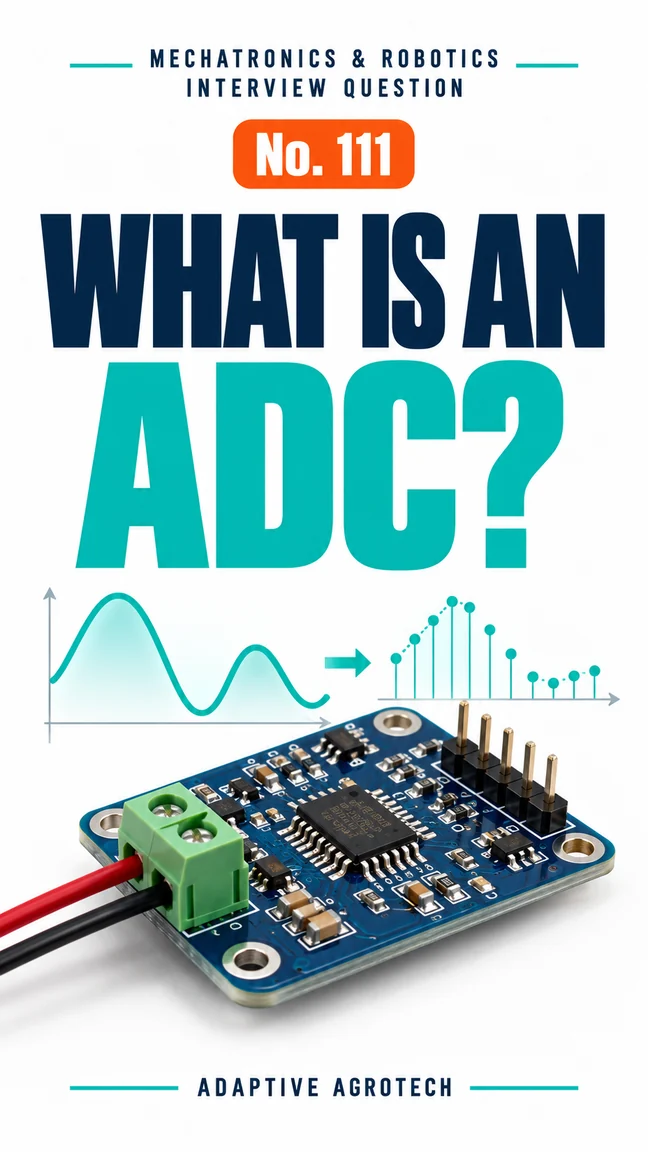
Watch & exploreAn ADC converts sampled voltage into a digital code whose ideal spacing depends on reference voltage and bit depth. Practical precision also depends on noise, reference quality, input range, and sampling conditions.
Watch & exploreA CPU handles general programs and control logic. A GPU performs many similar calculations in parallel. An NPU specializes in supported neural network operations, often with efficient low precision arithmetic.
Watch & explore