Adaptive AgroTech Robot Design
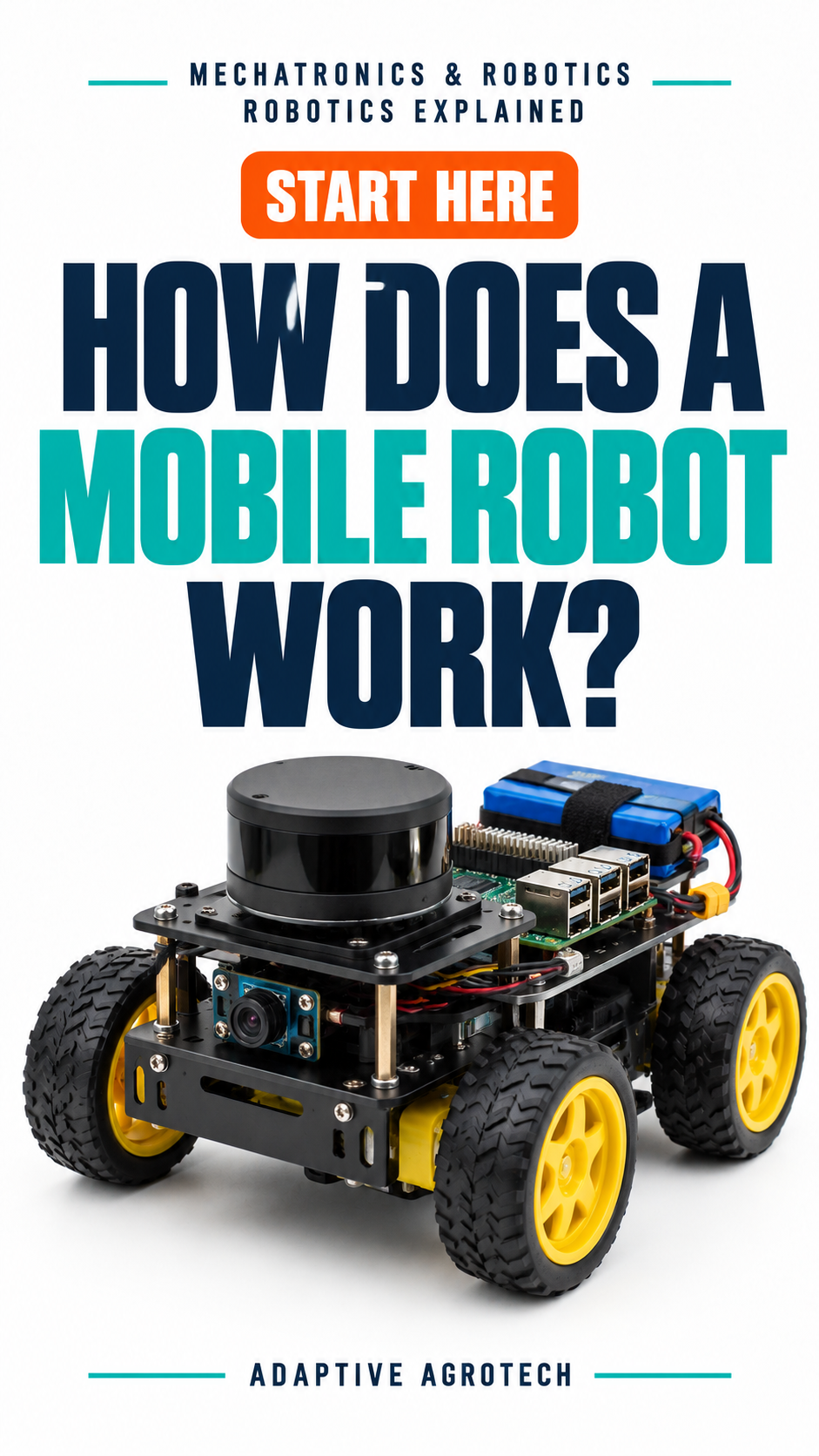
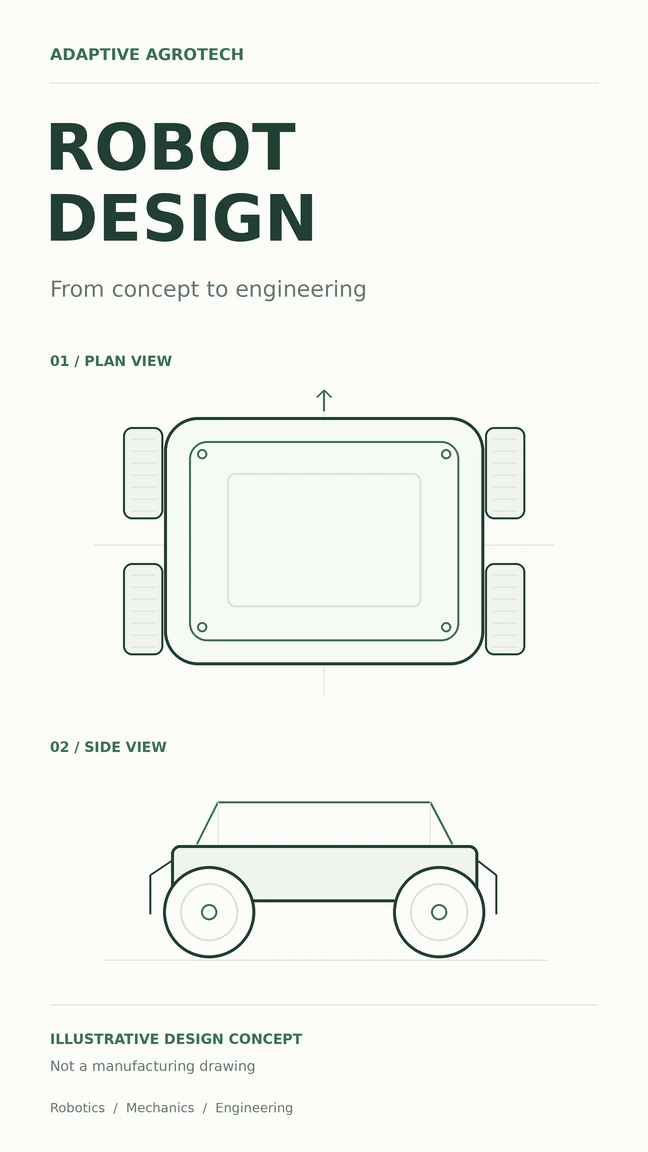
Explore Adaptive AgroTech’s robot-design work in a short visual introduction. Use the design prompts below to think about the relationship between a robot’s intended task, physical layout and engineering constraints.
The key idea
This 22-second video introduces Adaptive AgroTech robot design. The following notes provide general engineering context for discussing a robot concept.
Start with the job the robot must perform: its environment, payload, available space and interaction with people or crops. Those requirements guide choices about the chassis, locomotion, actuator placement, sensing and access for maintenance.
A visual concept is a starting point for engineering review. Before building, check component fit, wheel and joint clearances, mass distribution, power requirements and safe stopping. A useful interview answer connects each design choice to a stated requirement and explains how that choice would be tested.
What to remember
- Begin with the intended task and operating environment.
- Connect physical layout to sensing, actuation, power and maintenance.
- Check fit, stability, clearances and safety before fabrication.
Check your understanding
What should you establish before choosing a robot’s chassis and component layout?
Show the explanation
Define the intended task, environment, payload and physical constraints first. Use those requirements to justify the chassis and component layout, then verify fit, movement clearances, stability and safe operation.