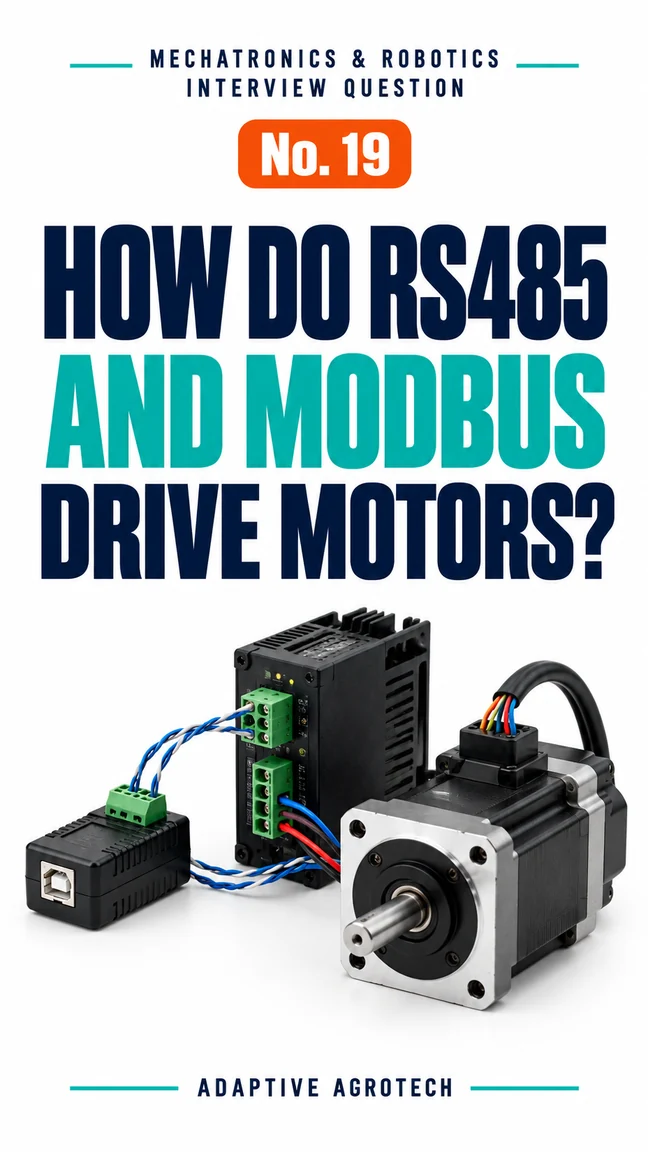
How RS485 and Modbus Connect a Robot to Its Motors
RS485 provides differential electrical communication, while Modbus RTU defines addressed transactions. Motor commands require the correct register map and scaling, feedback verification, and a defined response when communication fails.
The key idea
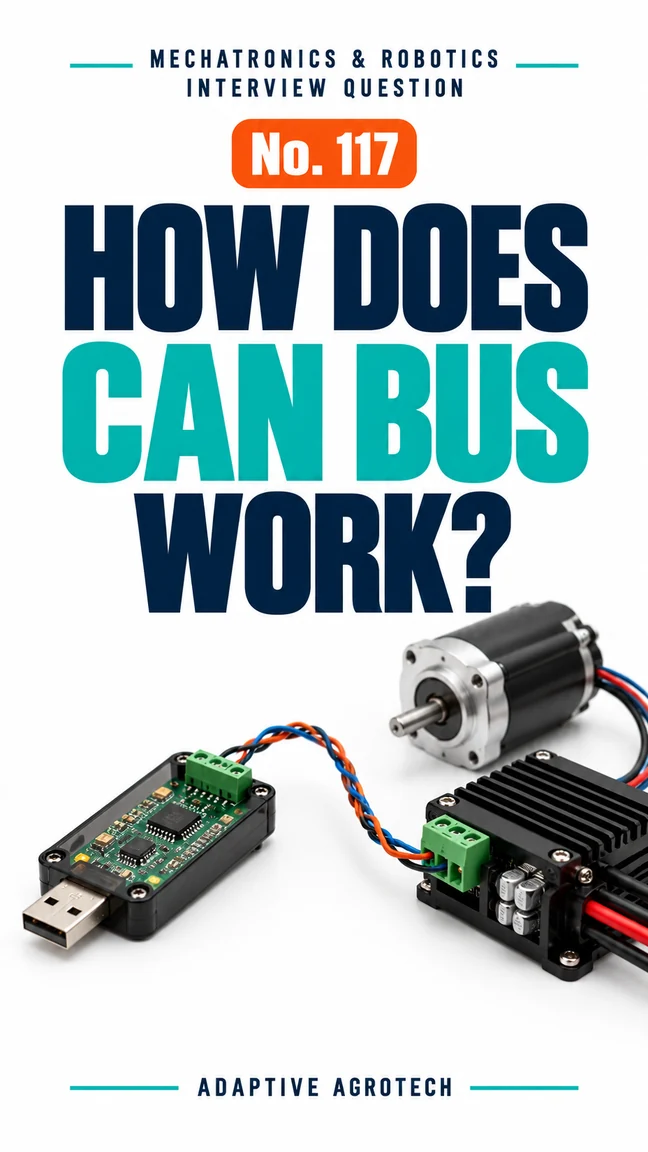
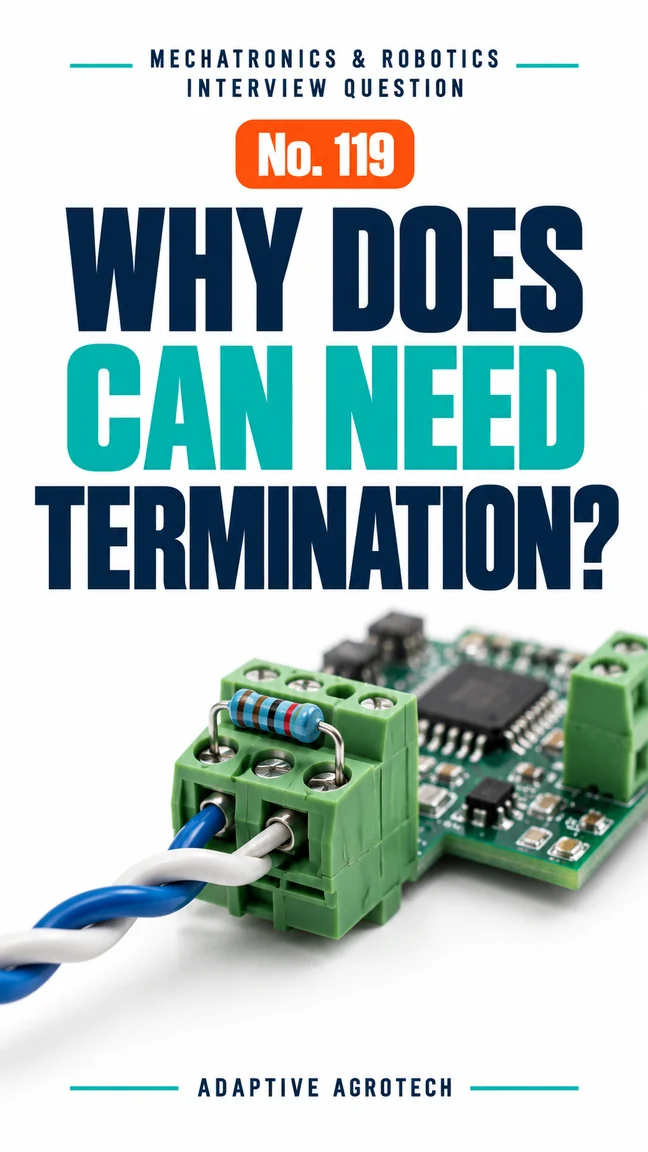
A controller can share an RS485 bus with multiple motor drivers through transceivers that convert logic signals to differential signals. Modbus RTU supplies message structure: address, function, data, and CRC. A speed request writes a documented register, using a unique driver address and the manufacturer's units, scaling, and signed-value convention. A successful write does not establish that the wheel reached its target. The controller must read measured speed and faults and check response timing. Correct bus layout, termination, and serial settings support communication, while lost messages need a defined timeout response alongside independent safety functions.
What to remember
- RS485 is the electrical layer; Modbus defines message meaning.
- Driver-specific registers and scaling determine valid commands.
- Readback and timeouts are needed to detect failed operation.
Check your understanding
Does a successful speed-register write prove target speed was reached?
Show the explanation
No. Measured-speed and fault-status feedback must confirm the resulting motion.