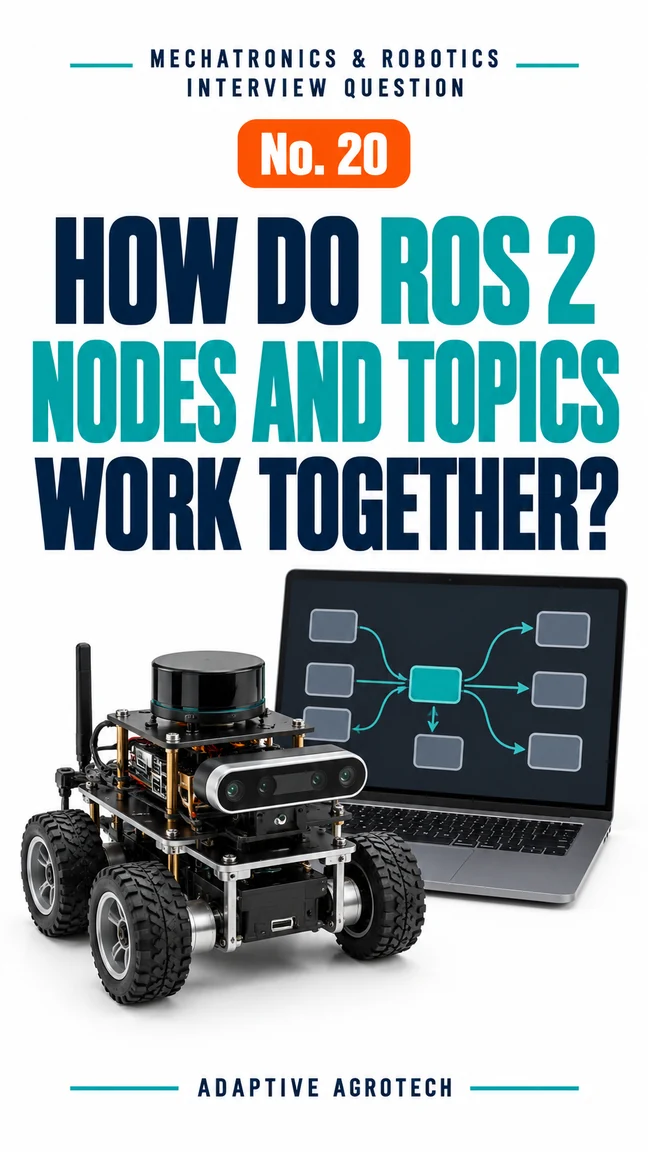
How ROS 2 Nodes and Topics Work Together
ROS 2 nodes exchange typed streams through topics, allowing one publisher to serve multiple subscribers. Hardware interfaces turn velocity messages into motor communication, and discovery and delivery settings determine whether messages arrive.
The key idea
A ROS 2 node performs a logical software task, such as sensing or motion control; multiple nodes may share a computer or communicate between computers. Publishers send typed messages on named topics, and matching subscribers receive the stream. A LiDAR topic can serve navigation, visualization, and recording simultaneously. Desired velocity still requires a hardware interface to communicate with motor drivers, while feedback returns measured motion. When messages fail to arrive, relevant checks include discovery, topic names, message types, and quality-of-service compatibility. Delivery settings must suit the application; ROS 2 alone does not establish real-time behavior or safety.
What to remember
- Nodes represent logical software participants.
- Topics support typed publication to multiple subscribers.
- Discovery and quality-of-service compatibility affect connectivity.
Check your understanding
Why is a velocity topic insufficient by itself to move real wheels?
Show the explanation
A hardware interface must translate its requested motion into the motor driver's communication and control path.