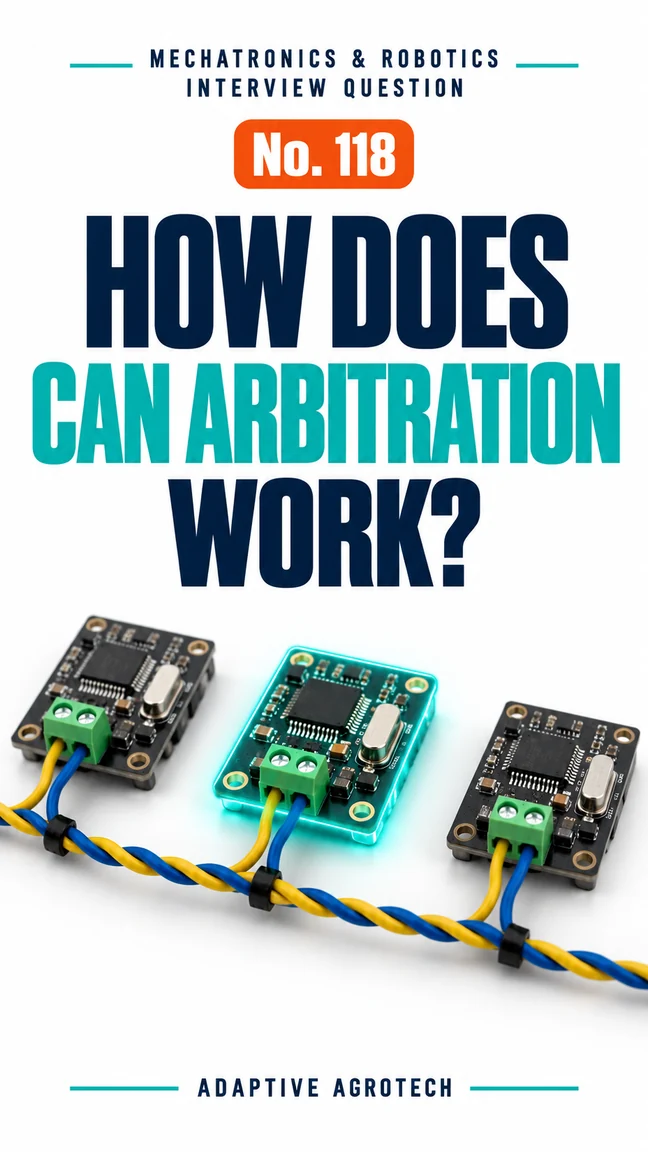
What is CAN Bus Arbitration?
CAN arbitration resolves simultaneous transmissions while preserving the winning frame. Senders compare transmitted and observed identifier bits; dominant zero wins over recessive one, giving lower identifiers higher priority for equal frame formats.
The key idea
When multiple CAN nodes begin transmitting together, each sends its identifier while simultaneously reading the bus. A dominant zero overrides a recessive one. A node that transmits one but observes zero recognizes that it has lost arbitration and stops transmitting, becoming a receiver while the winning frame continues intact. For equal frame formats, the lower identifier has higher priority. Robot network design should assign identifiers according to urgency and examine bus load, since giving urgent traffic priority does not remove the need to ensure that lower priority messages also receive transmission opportunities.
What to remember
- Each sender observes the bus during identifier transmission.
- A recessive sender withdraws when a dominant bit appears.
- Lower identifiers have higher priority for equal frame formats.
Check your understanding
What does a CAN sender do after sending one but reading zero during arbitration?
Show the explanation
It stops transmitting and becomes a receiver.