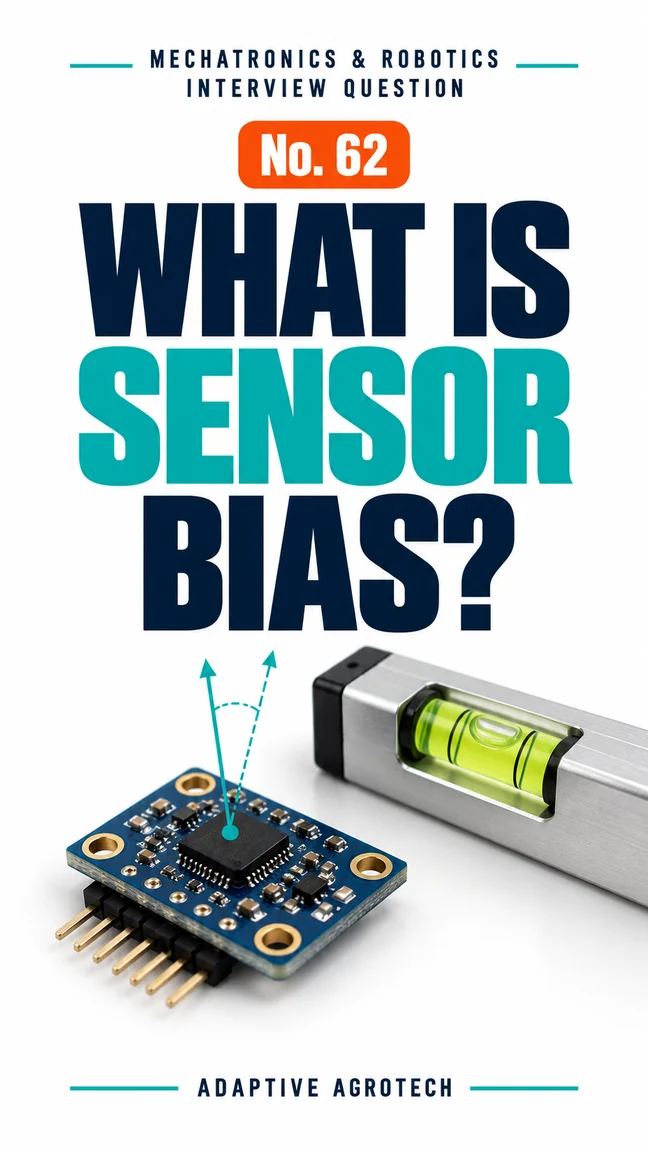
What is Sensor Bias?
Sensor bias is a systematic measurement offset that can accumulate through integration. Gyro bias illustrates the resulting heading drift, while changing temperature and time limit the lasting value of one calibration.
The key idea
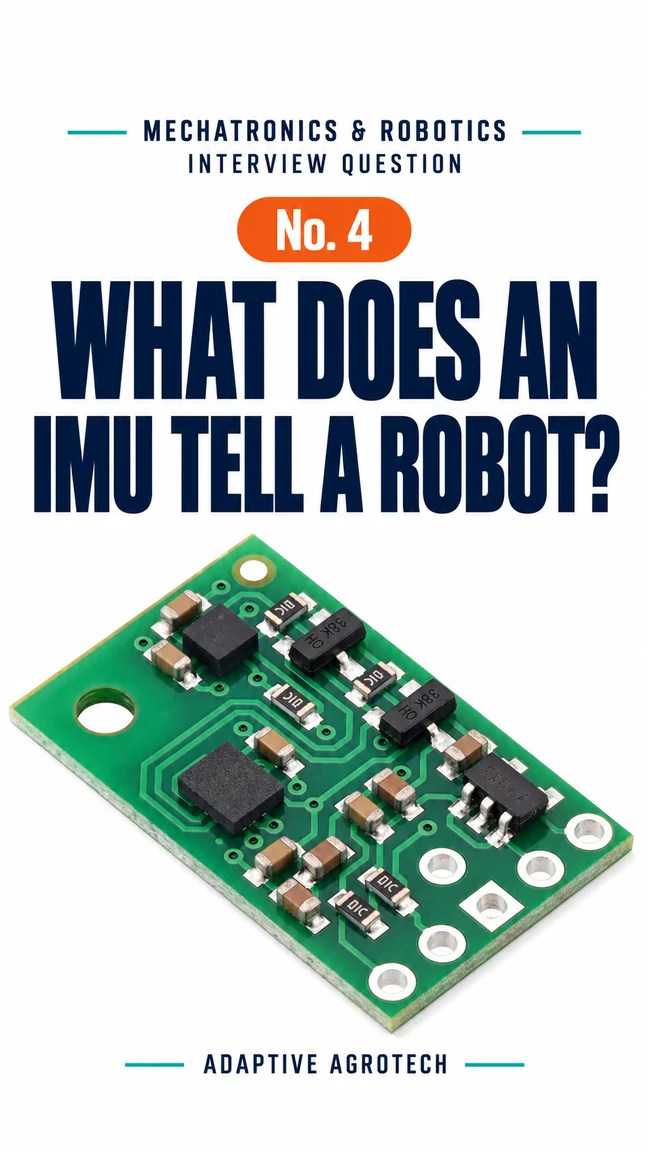
A stationary gyro may report a small nonzero turn rate even when the robot does not rotate. This systematic offset is bias. Integrating the reading treats the offset as real motion, so heading error grows with time. The presentation's 0.1 degree-per-second example produces six degrees of error after 60 seconds. Bias can be estimated when motion is known and then compensated. However, temperature and elapsed time may change the offset, so an estimate obtained at startup need not remain accurate throughout the day. Calibration should therefore be assessed under the conditions in which the measurement will be used.
What to remember
- Bias systematically shifts a sensor's measurement.
- Integrating gyro bias creates growing heading error.
- Temperature and time can change a calibrated offset.
Check your understanding
How much heading error does 0.1 degree/s bias create in one minute?
Show the explanation
Six degrees, because 0.1 degree/s multiplied by 60 seconds is 6 degrees.