Skip to content
Adaptive AgroTech NetworkUniversity of Southern Denmark · SDU Drone Center
Robotics · Mechatronics · Intelligent systems

Short videos.
Lasting understanding.

Explore one engineering idea at a time. Watch a short lesson, read the key concepts and test your understanding before your next interview, project or class.

19 topics found

Video · Key ideas · Check your understanding

Sensors & perceptionNo. 004

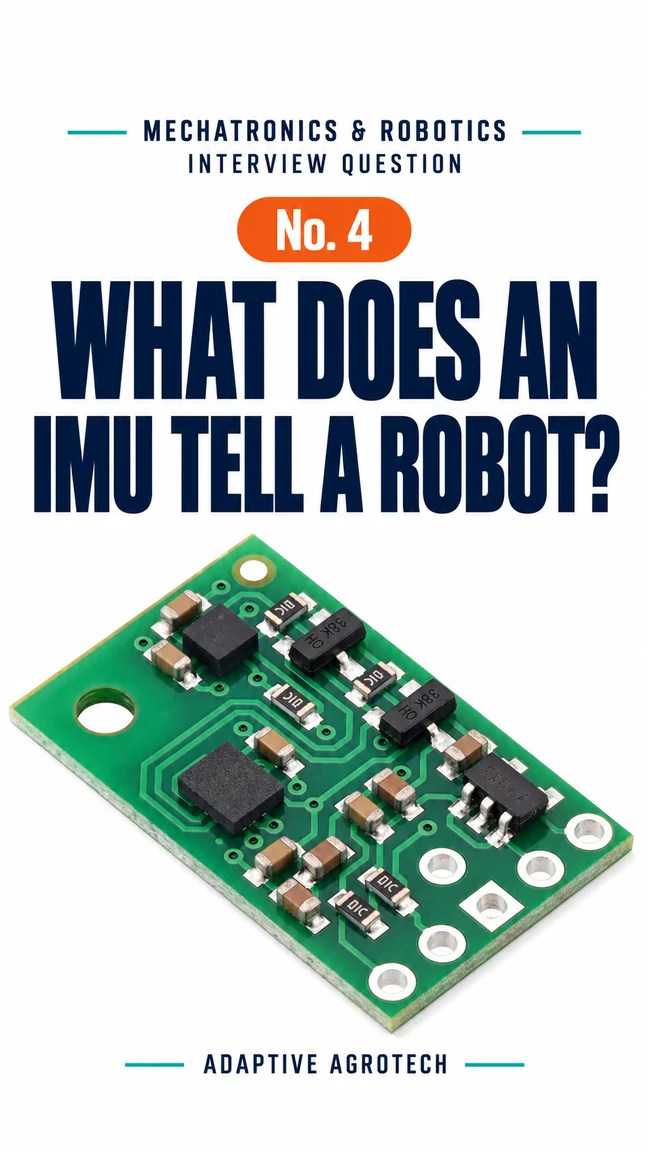
What Does an IMU Tell a Robot?

A six-axis IMU combines acceleration and angular-rate measurements. Gravity can constrain tilt, while gyro integration estimates turning; sensor bias still causes drift and prevents an IMU alone from guaranteeing absolute heading.

Watch & explore
Sensors & perceptionNo. 062

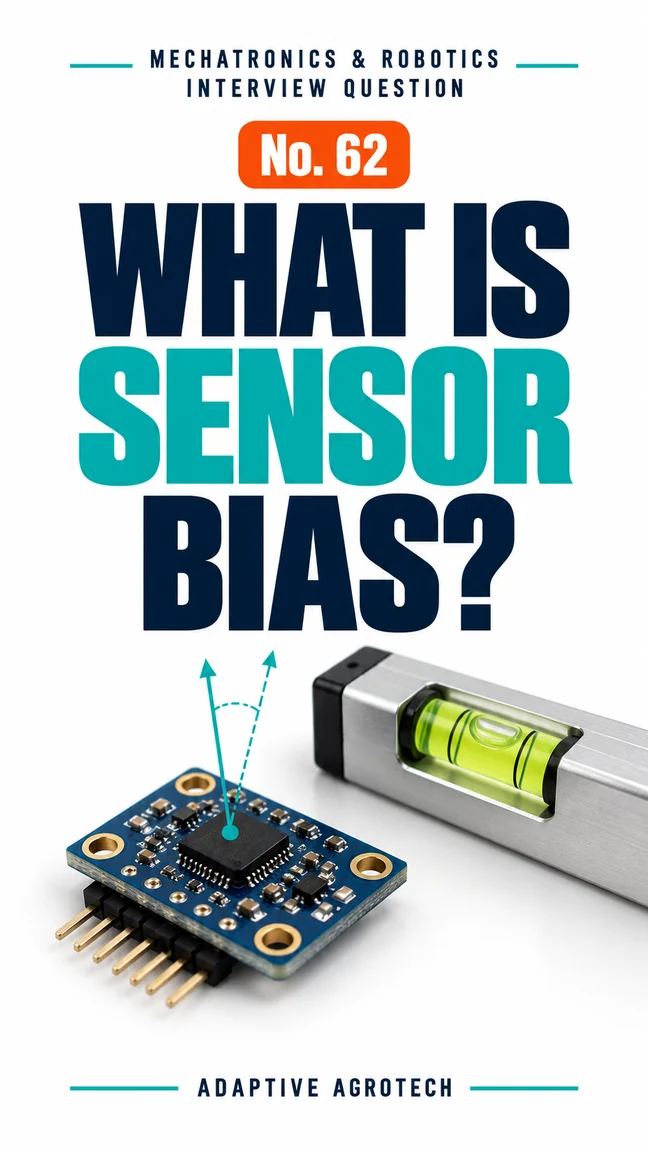
What is Sensor Bias?

Sensor bias is a systematic measurement offset that can accumulate through integration. Gyro bias illustrates the resulting heading drift, while changing temperature and time limit the lasting value of one calibration.

Watch & explore
Localization & estimationNo. 065

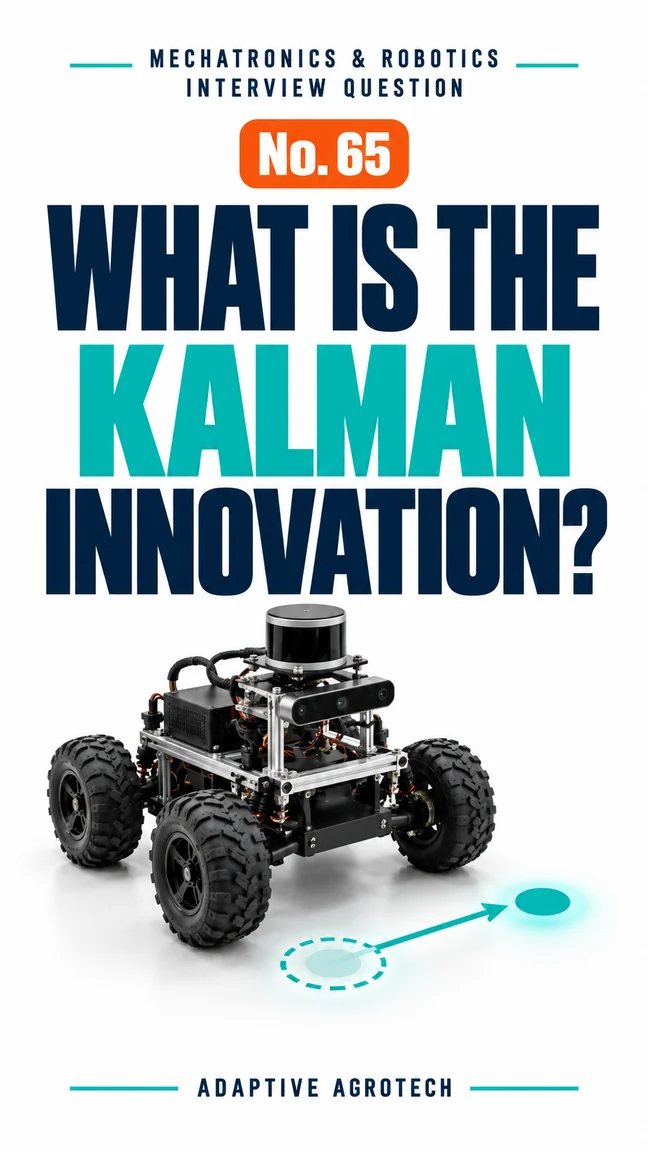
What is the Kalman Innovation?

Kalman innovation is the difference between an actual reading and its prediction. Interpreting it against expected uncertainty helps reveal timing, calibration, and model problems that smooth output alone can conceal.

Watch & explore
Sensors & perceptionNo. 073

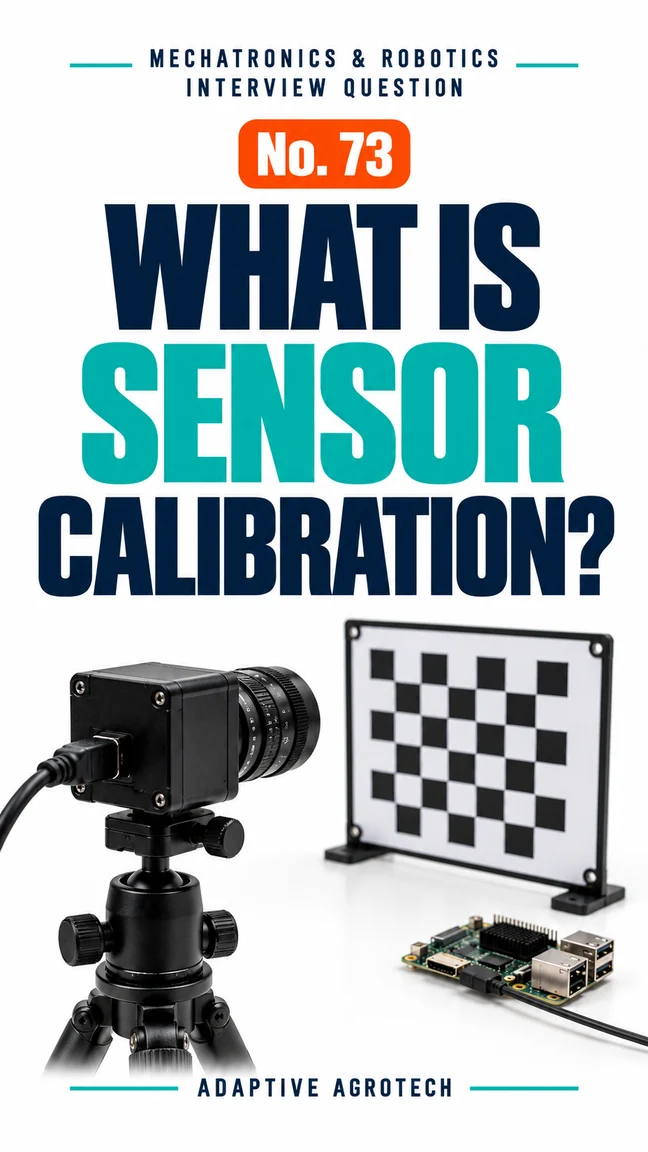
What is Sensor Calibration?

Sensor calibration estimates the parameters connecting readings to physical geometry. Known references constrain offsets, scales, distortion, and inter-sensor transforms, while independent validation and stable mounting determine whether the result remains useful.

Watch & explore
Sensors & perceptionNo. 108

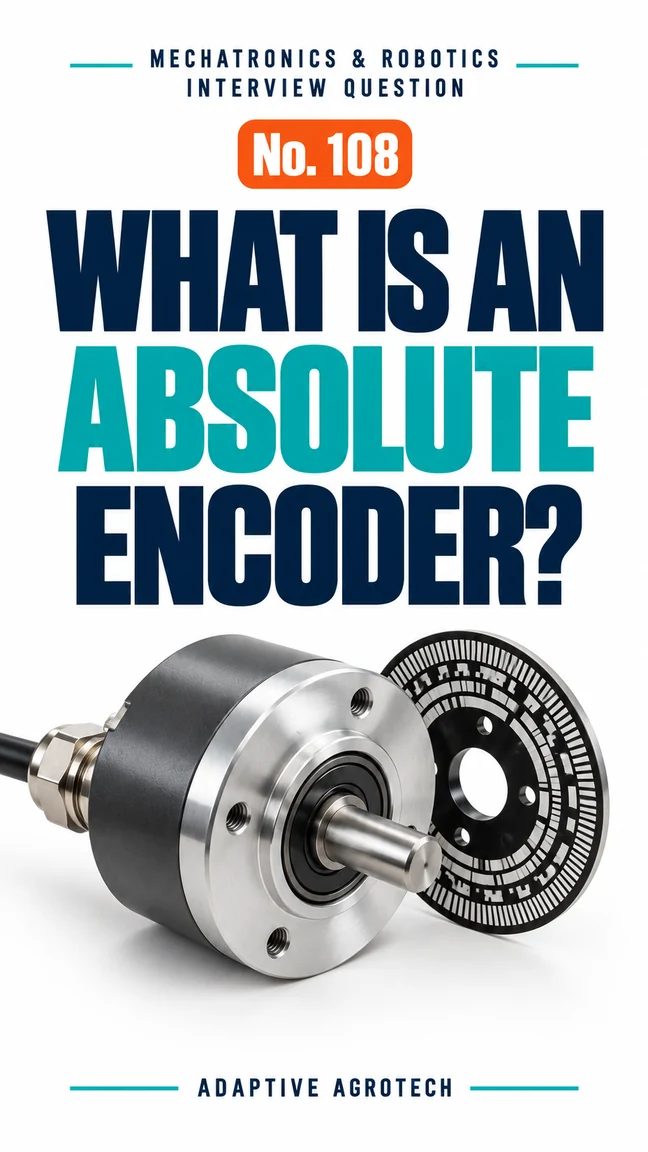
What is an Absolute Encoder?

An absolute encoder reports a position code that can identify shaft angle at startup. Single-turn and multi-turn devices differ, and useful joint measurements still require mounting, calibration, and an understanding of accuracy.

Watch & explore
Communication & networksNo. 131

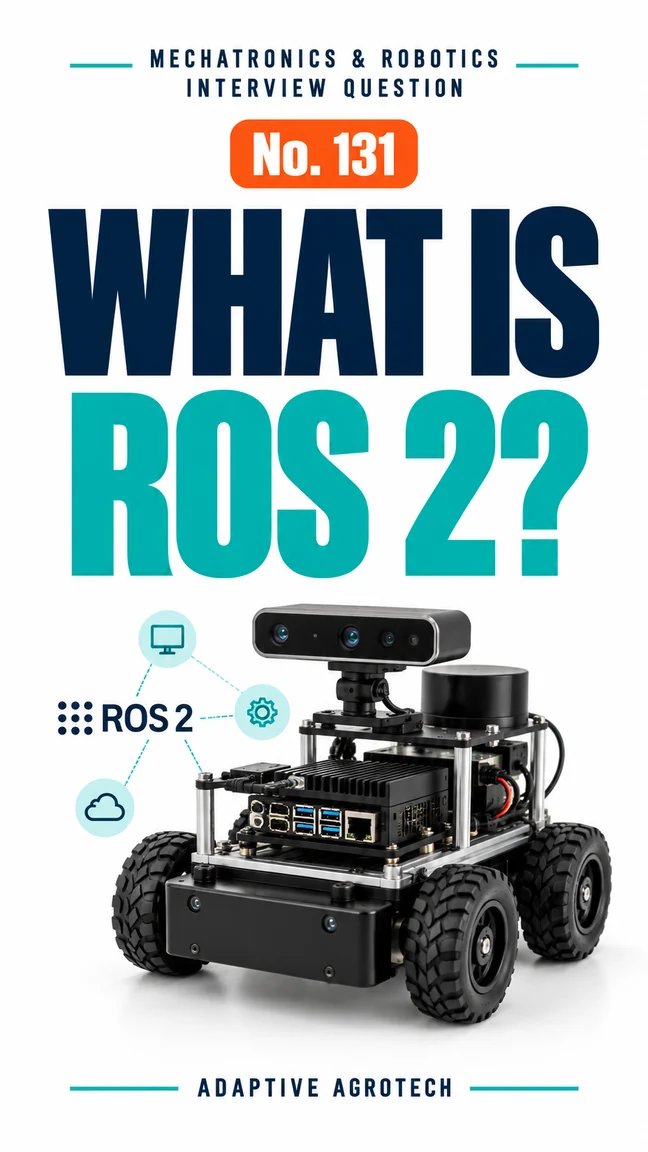
What is ROS 2?

ROS 2 organizes robot software into cooperating nodes with typed interfaces. Topics serve streams, services serve requests, and actions support longer tasks, while timing, motion behavior, and calibration still require engineering validation.

Watch & explore
Robot kinematicsNo. 154

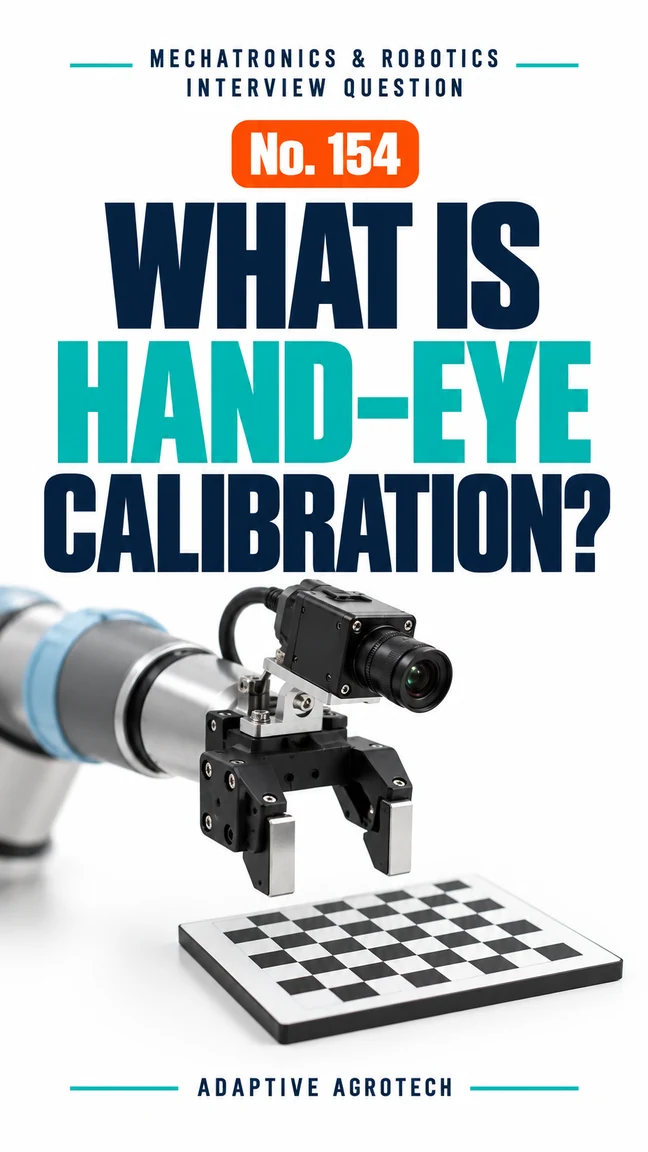
What Is Hand–Eye Calibration?

Hand–eye calibration estimates a fixed rigid relationship between camera and robot frames. Eye-in-hand observations across diverse robot poses constrain that transform, while synchronized measurements and validation on unused poses determine practical calibration quality.

Watch & explore
Computer visionNo. 208

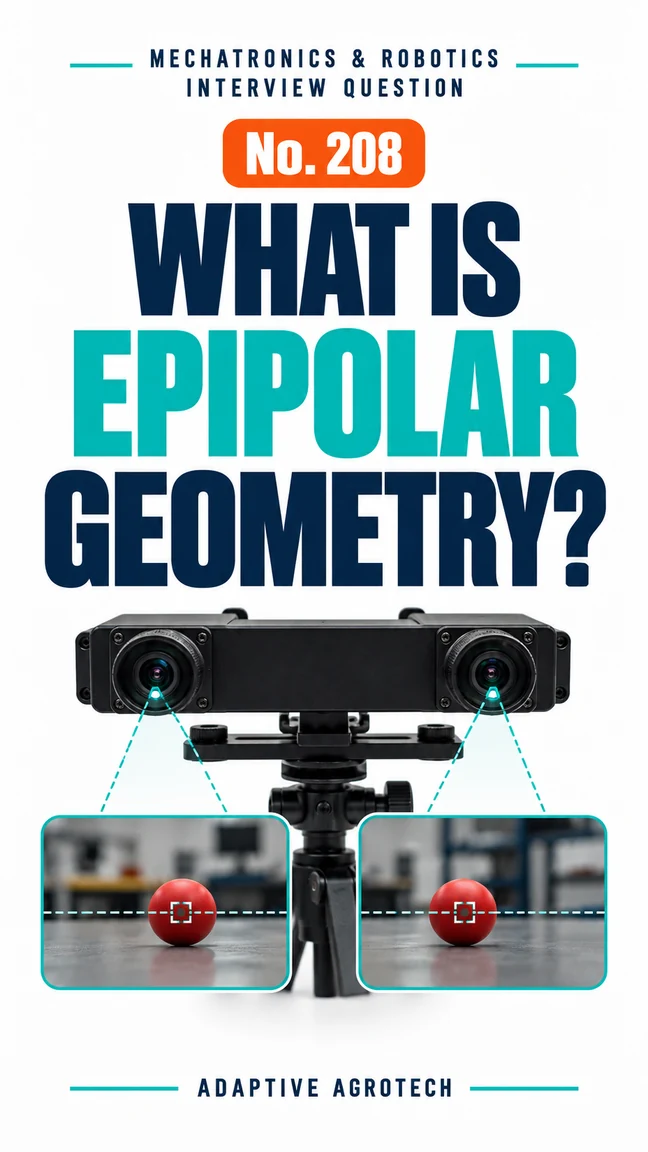
What Is Epipolar Geometry?

Epipolar geometry relates two views of the same three dimensional scene. Given a point in one image, its matching point in the other image lies on an epipolar line, when the camera geometry and correspondence assumptions hold.

Watch & explore
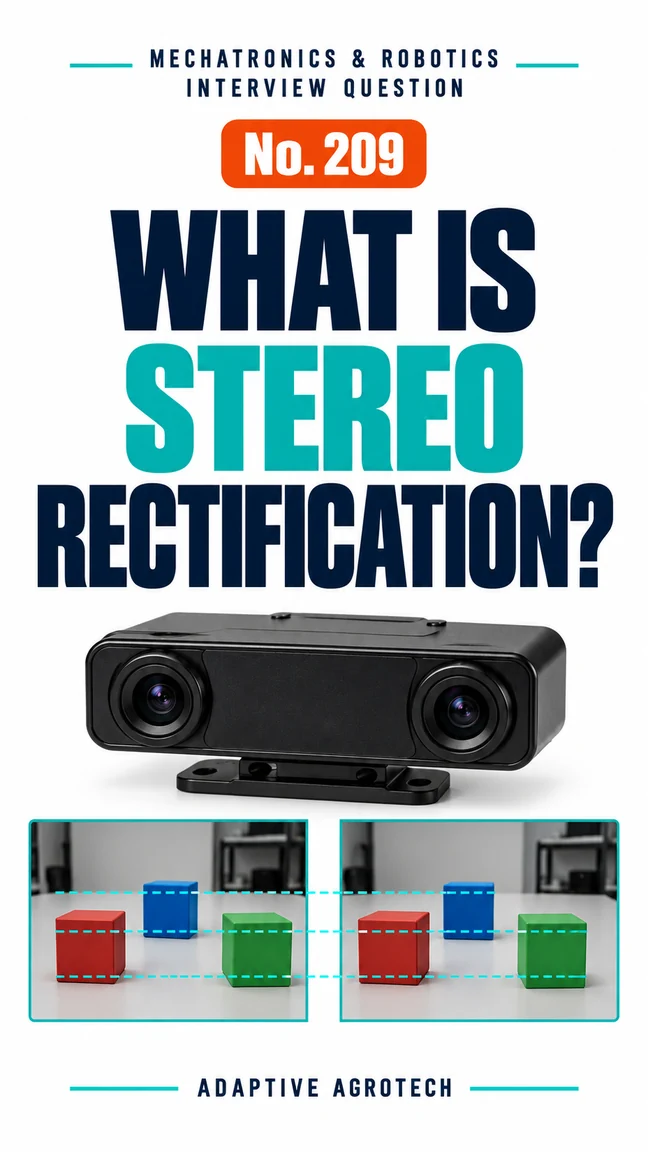
Computer visionNo. 209

What Is Stereo Rectification?

Stereo rectification warps a stereo image pair so corresponding epipolar lines become aligned. For a common horizontal stereo arrangement, matching points appear on the same image row. The rectified camera models describe this new geometry.

Watch & explore
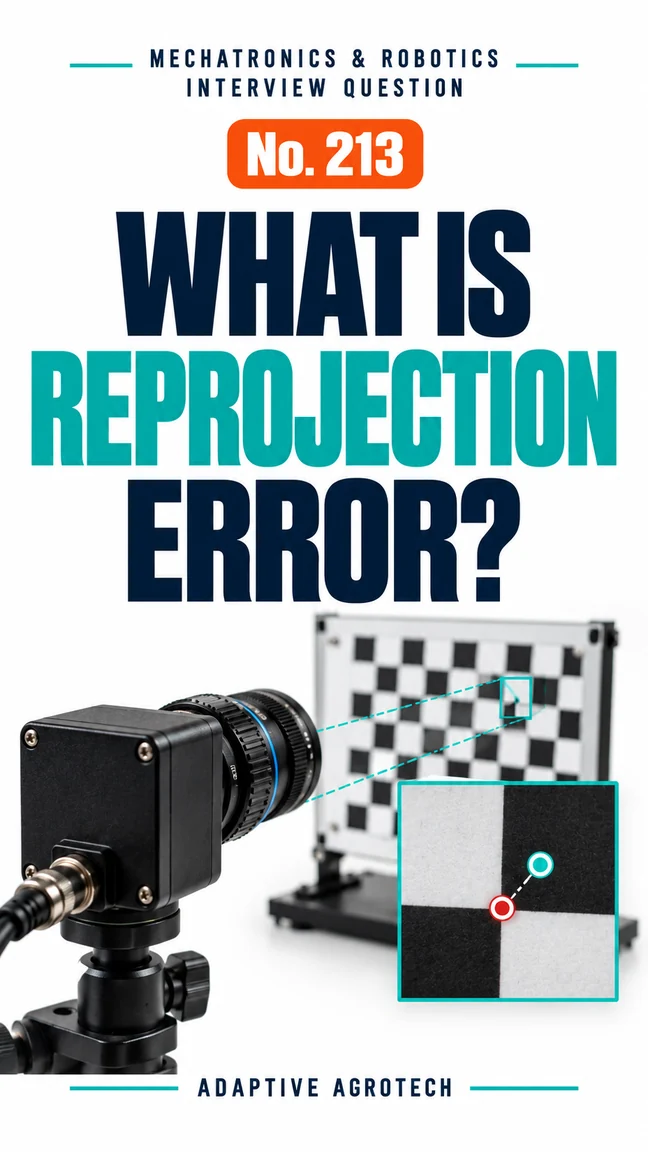
Computer visionNo. 213

What Is Reprojection Error?

Reprojection error measures the difference between an observed image point and the pixel predicted by a camera model and estimated geometry. It is an image space residual, usually reported in pixels, rather than a direct distance error in meters.

Watch & explore