Skip to content
Adaptive AgroTech NetworkUniversity of Southern Denmark · SDU Drone Center
Robotics · Mechatronics · Intelligent systems

Short videos.
Lasting understanding.

Explore one engineering idea at a time. Watch a short lesson, read the key concepts and test your understanding before your next interview, project or class.

11 topics to explore

Video · Key ideas · Check your understanding

Sensors & perceptionNo. 001

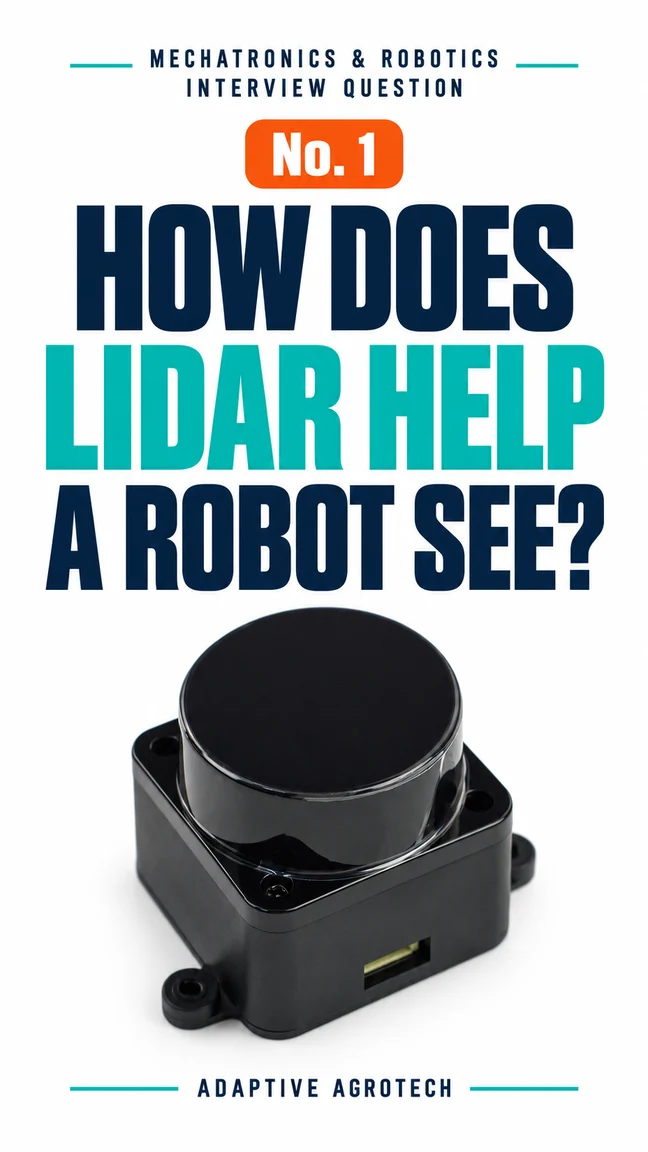
How LiDAR Helps a Robot See

Scanning LiDAR pairs range with angle to detect surrounding surfaces. Time-of-flight measurements support obstacle detection and mapping, while a two-dimensional scan can miss objects outside its measurement plane.

Watch & explore
Sensors & perceptionNo. 004

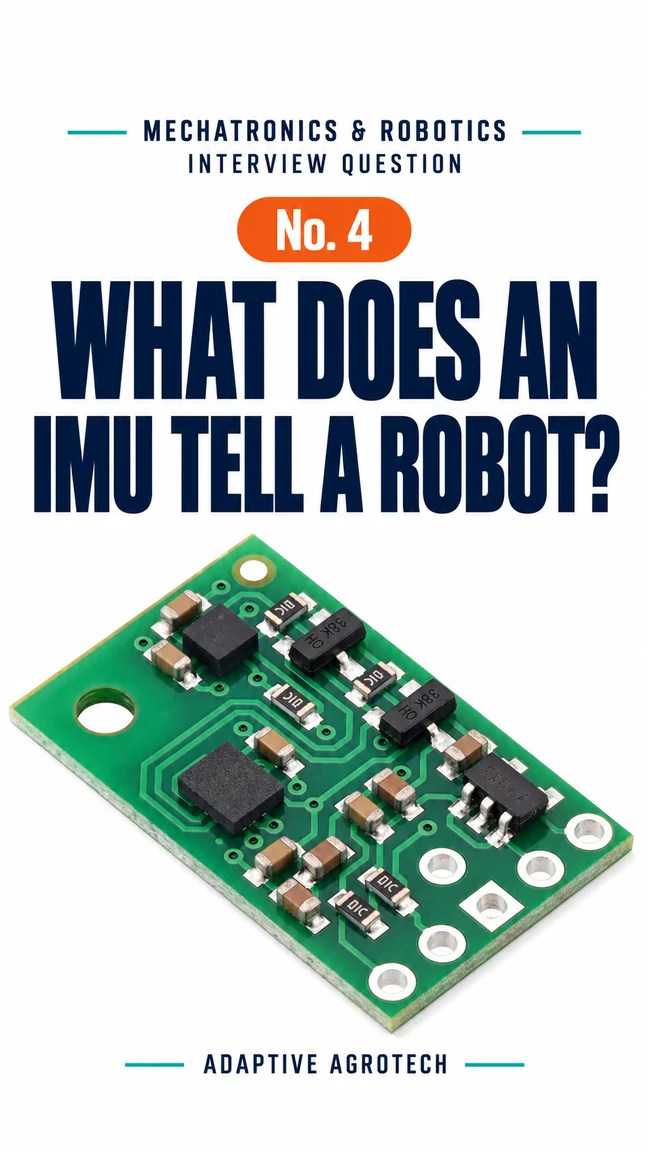
What Does an IMU Tell a Robot?

A six-axis IMU combines acceleration and angular-rate measurements. Gravity can constrain tilt, while gyro integration estimates turning; sensor bias still causes drift and prevents an IMU alone from guaranteeing absolute heading.

Watch & explore
Sensors & perceptionNo. 062

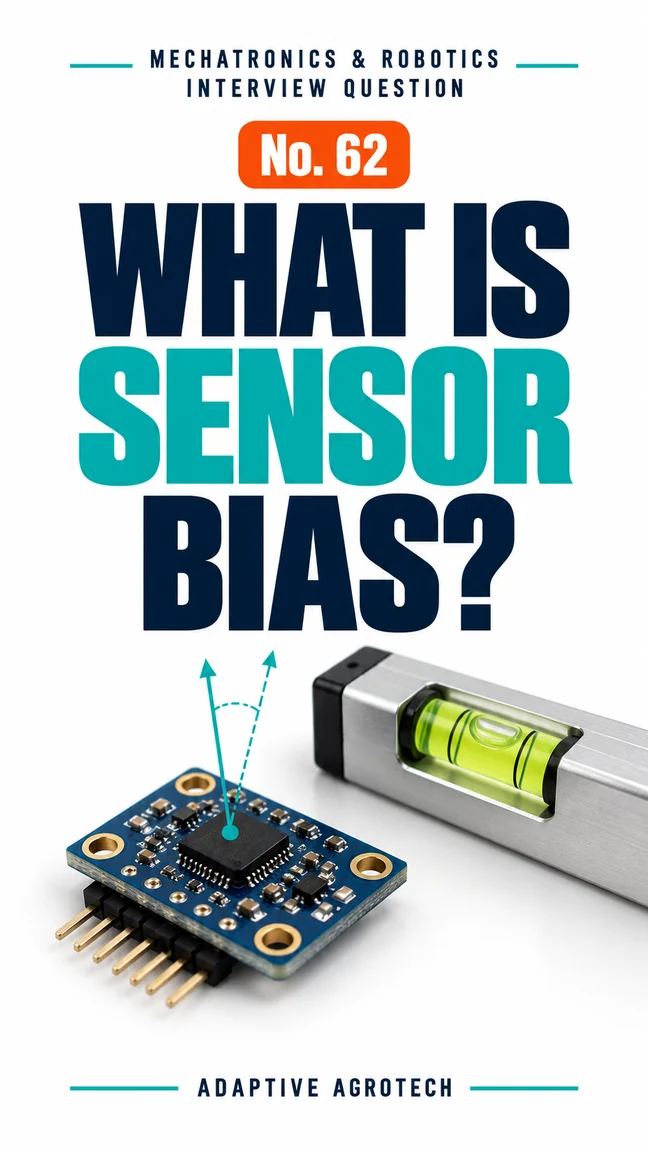
What is Sensor Bias?

Sensor bias is a systematic measurement offset that can accumulate through integration. Gyro bias illustrates the resulting heading drift, while changing temperature and time limit the lasting value of one calibration.

Watch & explore
Sensors & perceptionNo. 063

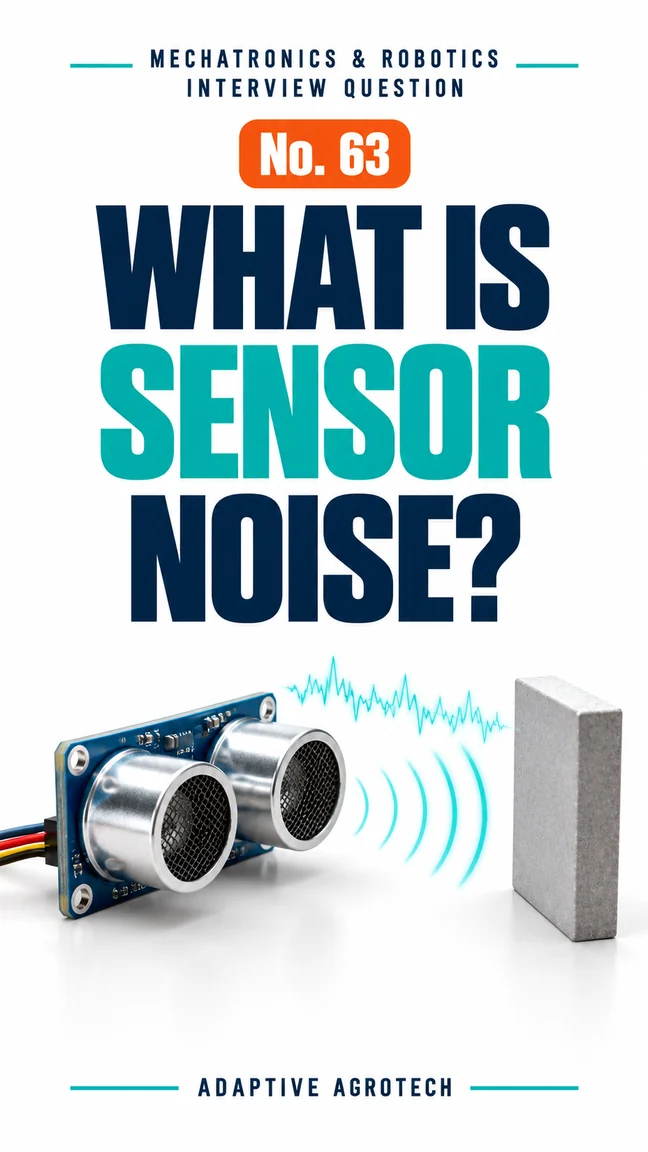
What is Sensor Noise?

Sensor noise causes random measurement variation around the signal. Averaging can smooth readings but delays change detection, so representative logging and frequency analysis help preserve the motion information a controller needs.

Watch & explore
Sensors & perceptionNo. 073

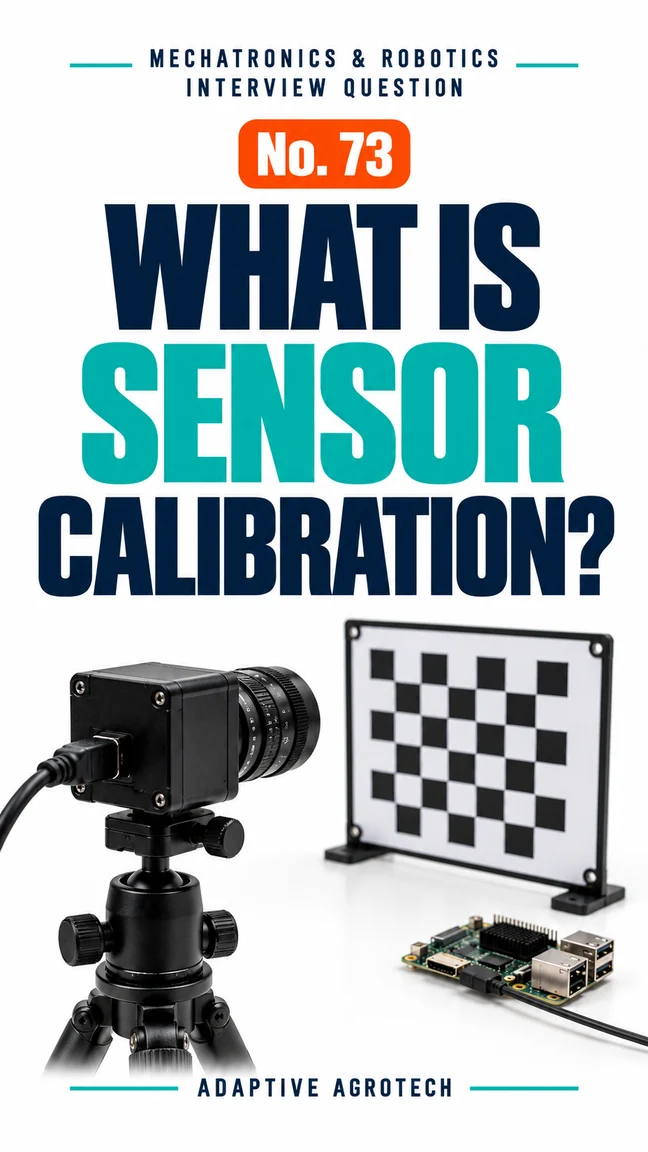
What is Sensor Calibration?

Sensor calibration estimates the parameters connecting readings to physical geometry. Known references constrain offsets, scales, distortion, and inter-sensor transforms, while independent validation and stable mounting determine whether the result remains useful.

Watch & explore
Sensors & perceptionNo. 107

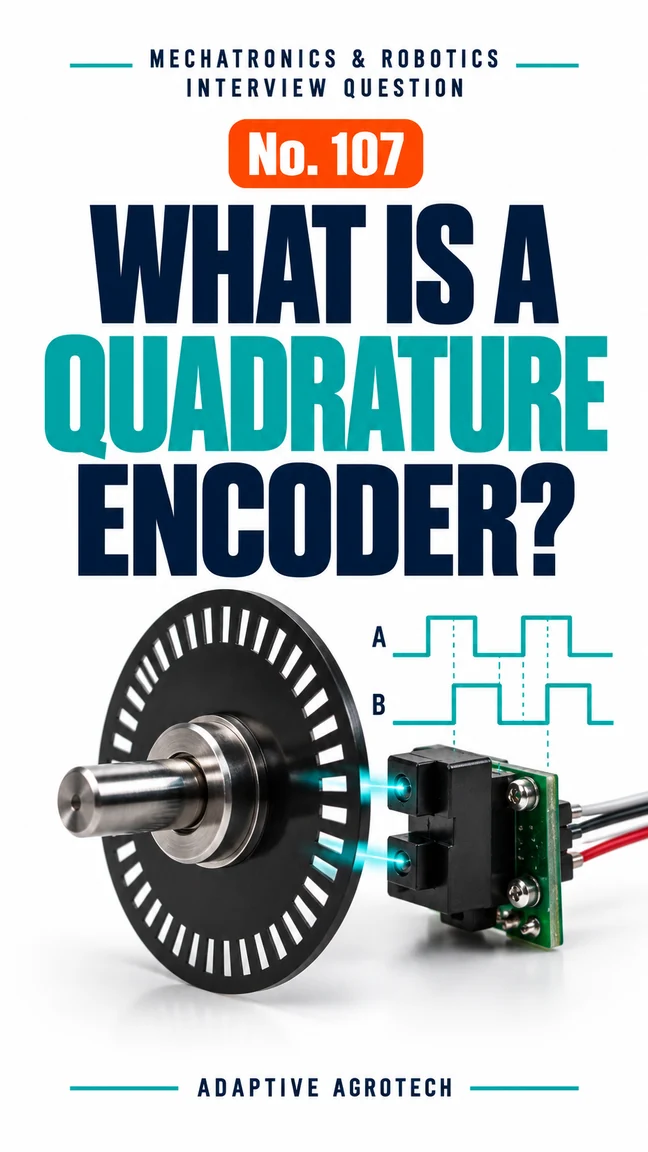
What is a Quadrature Encoder?

A quadrature encoder supplies two signals separated by a quarter cycle, revealing rotation direction and rate. Four-edge decoding improves count resolution, but converting counts into robot travel still depends on mechanics and wheel slip.

Watch & explore
Sensors & perceptionNo. 108

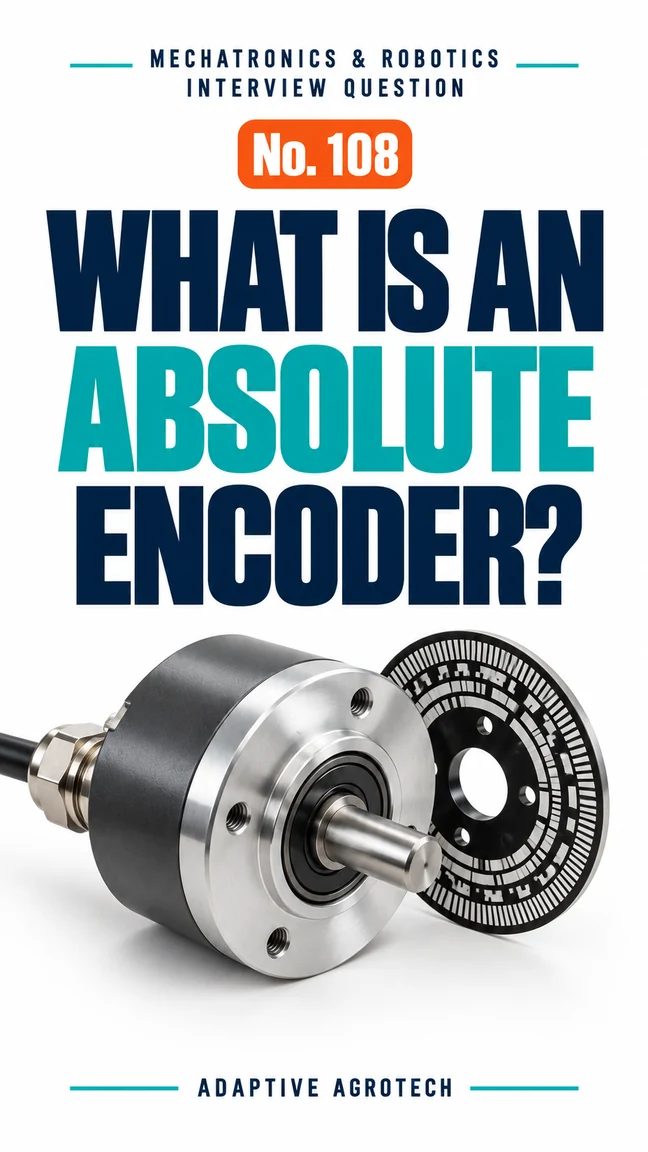
What is an Absolute Encoder?

An absolute encoder reports a position code that can identify shaft angle at startup. Single-turn and multi-turn devices differ, and useful joint measurements still require mounting, calibration, and an understanding of accuracy.

Watch & explore
Sensors & perceptionNo. 112

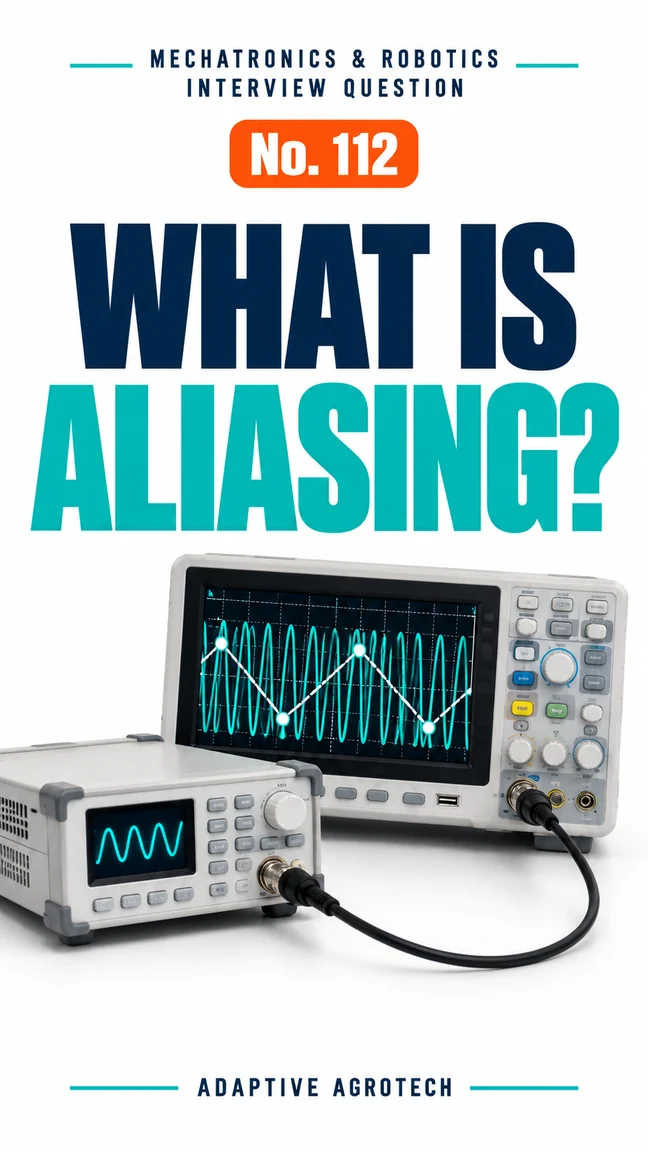
What is Aliasing?

Aliasing makes distinct input frequencies indistinguishable after sampling, potentially turning fast vibration into an apparent slow signal. Analog bandwidth limiting and a sufficient sample rate must prevent the ambiguity before conversion.

Watch & explore
Sensors & perceptionNo. 113

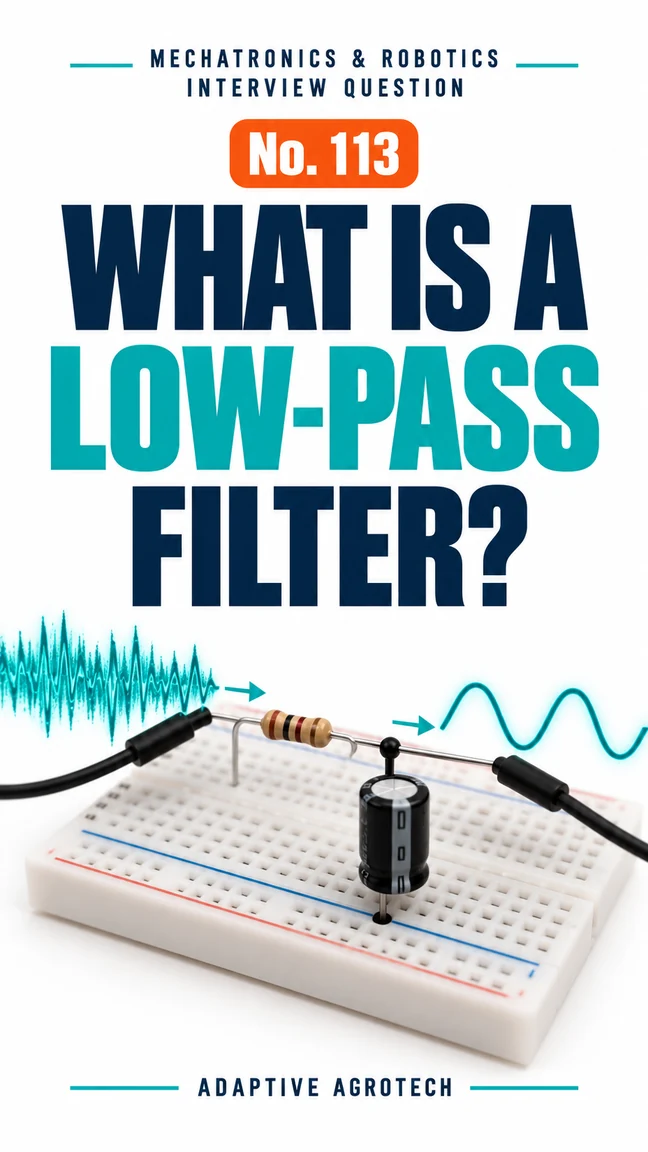
What is a Low-Pass Filter?

A low-pass filter attenuates rapid changes while preserving slower signals, which can smooth robot measurements. Its cutoff sets a bandwidth tradeoff, and the resulting delay can conceal events the controller needs.

Watch & explore