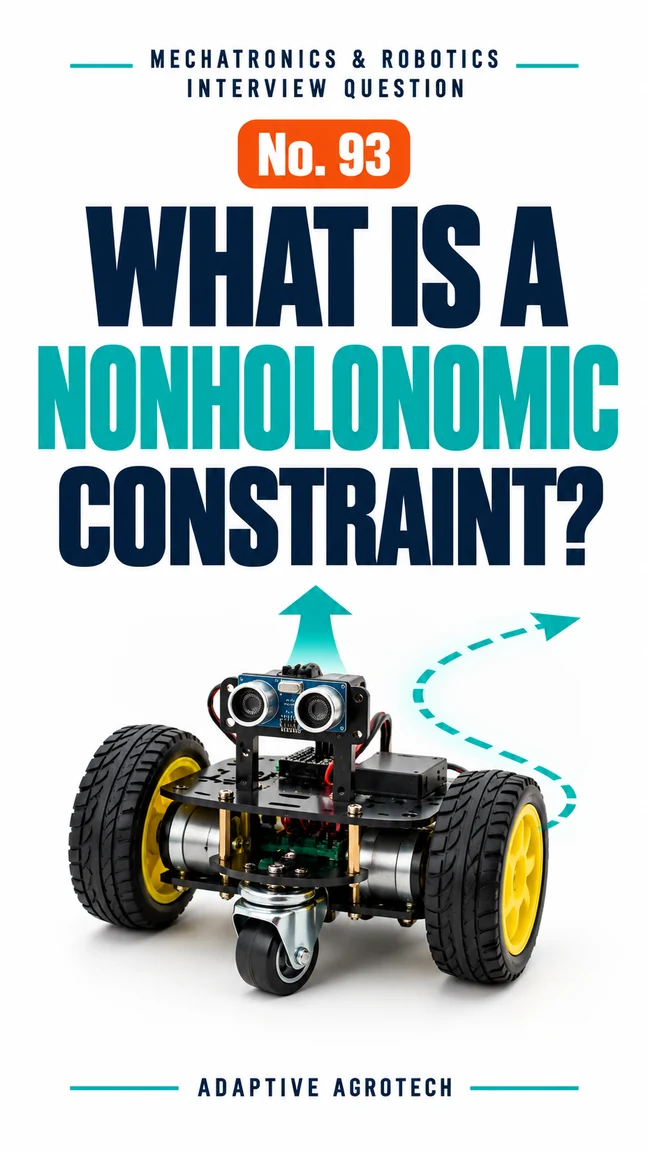
What is a Nonholonomic Constraint?
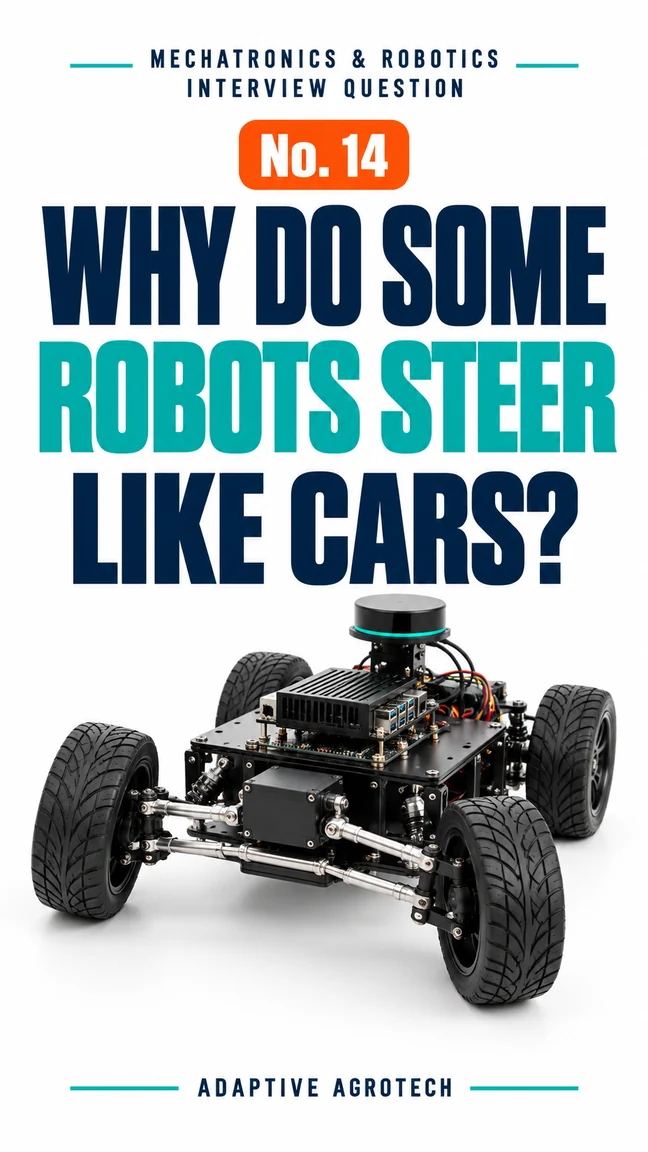
A nonholonomic constraint limits instantaneous velocities without reducing all positions reachable over time. Rolling wheels illustrate this distinction: a car cannot slide sideways immediately, yet sequences of arcs can change its lateral position.
The key idea
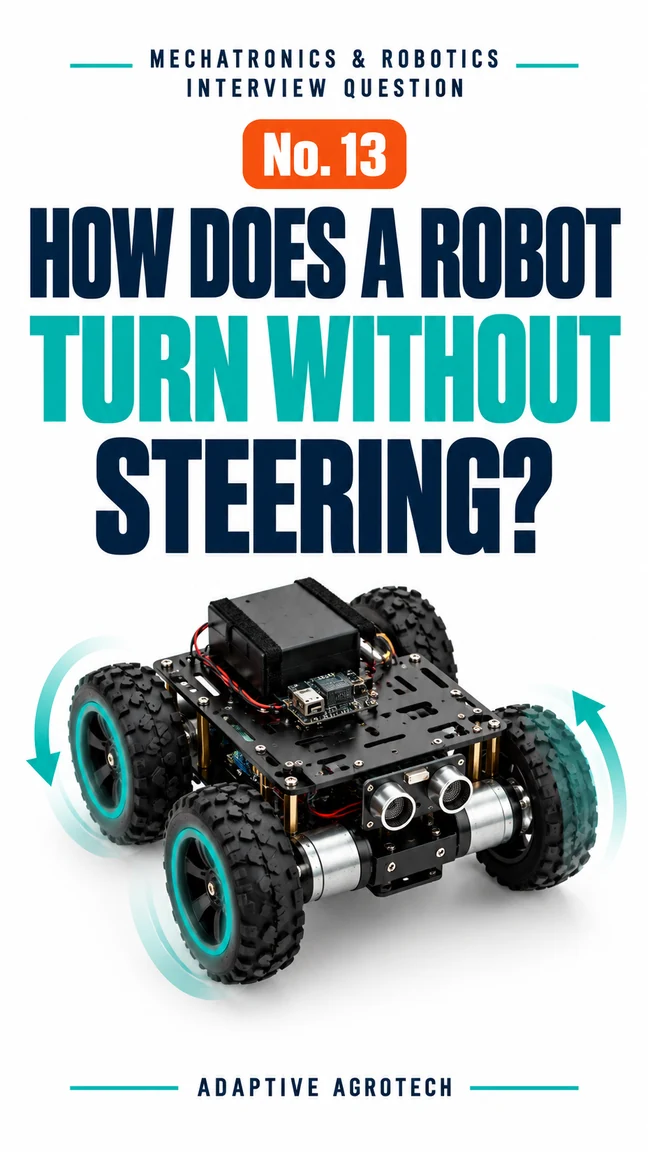
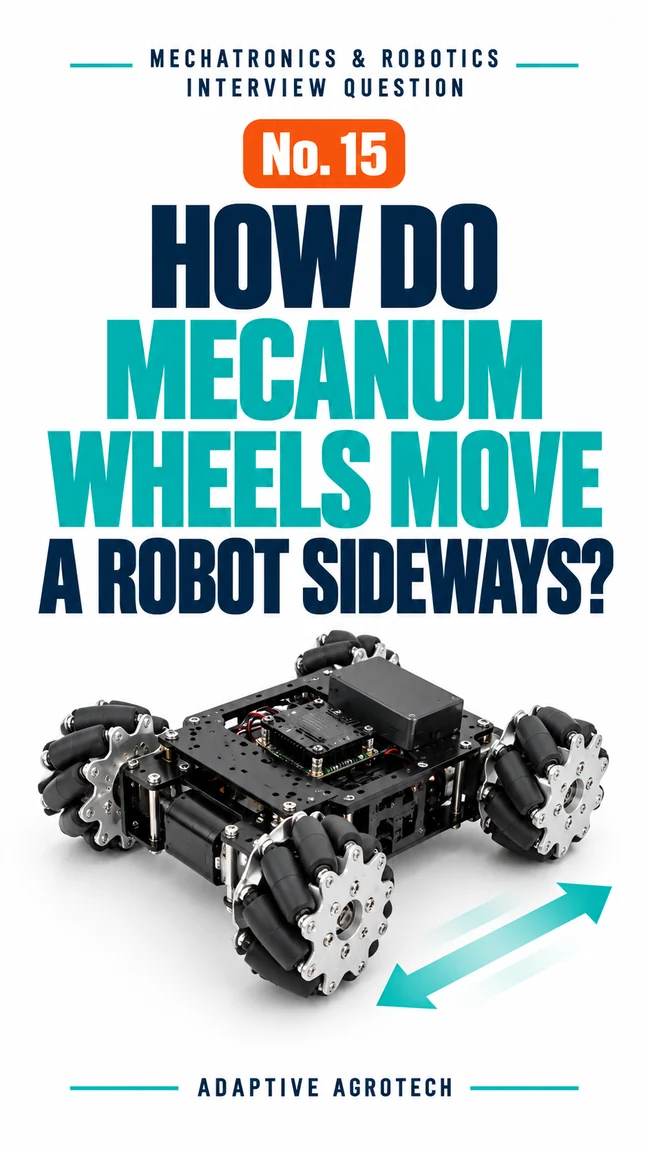
A nonholonomic constraint restricts the velocities a robot may have at an instant. An ordinary rolling wheel moves along its rolling direction but cannot freely slide sideways without slip. Consequently, a car like robot cannot directly translate sideways as a single instantaneous motion, even though forward and reverse arcs can eventually place it in a sideways parking space. A planner must respect these rolling and turning restrictions when joining poses. A geometrically clear path can still be undrivable if it asks the robot to move in directions its wheels cannot realize.
What to remember
- Rolling constrains instantaneous lateral velocity.
- Sequences of allowed arcs can reach new lateral positions.
- Collision free geometry alone does not prove drivability.
Check your understanding
Can a car reach a sideways parking position despite lacking instantaneous sideways motion?
Show the explanation
Yes. A sequence of forward and reverse arcs can change its position over time.