What is a Fail-Safe Robot State?
A fail-safe state is a defined fault response that reduces the hazards of a particular robot. Stopping or removing power may be insufficient, so stored energy, gravity, braking, and transition verification must guide the design.
The key idea
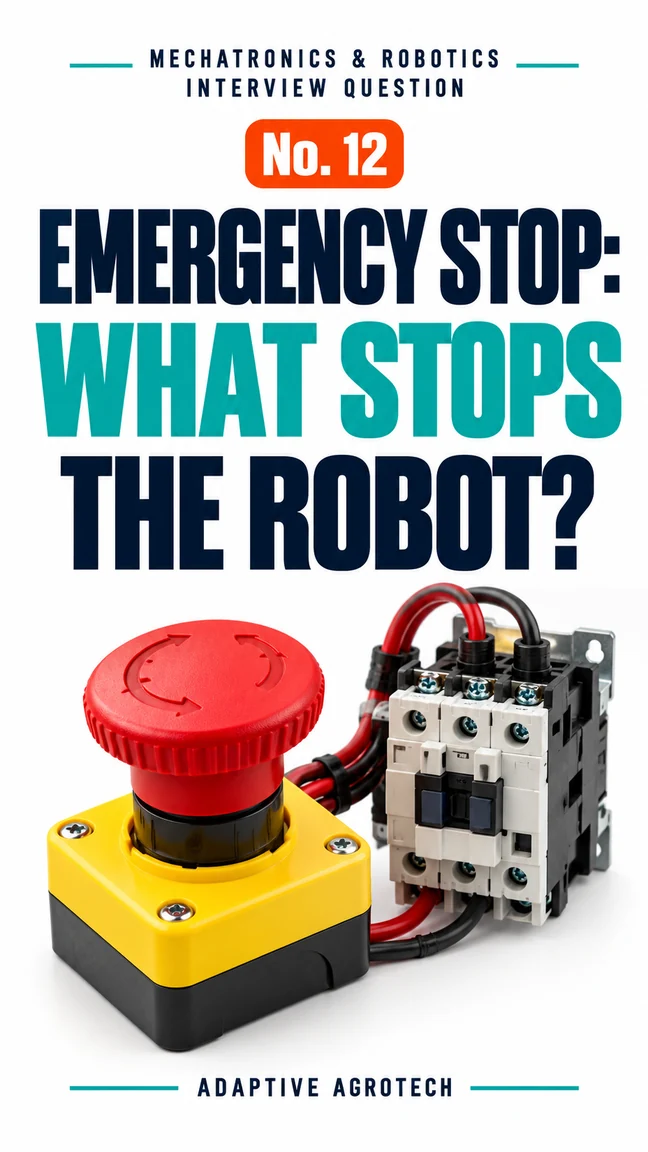
A robot’s fail-safe state is a specified condition intended to reduce risk after a fault. A mobile platform may need to stop and apply a brake, but the correct response depends on the hazard. Removing power could let a raised load fall or leave a rolling vehicle coasting. Stored energy, gravity, stopping distance, and the surrounding hazards therefore influence the choice. A risk assessment determines the response and required safety hardware. The design must detect faults, carry out the transition, and verify both the transition and resulting condition; a software stop alone does not establish safety.
What to remember
- Define the fault response around the actual hazards.
- Loss of power can leave gravity or stored energy hazards.
- Test the transition and verify the resulting state.
Check your understanding
Why might removing power fail to produce a safe state?
Show the explanation
A suspended load could fall or a moving platform could coast after power disappears.