What Is Backlash in a Robot Transmission?
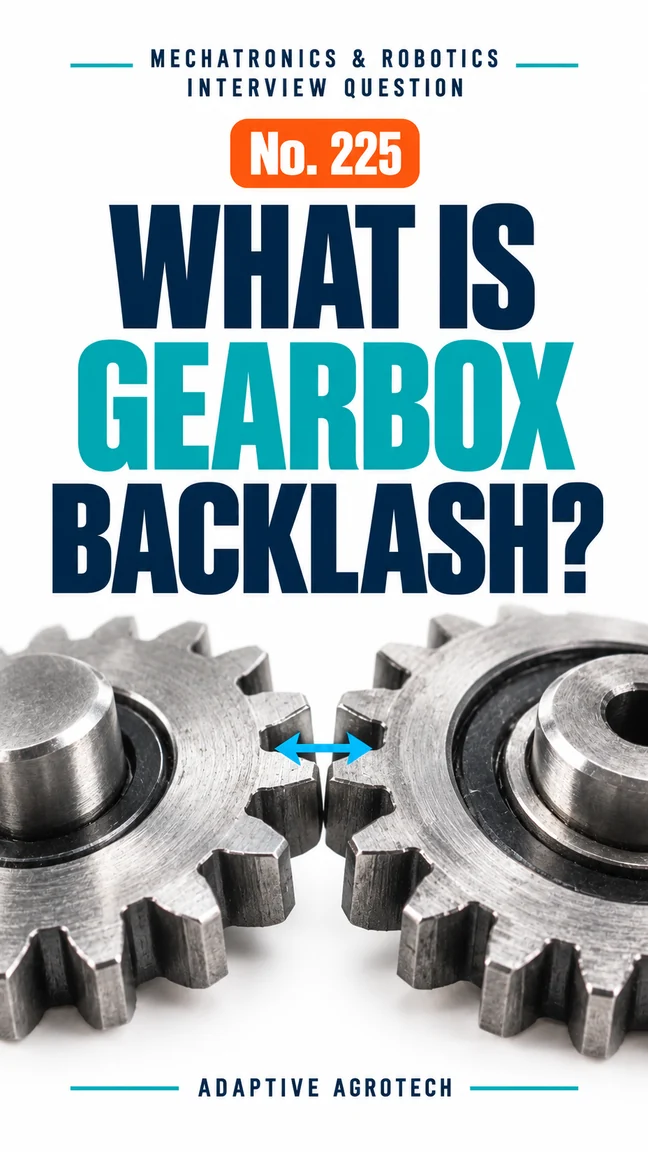
Backlash is lost motion caused by clearance between transmission parts. When the input reverses, it can move through a gap before the opposite contact surface begins driving the output.
The key idea
Backlash is lost motion caused by clearance between transmission parts. When the input reverses, it can move through a gap before the opposite contact surface begins driving the output.
A robot joint can therefore reverse its motor without immediately reversing its link. This input and output plot shows the resulting hysteresis. An encoder before the gearbox cannot directly measure that lost output motion.
Backlash differs from elastic deflection under load. Mechanical preload or a suitable transmission can reduce play. Output sensing can reveal its effect, while compensation must account for changing load and contact direction.
What to remember
- Input motion can occur while the output stays still
- A motor encoder does not directly measure link motion
- Distinguish mechanical clearance from elastic deflection
Check your understanding
Why might a motor encoder fail to reveal gearbox backlash at the link?
Show the explanation
It measures motion before the gearbox. During reversal, motor motion can traverse mechanical clearance before output motion begins; sensing the output can reveal the lost motion.