What Is Passivity in Robot Control?
Passivity is an input–output energy property. A passive system cannot supply more energy than it initially stores plus the energy it receives. For mechanical interaction, force and velocity form a power pair at the contact.
The key idea
Passivity is an input–output energy property. A passive system cannot supply more energy than it initially stores plus the energy it receives. For mechanical interaction, force and velocity form a power pair at the contact.
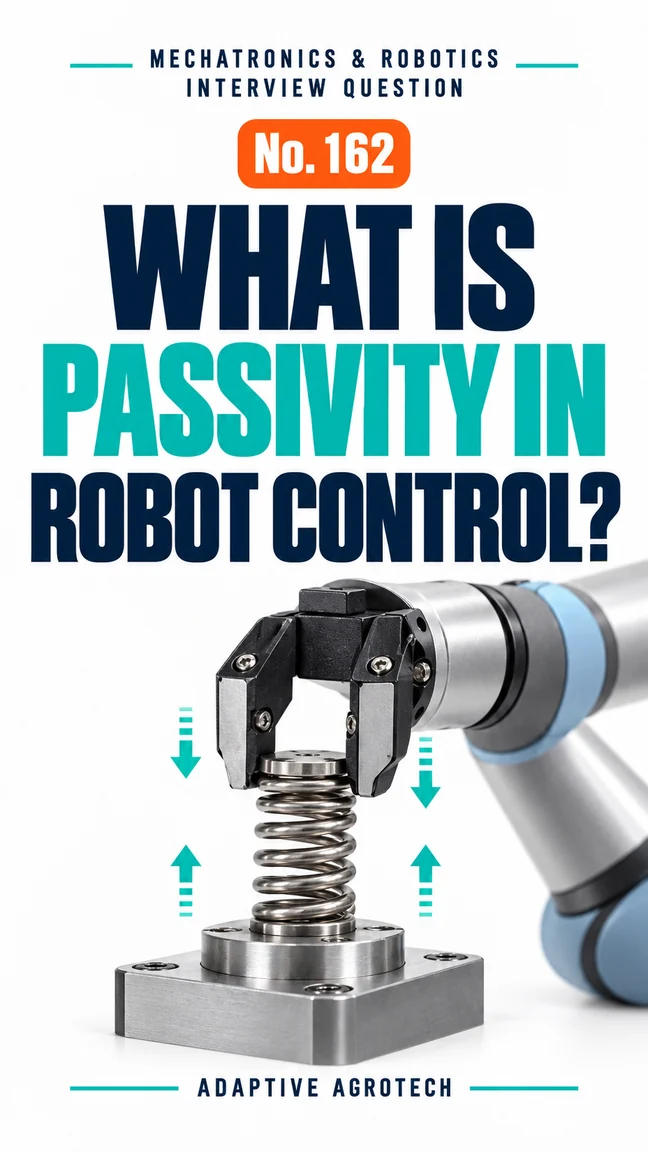
A spring stores energy when compressed and returns it when released. A damper dissipates energy. Robot controllers can shape similar behavior to help analyze contact with a person or an uncertain environment.
Feedback connections of passive systems have useful stability properties under the required assumptions. Digital sampling, delays, and changing stiffness can violate passivity. Check the implemented energy balance rather than assuming a soft response proves this property.
What to remember
- Stored energy cannot exceed supplied energy
- Springs store energy. Dampers dissipate it
- Sampling and controller changes can inject energy
Check your understanding
Why does a compliant-looking controller still need a passivity check?
Show the explanation
A soft response does not prove its energy balance is passive. Sampling, delays and changing stiffness can inject energy even when the robot appears compliant.