What Is the Difference Between Torque, Velocity, and Position Control?
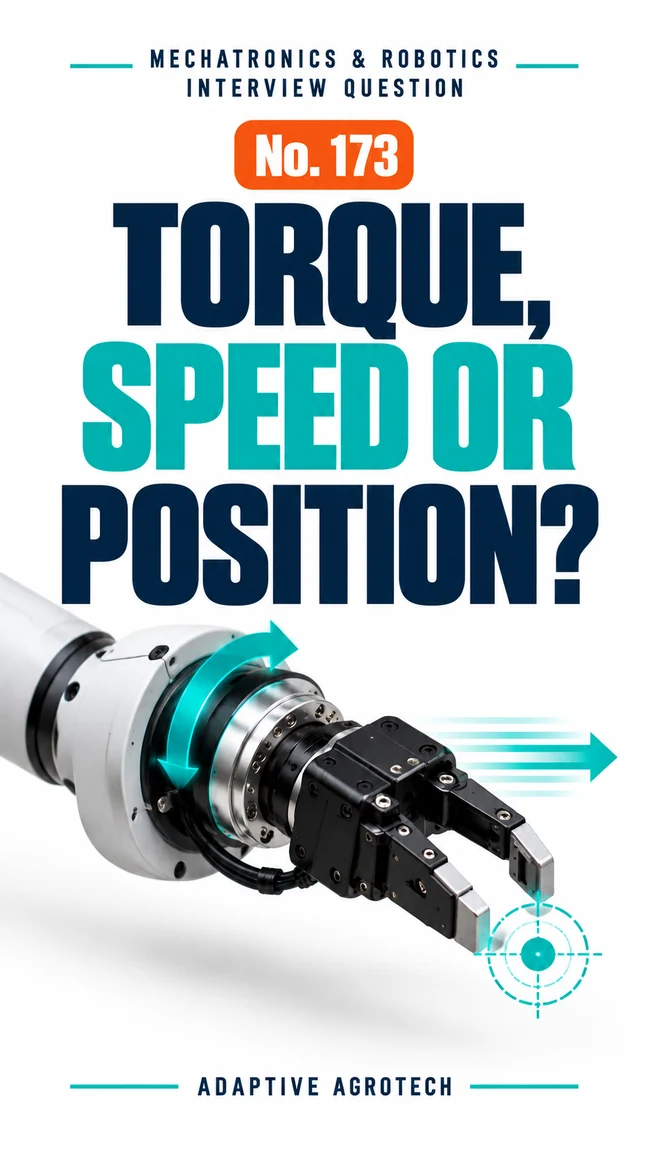
Torque, velocity, and position control regulate different quantities. Torque control targets joint effort. Velocity control targets motion rate. Position control targets a joint angle or location, normally using lower level effort control internally.
The key idea
Torque, velocity, and position control regulate different quantities. Torque control targets joint effort. Velocity control targets motion rate. Position control targets a joint angle or location, normally using lower level effort control internally.
A robot drive often nests a fast current loop inside a velocity loop, with a position loop outside. Each layer produces a reference for the next. Current approximates motor torque when the motor model supports that relationship.
A value of one can mean a newton meter, a radian per second, or a radian. Confirm mode, units, signs, and limits before commanding hardware. The available interface determines which control architecture you can implement.
What to remember
- The mode defines which quantity follows a reference
- Outer loops rely on the inner loops
- Check command meaning before enabling motion
Check your understanding
Why is a command value meaningless without its control mode and units?
Show the explanation
The same number can request torque, velocity or position depending on the interface. Confirm mode, units, direction and limits before enabling motion.