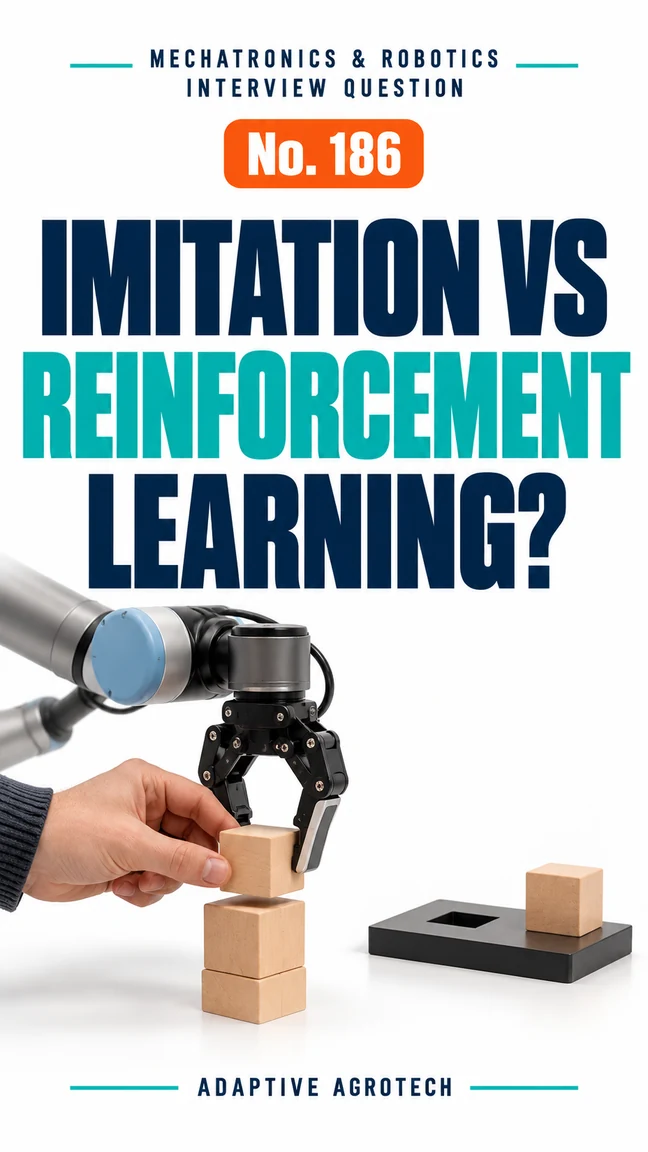
What Is the Difference Between Imitation Learning and Reinforcement Learning?
Imitation learning uses expert behavior as a learning signal. Reinforcement learning improves behavior using rewards from interaction or recorded experience. The key distinction is whether the learner receives examples of actions or feedback about outcomes.
The key idea
Imitation learning uses expert behavior as a learning signal. Reinforcement learning improves behavior using rewards from interaction or recorded experience. The key distinction is whether the learner receives examples of actions or feedback about outcomes.
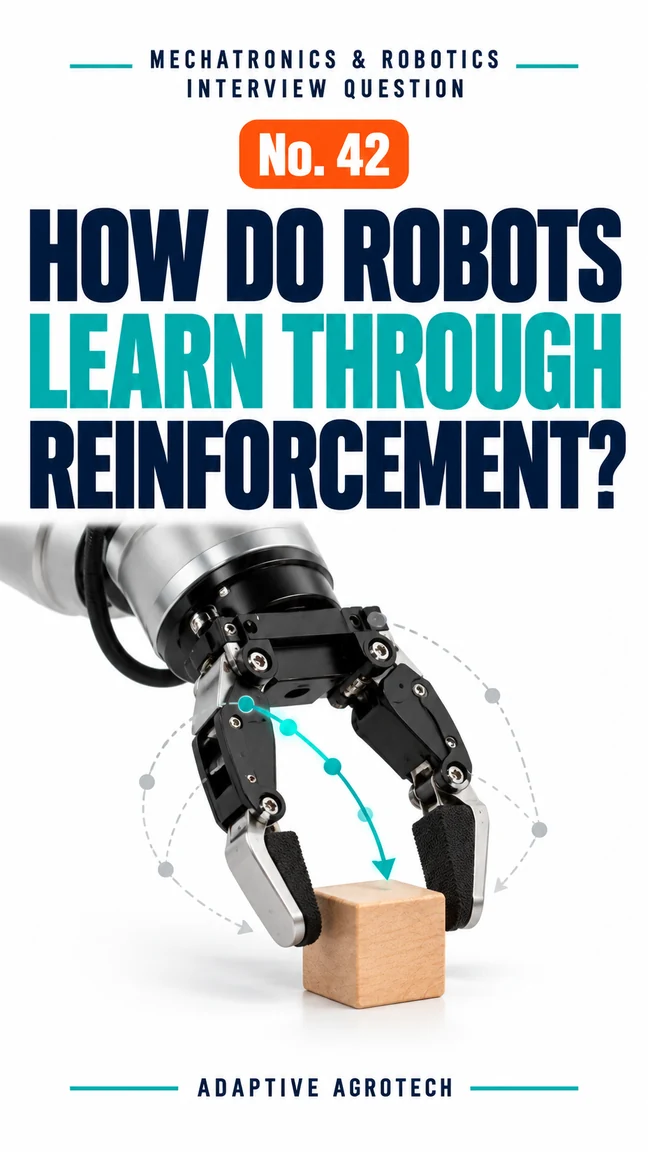
For an arm reaching a target, behavior cloning can match demonstrated joint commands. Reinforcement learning can test commands and receive reward for reaching accurately, perhaps with a penalty for excessive effort.
Demonstrations can initialize a policy before reinforcement learning refines it. Neither approach guarantees reliable behavior outside its training conditions. Expert coverage, reward design, and evaluation all influence how well the final robot performs.
What to remember
- Expert actions and rewards provide different signals
- The task can stay the same while supervision changes
- Imitation and reinforcement can be combined
Check your understanding
What separates imitation learning from reinforcement learning?
Show the explanation
Imitation uses examples of expert actions as supervision. Reinforcement learning uses rewards about outcomes; demonstrations can also initialize a policy before reward-based refinement.