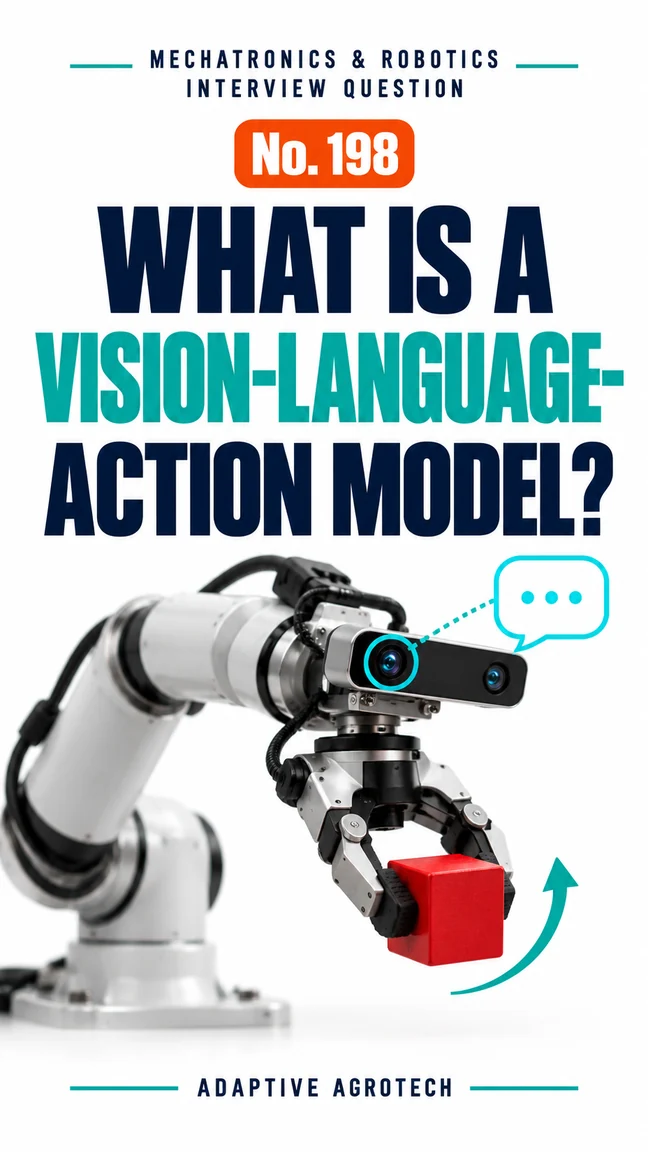
What Is a Vision-Language-Action Model?
A vision language action model connects visual observations and language instructions to robot actions. It may also use joint positions or other robot state. Its output describes movements, rather than only a written answer.
The key idea
A vision language action model connects visual observations and language instructions to robot actions. It may also use joint positions or other robot state. Its output describes movements, rather than only a written answer.
For example, the instruction pick up the red cup must select the correct cup in the camera image. The model predicts an action sequence, and the robot controller executes those commands through its actuators.
The learned model still has a training distribution and limited reaction time. An action that sounds sensible can be physically impossible. Check workspace, speed, force, and collision constraints before relying on the behavior.
What to remember
- VLA combines perception, instructions, and action
- The selected object must match the command
- Language competence does not establish physical safety
Check your understanding
What makes a vision-language-action model different from a system that only writes answers?
Show the explanation
It maps visual observations and instructions to robot actions, potentially using robot state too. Those outputs still need feasible timing and workspace, force, speed and collision limits.