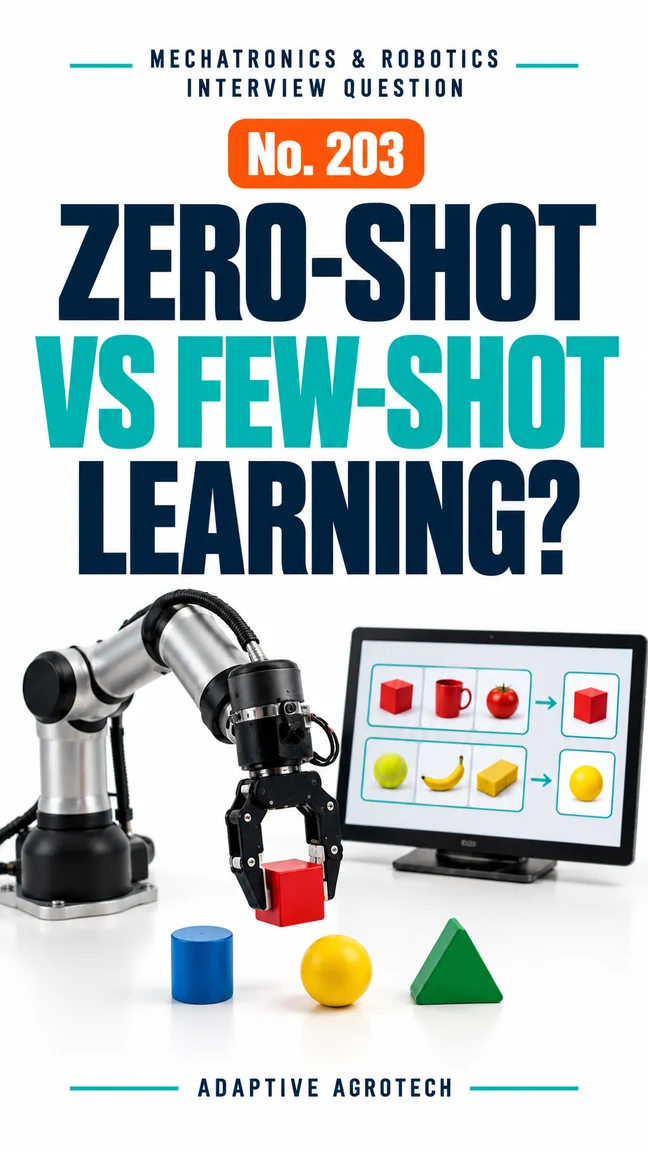
What Is the Difference Between Zero-Shot and Few-Shot Learning?
Zero shot learning uses a trained model on a new task without task specific training examples. Few shot learning provides a small number of examples for that task. Both approaches still rely on substantial prior training or structure.
The key idea
Zero shot learning uses a trained model on a new task without task specific training examples. Few shot learning provides a small number of examples for that task. Both approaches still rely on substantial prior training or structure.
Suppose an arm already understands several manipulation tasks. In a zero shot test, it receives a new instruction. In a few shot test, it also receives a few demonstrations, used as context or for adaptation.
A new object, new environment, and new skill are different kinds of novelty. Report which one changed and what data the model saw. Few shot does not guarantee success, especially when demonstrations miss important failure cases.
What to remember
- Zero shot and few shot describe task specific data
- A few examples can condition or update a model
- Describe exactly what is new at evaluation
Check your understanding
What must be specified when reporting zero-shot or few-shot robot results?
Show the explanation
State what is new, such as the object, environment or skill, and which task-specific examples the model received. Both settings still rely on prior learning or structure.