What Is Distribution Shift in Robot AI?
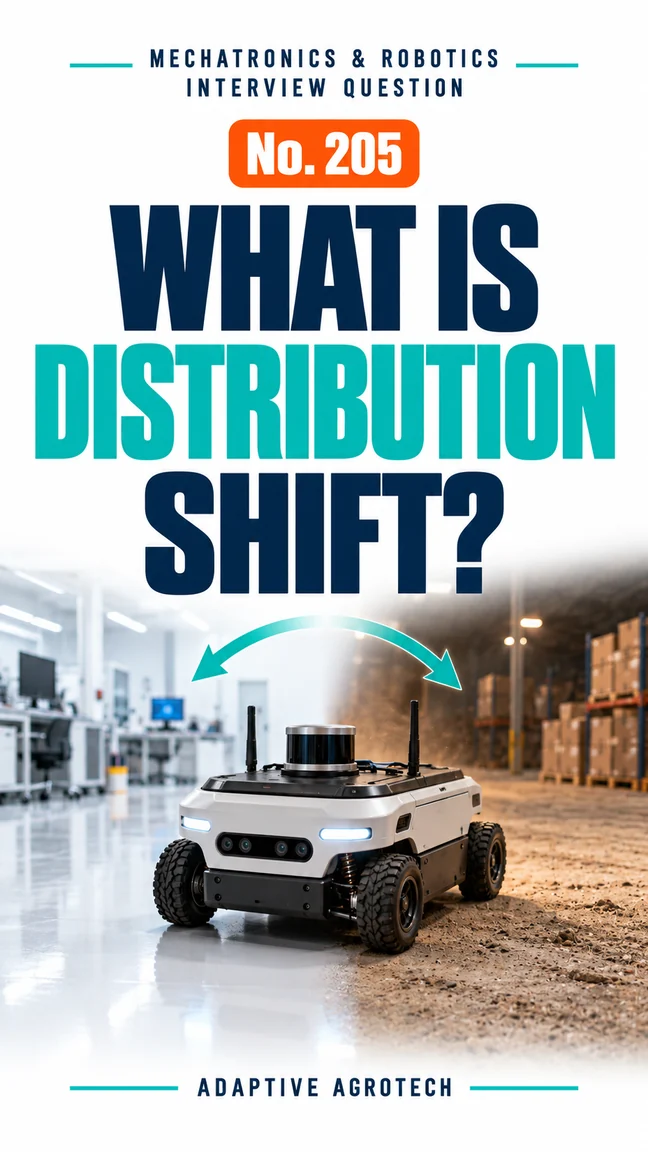
Distribution shift means the data encountered during deployment differ statistically from the training data. A robot vision model trained in one workspace may face new lighting, backgrounds, object appearances, or camera positions after installation.
The key idea
Distribution shift means the data encountered during deployment differ statistically from the training data. A robot vision model trained in one workspace may face new lighting, backgrounds, object appearances, or camera positions after installation.
A detector trained on clean parts under bright light may struggle with oily parts in shadow. The object class has not changed, but the image statistics have. Performance on a random training split may conceal this problem.
Test across the conditions that matter and inspect performance for each condition. More data from the original setup may not cover a new domain. Monitor changes and validate any adaptation before putting it into operation.
What to remember
- Deployment changes can alter the input distribution
- A familiar label can appear under unfamiliar conditions
- Deployment tests must include realistic variations
Check your understanding
Why can a random training-data split hide a deployment problem?
Show the explanation
Train and test samples may share the same familiar conditions. New lighting, surfaces or camera positions require realistic deployment variation tests and condition-specific performance checks.