What Is RANSAC, and Why Do Robots Use It?
RANSAC means random sample consensus. It repeatedly fits a candidate model to small random subsets, then counts measurements that agree within a chosen tolerance. It seeks a model supported by many inliers despite incorrect measurements in the data.
The key idea
RANSAC means random sample consensus. It repeatedly fits a candidate model to small random subsets, then counts measurements that agree within a chosen tolerance. It seeks a model supported by many inliers despite incorrect measurements in the data.
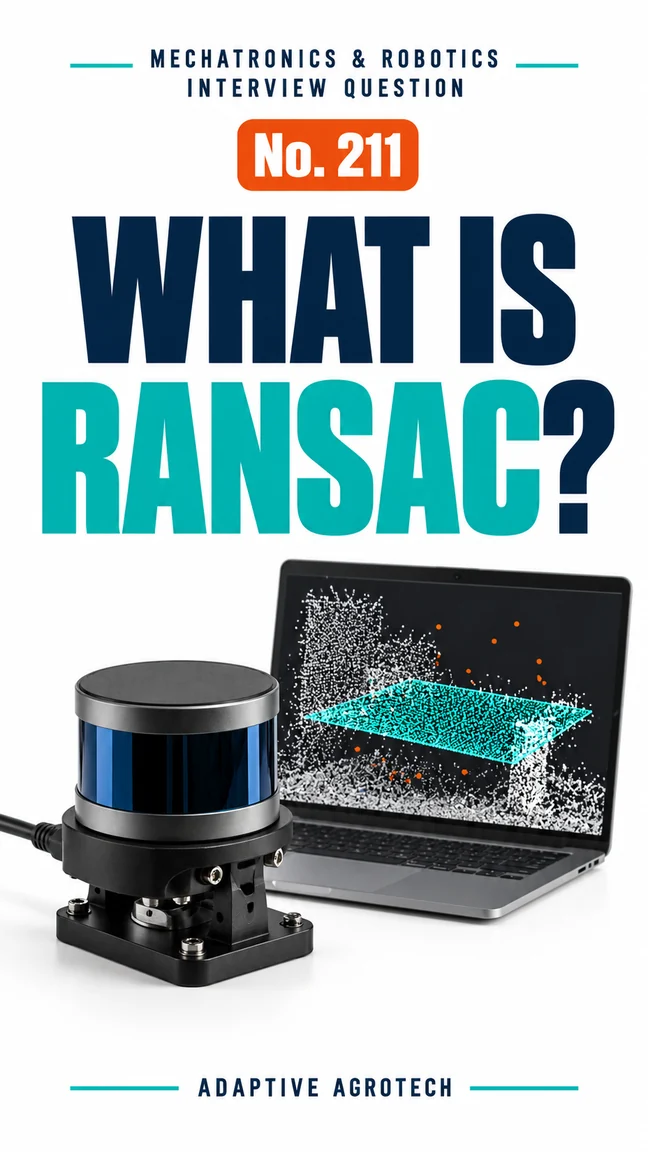
Imagine fitting a wall line to laser points with several false returns. A candidate from two points defines a line. Nearby measurements support it. After enough trials, refit using the selected inliers to improve the estimate.
A loose threshold can accept bad measurements, while a tight one rejects valid noisy data. Success also depends on the inlier fraction and number of trials. RANSAC cannot rescue a model that does not describe the scene.
What to remember
- Sample a model, then count consistent measurements
- Consensus separates supporting points from outliers
- Model, threshold, and trial count all matter
Check your understanding
Why can changing a RANSAC inlier threshold alter the chosen model?
Show the explanation
A loose threshold admits bad measurements, while a tight one rejects valid noisy points. Consensus depends on that tolerance, inlier fraction, trial count and a suitable scene model.