What Is the Difference Between AI Inference Latency and Throughput?
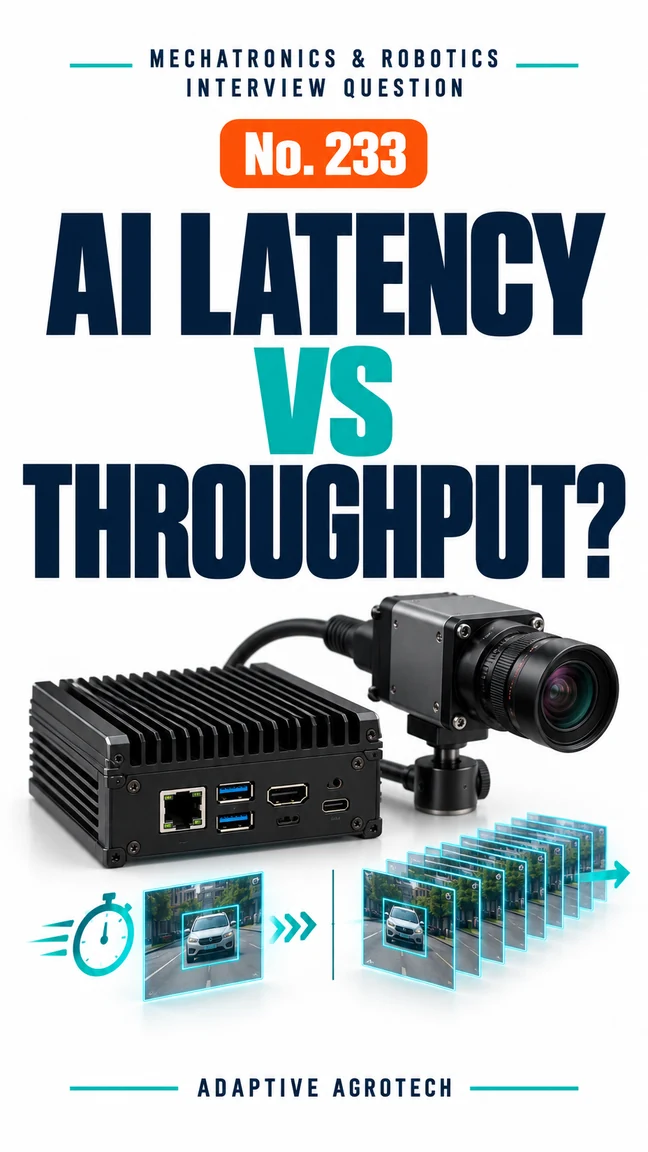
Inference latency is the elapsed time for one request to receive a result. Throughput is how many requests or samples finish per second. A system can have high throughput while individual results arrive late.
The key idea
Inference latency is the elapsed time for one request to receive a result. Throughput is how many requests or samples finish per second. A system can have high throughput while individual results arrive late.
Processing several camera frames together can improve accelerator utilization. But waiting to form a batch adds delay. Here a batch finishes more samples together while the first sample waits longer than in the immediate example.
For a moving robot, a fast stream of old detections can still be unhelpful. Measure capture to decision latency, queueing, and tail delays under realistic load. Keep the time definition consistent when comparing systems.
What to remember
- Latency measures delay; throughput measures completion rate
- Batch waiting can increase an individual frame’s delay
- Measure frame age and delay under realistic load
Check your understanding
How can batching increase throughput while making individual robot results less timely?
Show the explanation
It can improve accelerator utilization but adds time waiting for a batch. Measure capture-to-decision latency, queueing and tail delay as well as completions per second.