
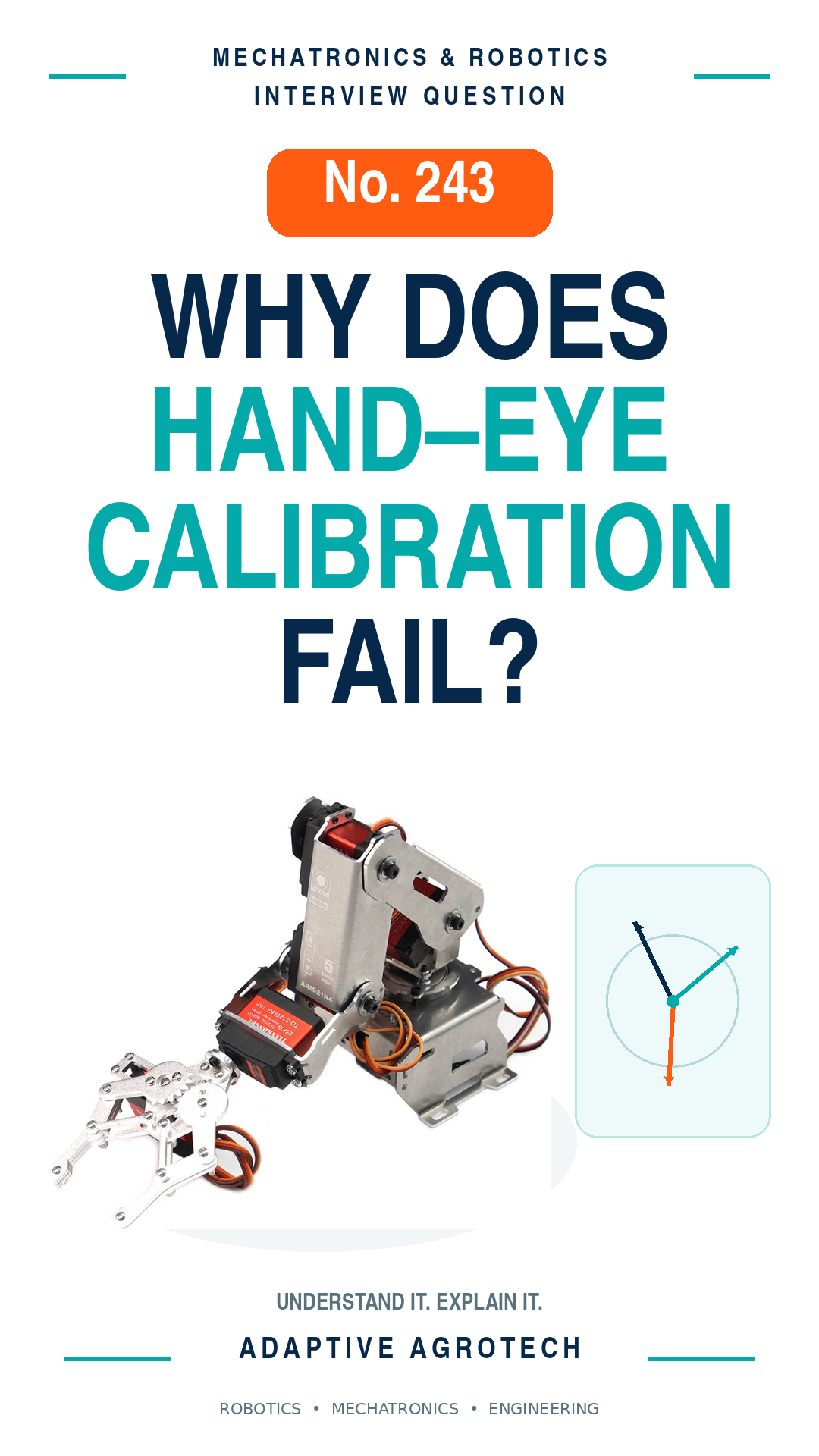
Video by Adaptive AgroTech. If the embedded player is unavailable, open the original video ↗.
Continue exploring
All interview topics →Related topics
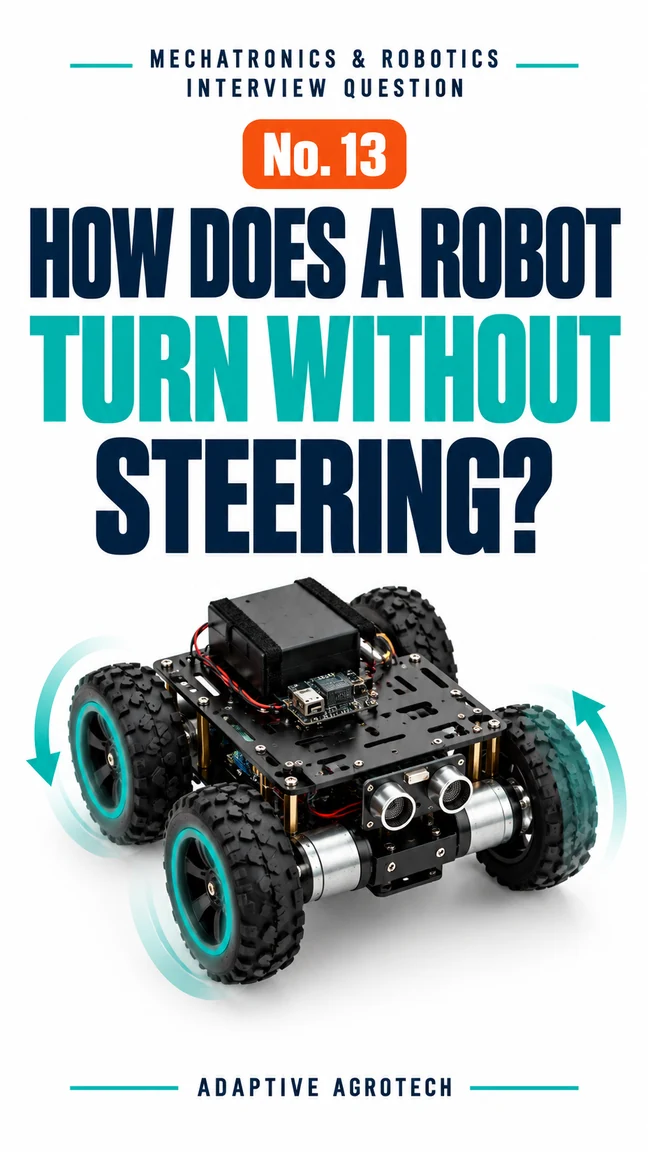
How a Robot Turns Without a Steering Wheel
Differential drive steers by changing the speeds of two independently driven wheels. Their average sets forward motion and their difference sets yaw, with ideal relationships depending on rolling contact and traction.
Watch & explore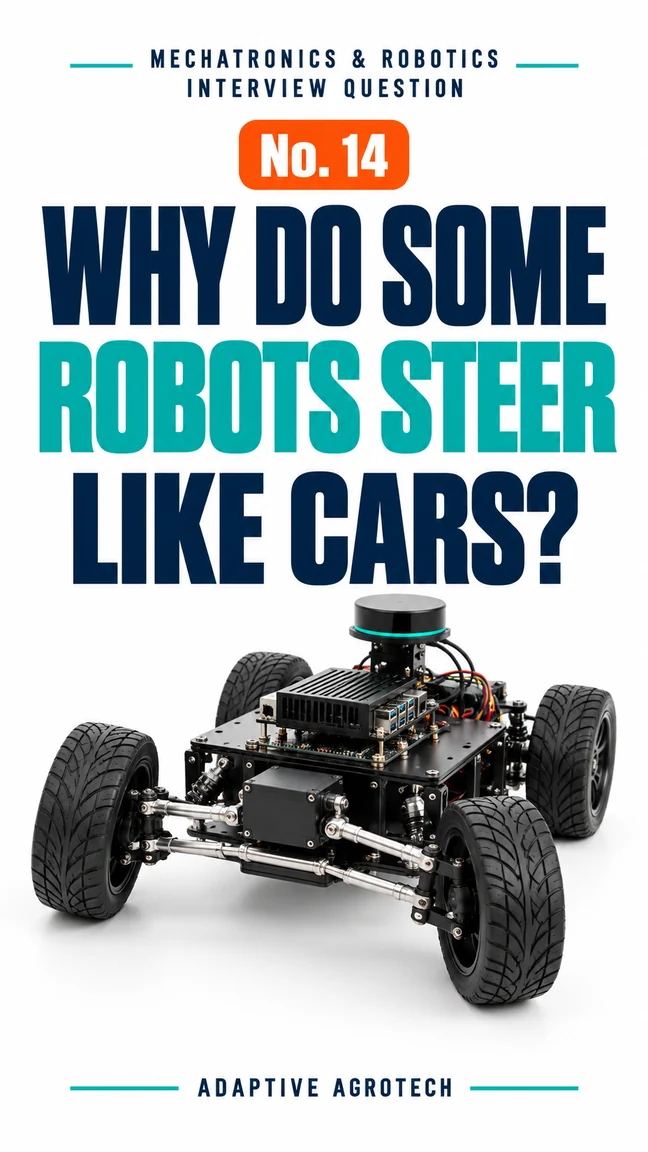
Why Some Robots Steer Like Cars
Car-like steering follows curved rolling paths. Ackermann geometry turns the inside wheel more sharply, while wheelbase and steering limits determine turning radius and constrain the manoeuvres a planner can request.
Watch & explore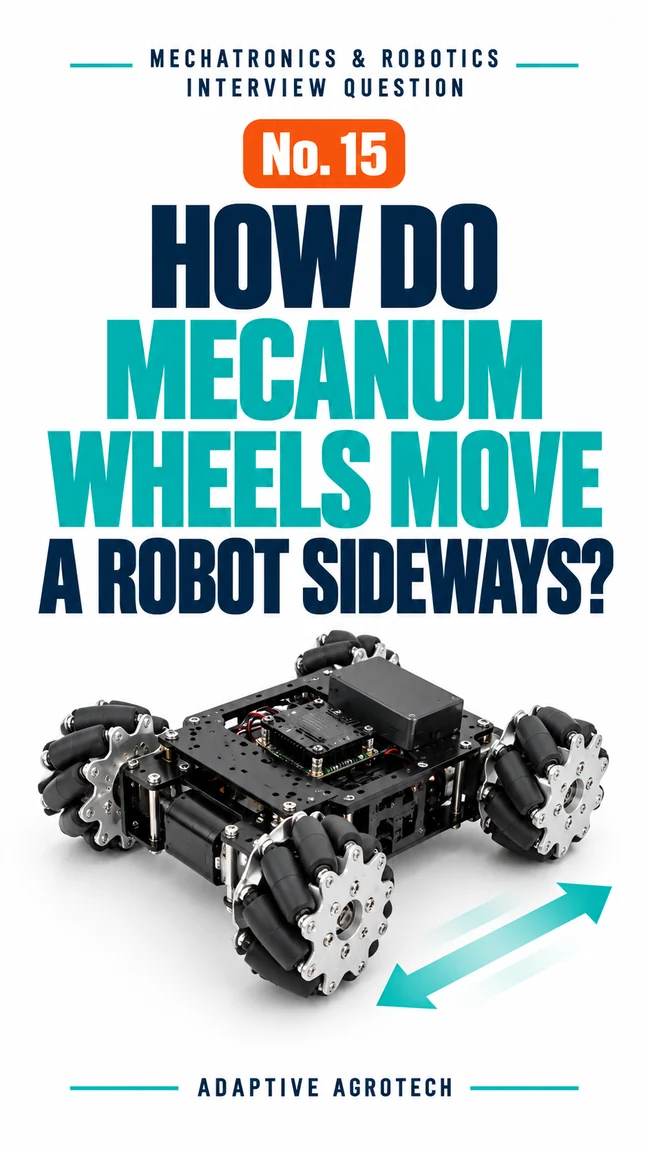
How Mecanum Wheels Let a Robot Move Sideways
Mecanum wheels use angled passive rollers to combine forward, sideways, and rotational motion. Correct wheel placement and coordinated speeds enable lateral travel, while traction and consistent floor contact limit accuracy.
Watch & explore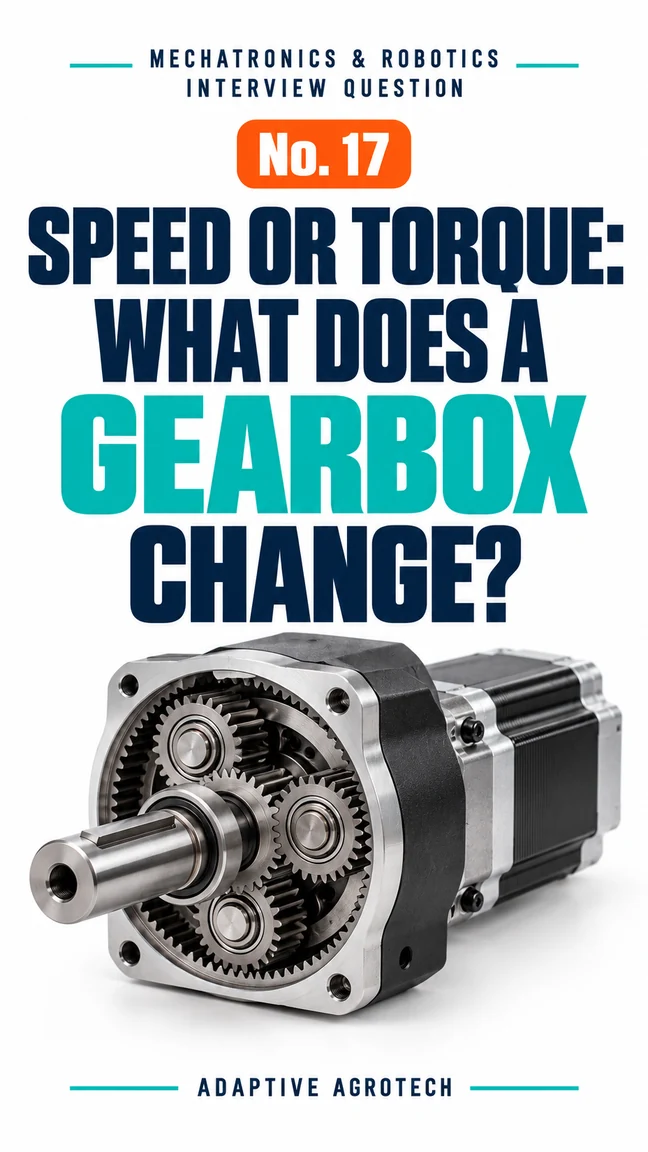
Speed or Torque? What a Robot’s Gearbox Changes
A reduction gearbox trades motor speed for output torque, with efficiency reducing the ideal torque gain. Wheel radius, gearbox limits, and backlash determine how that operating point translates into useful robot motion.
Watch & explore