
Video by Adaptive AgroTech. If the embedded player is unavailable, open the original video ↗.
Continue exploring
All interview topics →Related topics
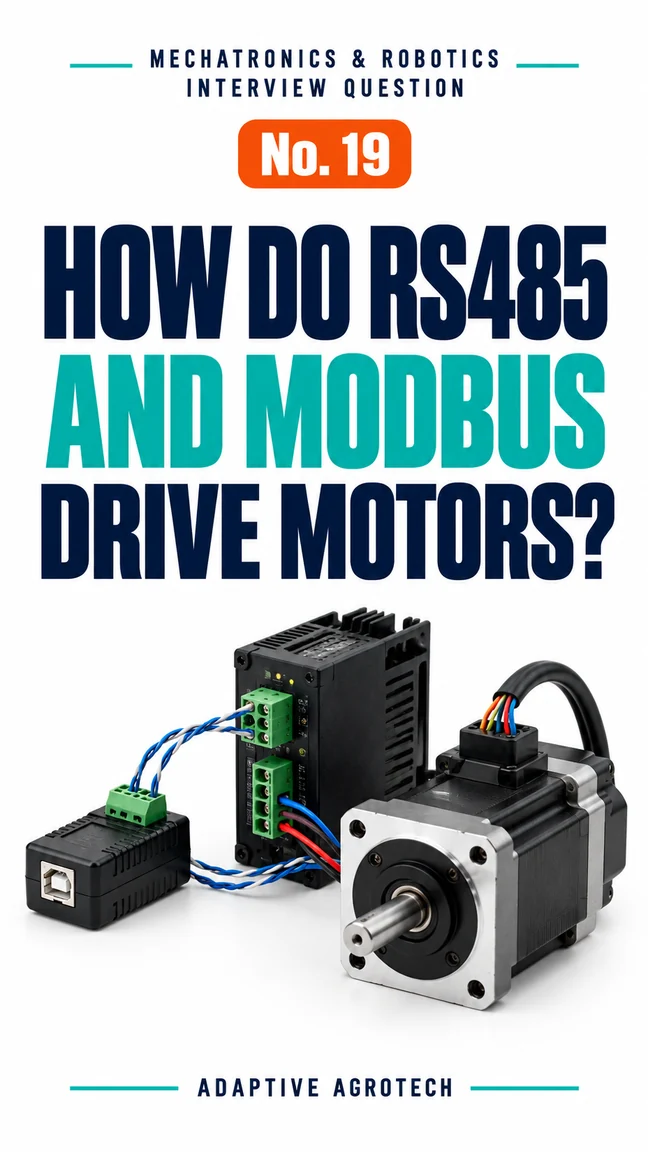
How RS485 and Modbus Connect a Robot to Its Motors
RS485 provides differential electrical communication, while Modbus RTU defines addressed transactions. Motor commands require the correct register map and scaling, feedback verification, and a defined response when communication fails.
Watch & explore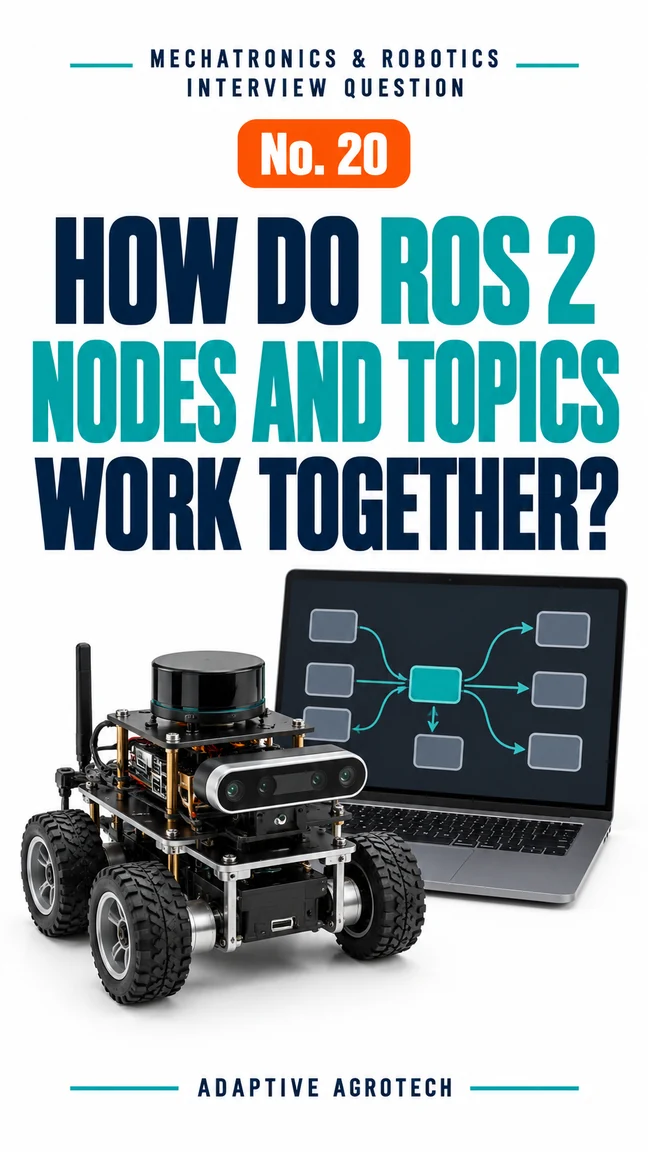
How ROS 2 Nodes and Topics Work Together
ROS 2 nodes exchange typed streams through topics, allowing one publisher to serve multiple subscribers. Hardware interfaces turn velocity messages into motor communication, and discovery and delivery settings determine whether messages arrive.
Watch & explore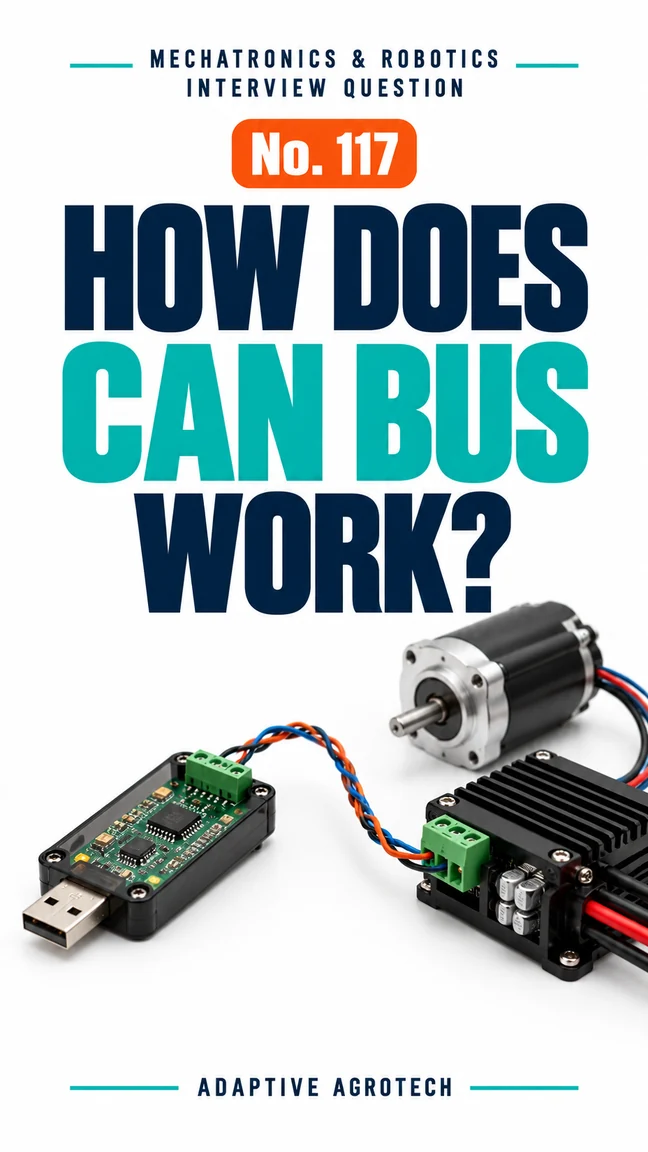
What is CAN Bus?
CAN links multiple electronic control units through a shared message bus. Frame identifiers support priority and data selection, while delivery checks still need application feedback and stale-command supervision to confirm robot behavior.
Watch & explore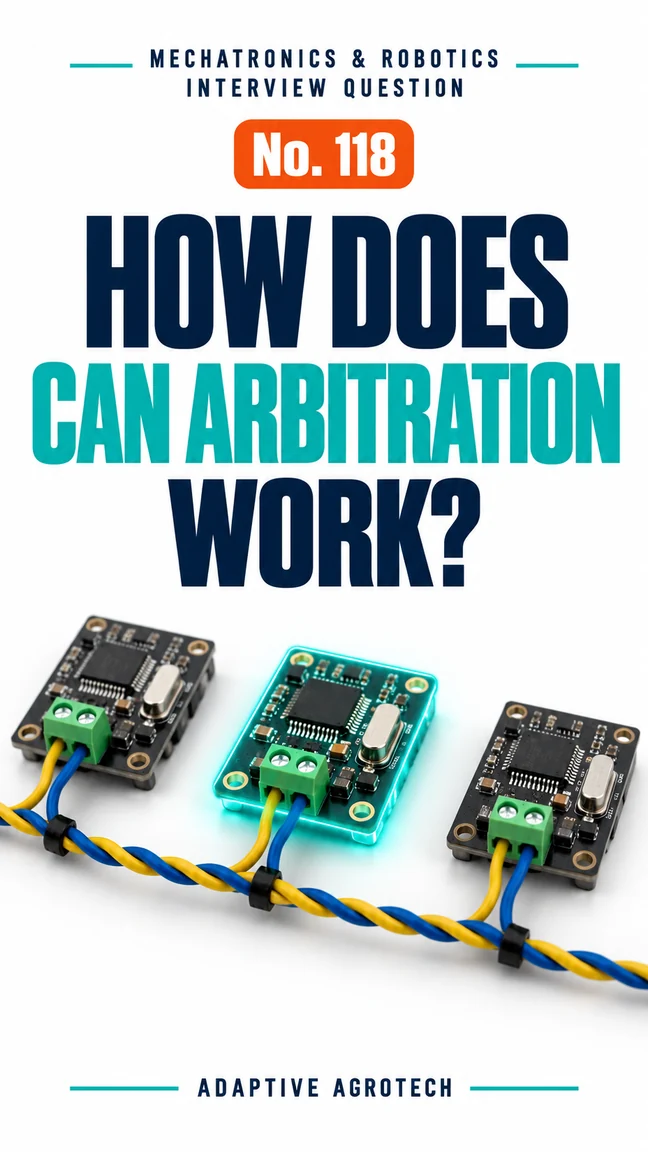
What is CAN Bus Arbitration?
CAN arbitration resolves simultaneous transmissions while preserving the winning frame. Senders compare transmitted and observed identifier bits; dominant zero wins over recessive one, giving lower identifiers higher priority for equal frame formats.
Watch & explore