
Video by Adaptive AgroTech. If the embedded player is unavailable, open the original video ↗.
Continue exploring
All interview topics →Related topics
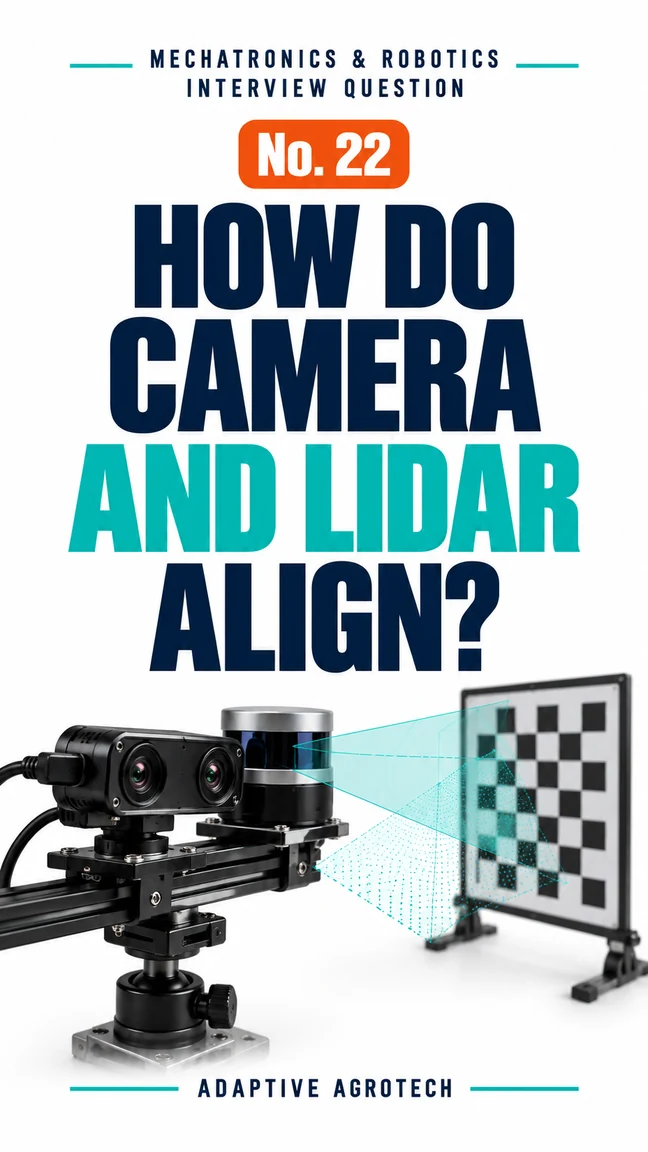
How Camera–LiDAR Calibration Aligns Two Sensors
Camera–LiDAR alignment needs calibrated rotation and translation plus camera projection geometry. Independent validation checks spatial alignment, while synchronization remains a separate requirement whenever the robot or scene moves.
Watch & explore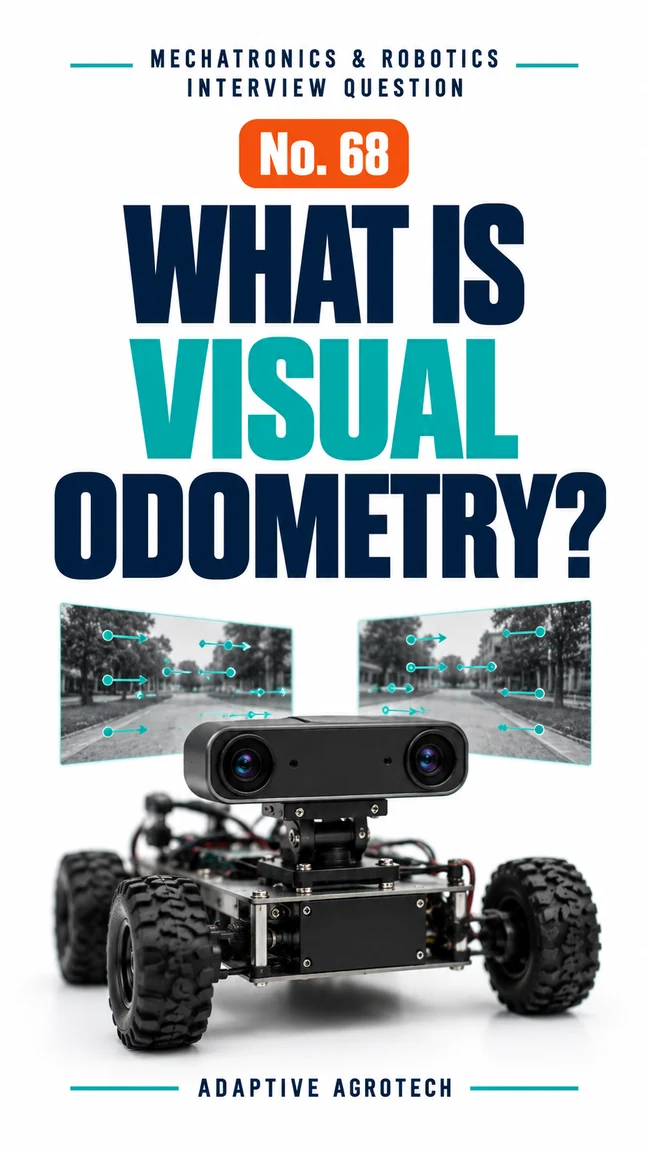
What is Visual Odometry?
Visual odometry estimates relative camera motion from image sequences. Feature or brightness changes constrain geometry, stereo provides metric depth, and monocular scale ambiguity and tracking failures limit its long-term position estimate.
Watch & explore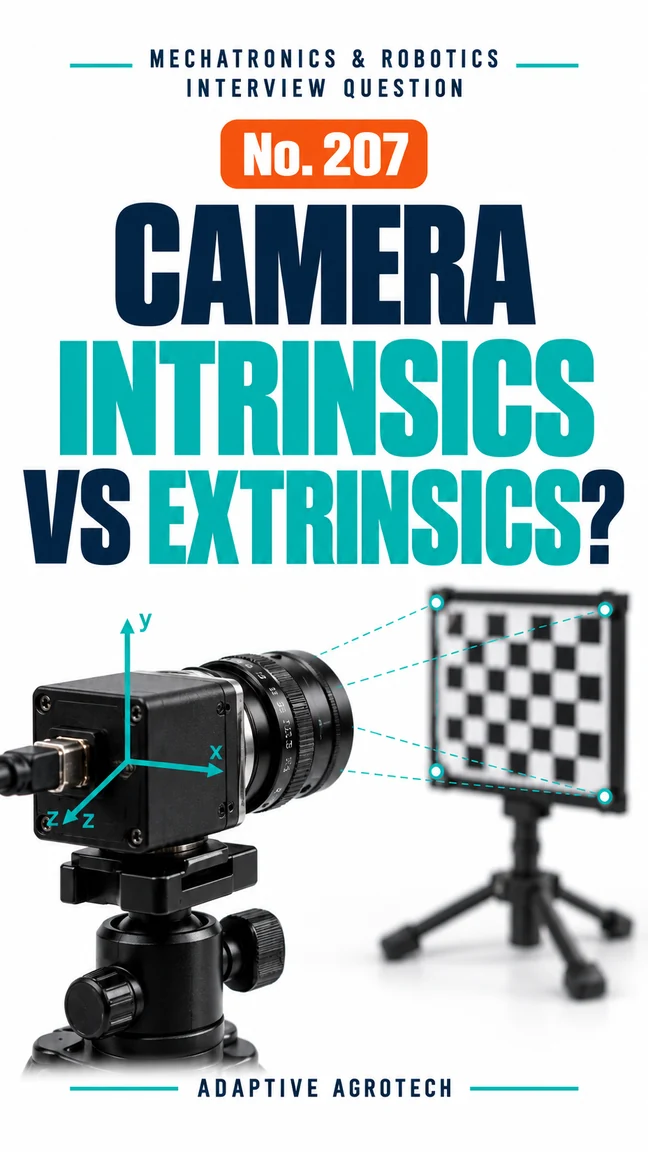
What Is the Difference Between Camera Intrinsics and Extrinsics?
Camera intrinsics describe how camera coordinates project into image pixels. Focal lengths and the principal point belong to this model. Extrinsics describe the rotation and translation between the camera frame and another coordinate frame.
Watch & explore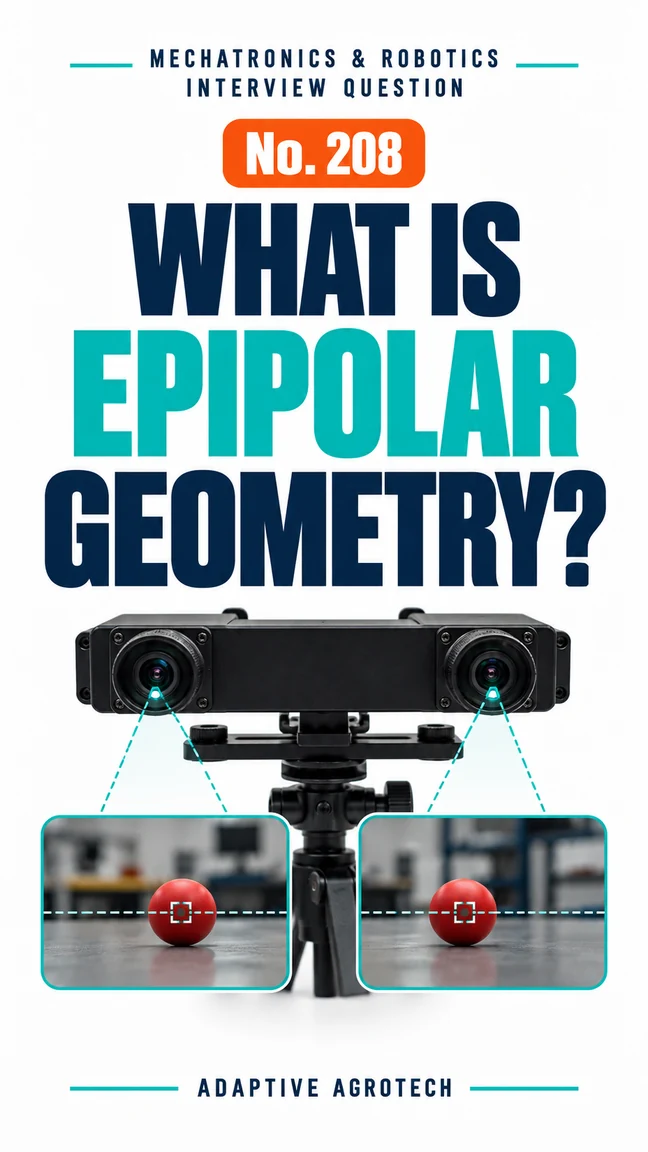
What Is Epipolar Geometry?
Epipolar geometry relates two views of the same three dimensional scene. Given a point in one image, its matching point in the other image lies on an epipolar line, when the camera geometry and correspondence assumptions hold.
Watch & explore