
Video by Adaptive AgroTech. If the embedded player is unavailable, open the original video ↗.
Continue exploring
All interview topics →Related topics
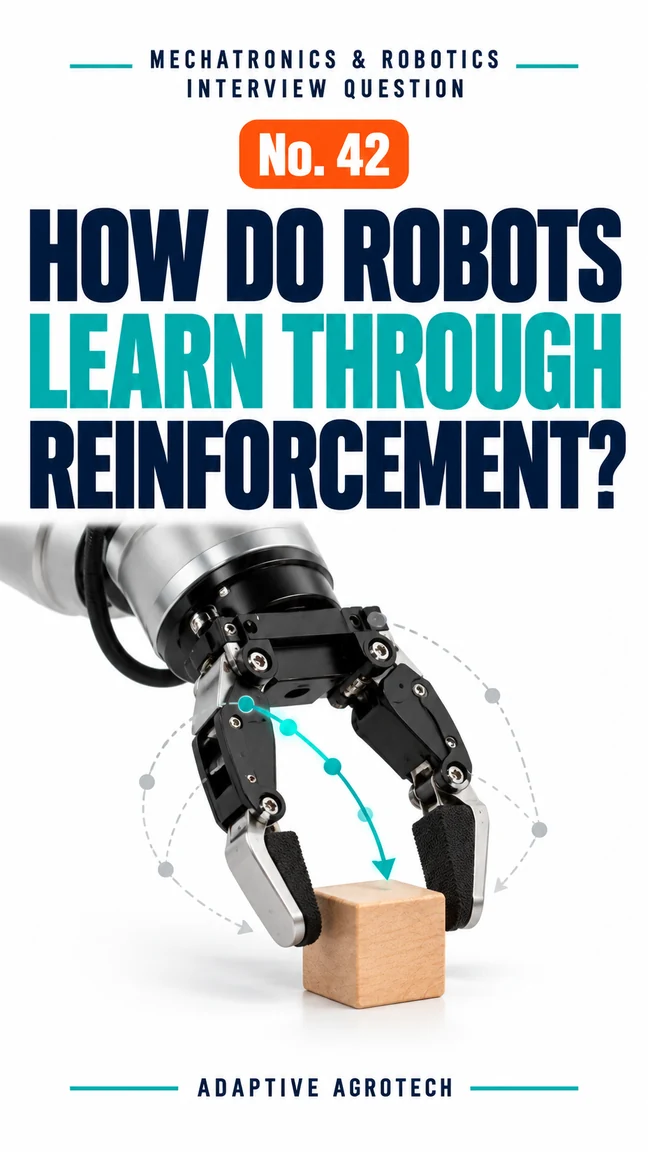
What is Reinforcement Learning for Robot Control?
Reinforcement learning trains a policy to choose actions for expected total reward. Reward design shapes robot behavior, but successful simulation training still requires validation of delays, model mismatch, and hardware action limits.
Watch & explore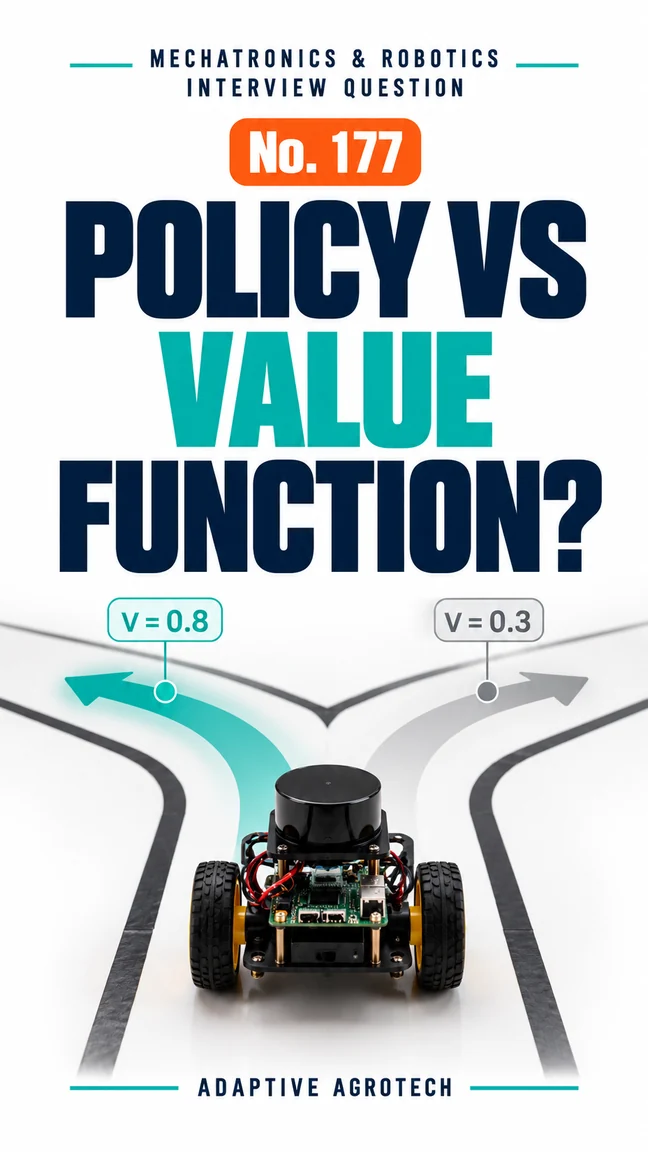
What Is the Difference Between a Policy and a Value Function?
A policy tells a robot how to choose an action from its observation or state. A value function estimates the expected discounted return when the robot follows a particular policy.
Watch & explore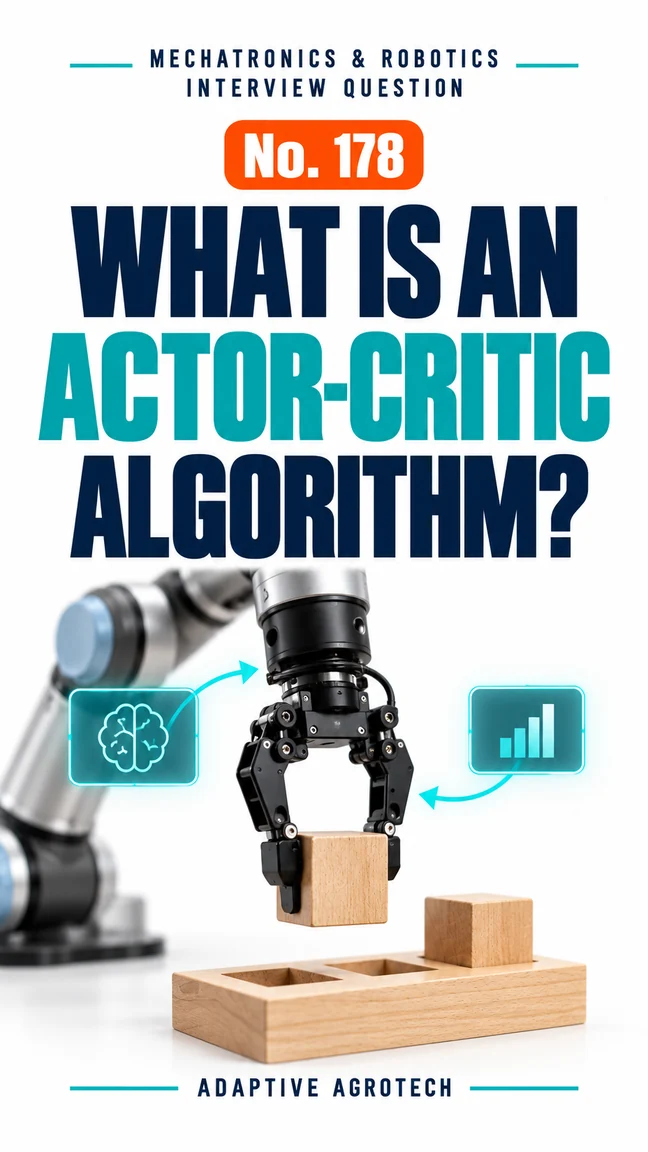
What Is an Actor–Critic Algorithm?
An actor critic algorithm learns a policy and a value estimate together. The actor selects actions. The critic evaluates expected return and provides a learning signal that helps improve the actor.
Watch & explore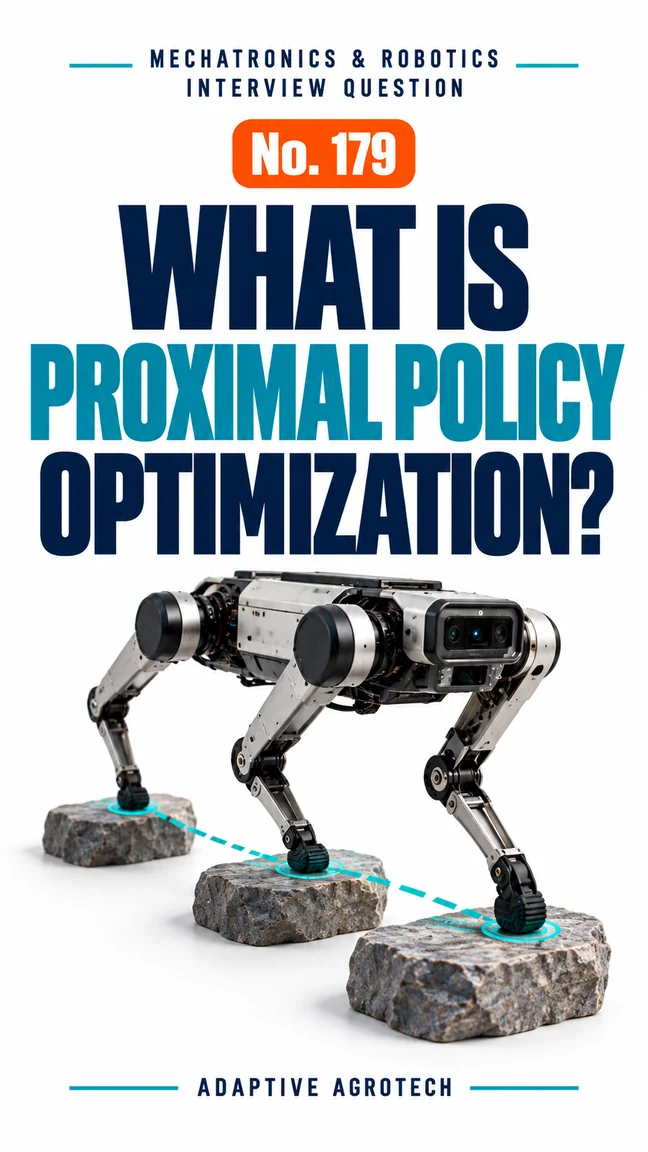
What Is Proximal Policy Optimization, or PPO?
PPO means proximal policy optimization. Its common clipped version improves a stochastic policy using recent experience. A probability ratio compares how likely an action is under the new and old policies.
Watch & explore