What Is a Zero-Order Hold?
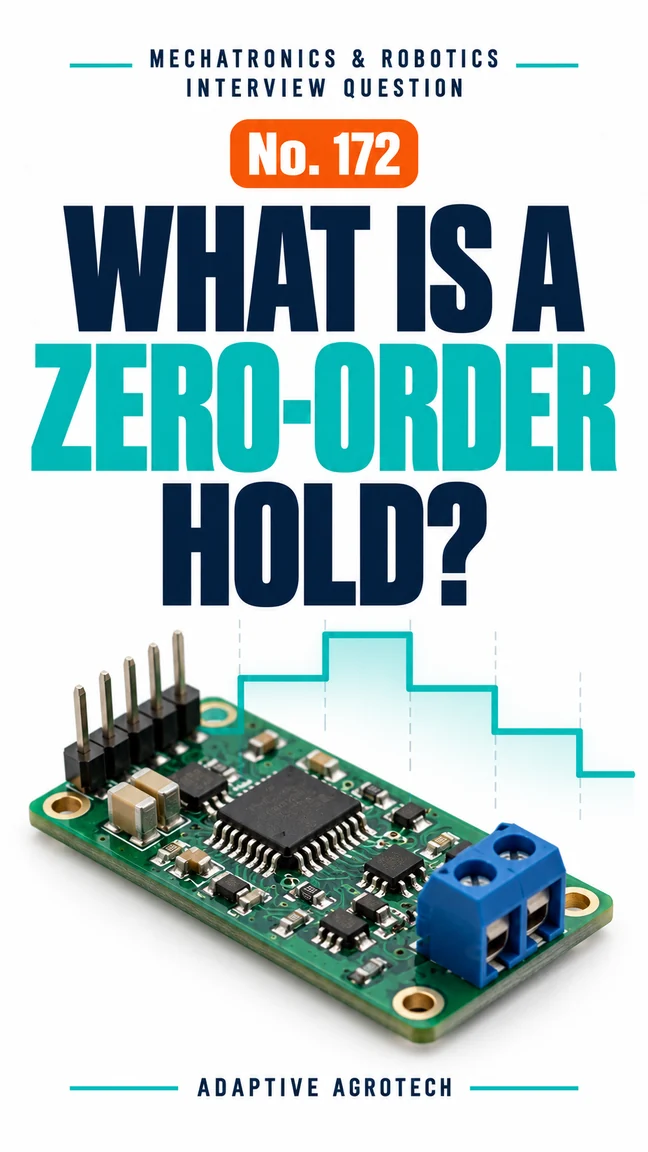
A zero order hold keeps each sampled command constant until the next update. Its output is a staircase. It does not draw a straight line between samples or predict the next command.
Watch & exploreExplore one engineering idea at a time. Watch a short lesson, read the key concepts and test your understanding before your next interview, project or class.
Video · Key ideas · Check your understanding
A zero order hold keeps each sampled command constant until the next update. Its output is a staircase. It does not draw a straight line between samples or predict the next command.
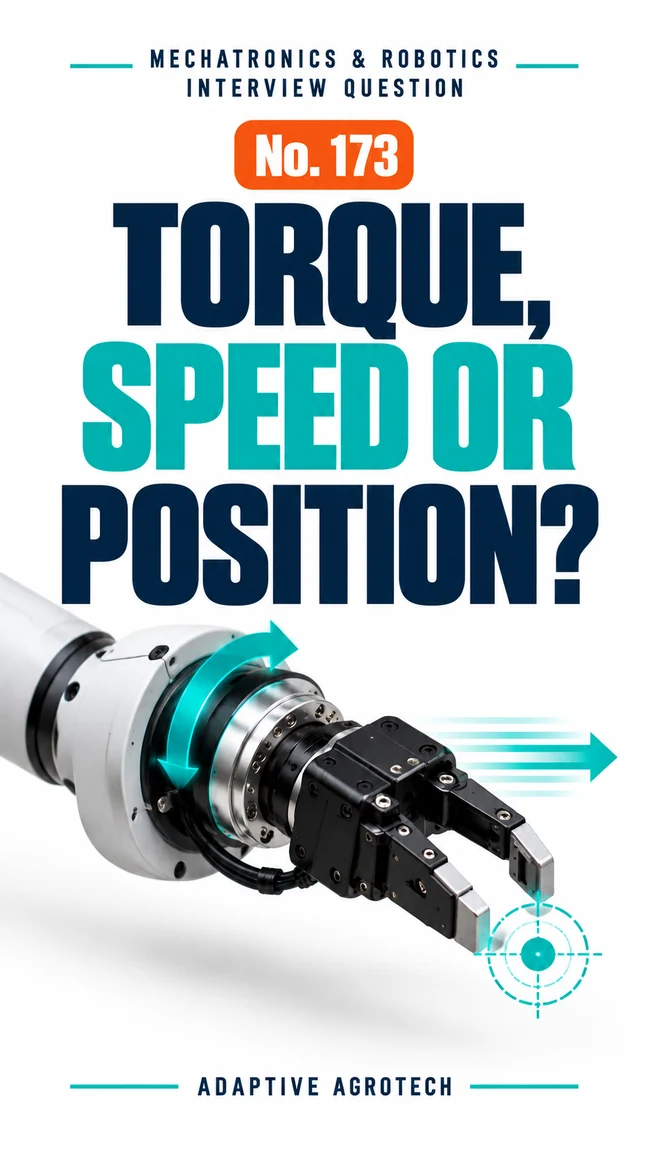
Watch & exploreTorque, velocity, and position control regulate different quantities. Torque control targets joint effort. Velocity control targets motion rate. Position control targets a joint angle or location, normally using lower level effort control internally.
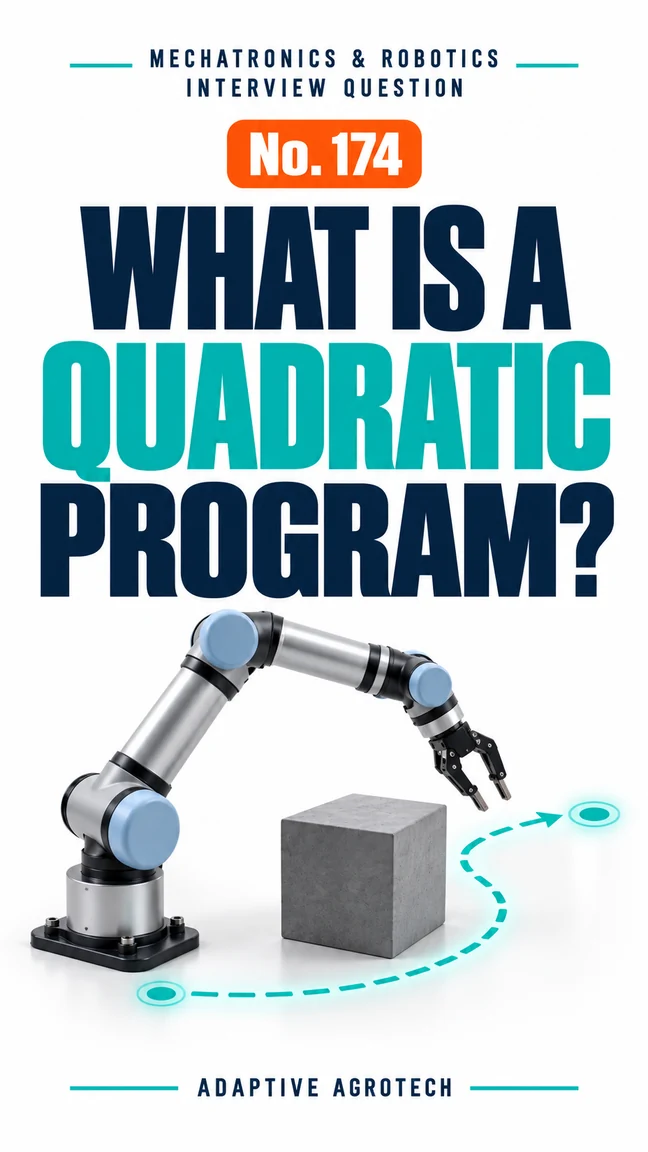
Watch & exploreA quadratic program minimizes a quadratic objective subject to linear constraints. In a convex quadratic program, the cost matrix is positive semidefinite. This structure lets a controller balance tracking against limits in a systematic calculation.
Watch & exploreA water-leak controller can drive a motorized valve closed and keep the system tripped until someone rearms it.
Watch & exploreRain detection can request closure of a greenhouse vent. A limit switch can indicate the end of travel, while a latch retains the close request.
Watch & exploreA separate high-level float can interrupt tank filling if the normal level control fails. A latched trip keeps the fill command disabled after the surface drops below the float.
Watch & exploreA joystick supplies two analog commands for pan and tilt. The ESP32 reads each axis and sends the corresponding servo pulse settings to a PCA9685 over I²C.
Watch & exploreA conveyor checkweigher needs a stable weight reading and a way to associate the result with the item that reaches the reject station.
Watch & exploreA Pico and DRV8825 can move a stepper axis toward a home switch to establish a repeatable position reference.
Watch & exploreA PLC can detect a possible motor jam from sustained overcurrent and latch a trip until an operator resets it.
Watch & exploreEncoder feedback lets an Arduino compare measured motor speed with the target and adjust drive after a load change.
Watch & exploreAn Arduino and a PLC can both send step and direction commands to a suitable drive. Using the same NEMA 17 motor makes the controller’s role easier to isolate.
Watch & exploreAn Arduino can provide a speed request through a suitable 0–10 V interface to a variable-frequency drive. The drive supplies and controls the AC motor that turns the fan.
Watch & explore