Skip to content
Adaptive AgroTech NetworkUniversity of Southern Denmark · SDU Drone Center
Robotics · Mechatronics · Intelligent systems

Short videos.
Lasting understanding.

Explore one engineering idea at a time. Watch a short lesson, read the key concepts and test your understanding before your next interview, project or class.

196 topics found

Video · Key ideas · Check your understanding

Embedded electronicsNo. 018

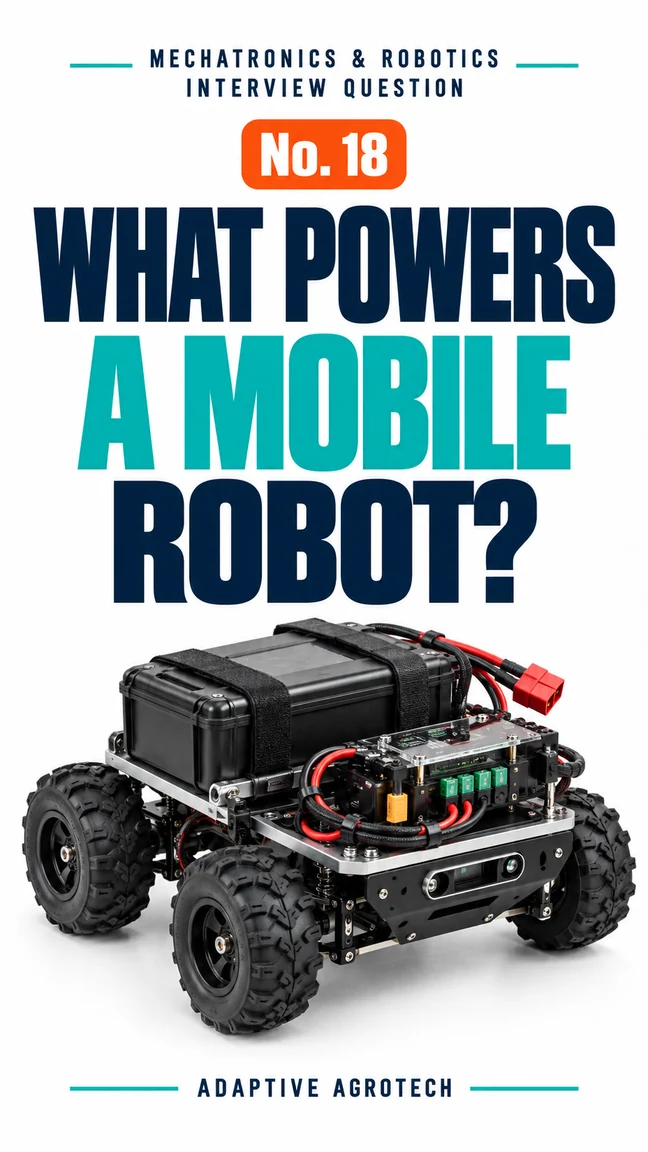
What Powers a Mobile Robot?

Reliable robot power depends on compatible voltage, usable energy, protection, and peak current. Runtime follows average demand, while motor surges and voltage drop can interrupt operation despite remaining battery capacity.

Watch & explore
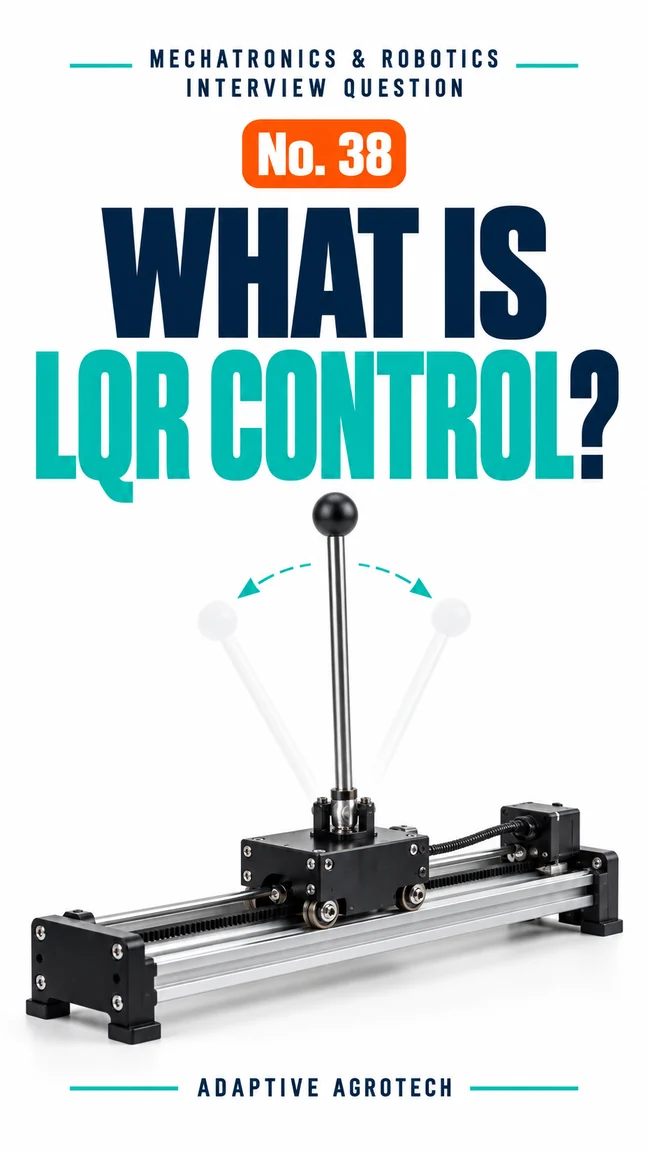
Control systemsNo. 038

What is LQR?

LQR chooses state-feedback gains that balance state error against control effort in a linear model. Cost weights shape behavior, while the basic regulator does not impose hard actuator constraints or eliminate model error.

Watch & explore
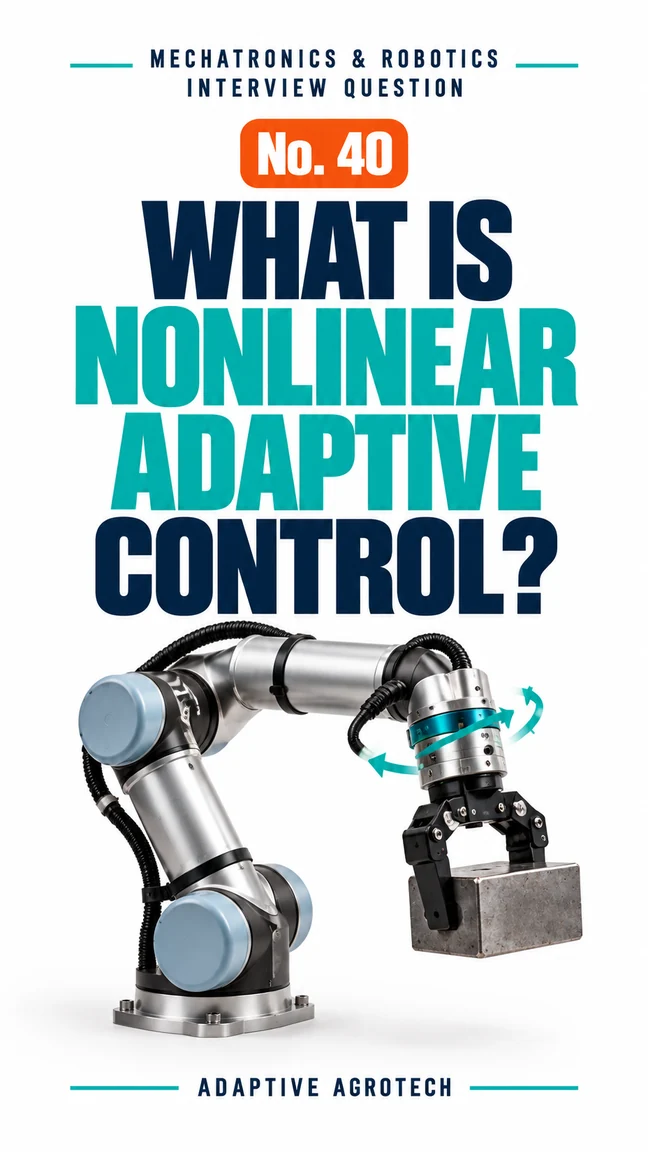
Control systemsNo. 040

What is Nonlinear Adaptive Control?

Nonlinear adaptive control combines a nonlinear law with parameter updates. Tracking error can adjust estimated payload or friction, but successful tracking does not alone establish convergence to the true physical parameters.

Watch & explore
Control systemsNo. 041

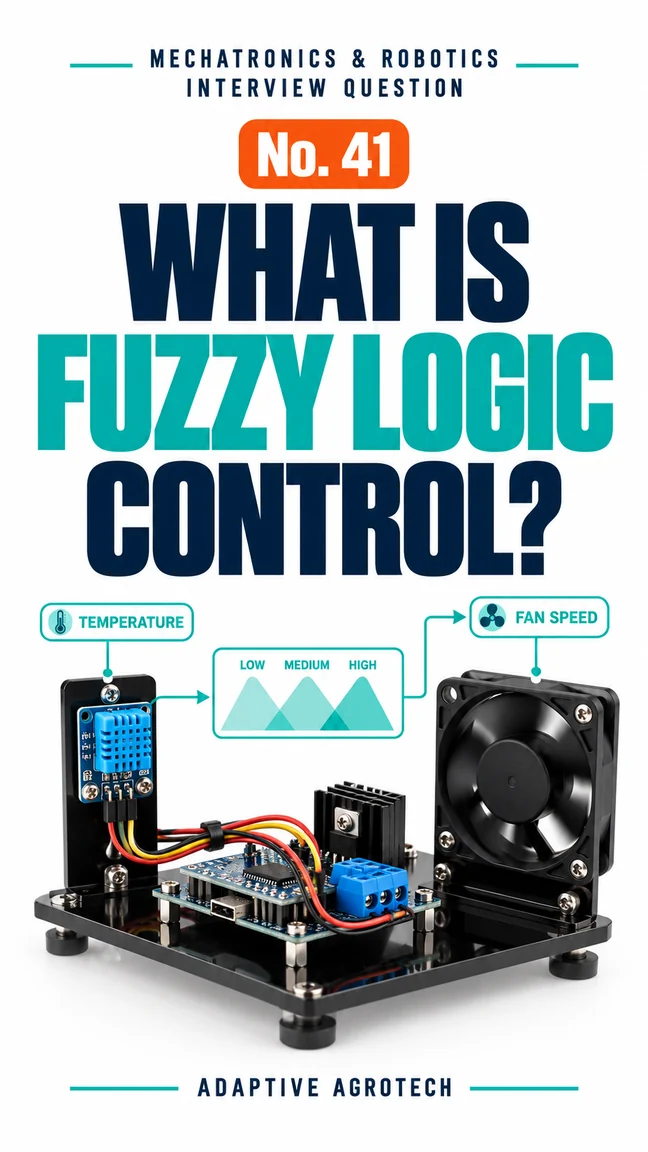
What is Fuzzy Logic Control?

Fuzzy logic turns overlapping linguistic rules into a numeric control command. Multiple memberships can activate rules together, encoding practical knowledge while still requiring stability and operating-range validation under real disturbances and limits.

Watch & explore
Control systemsNo. 043

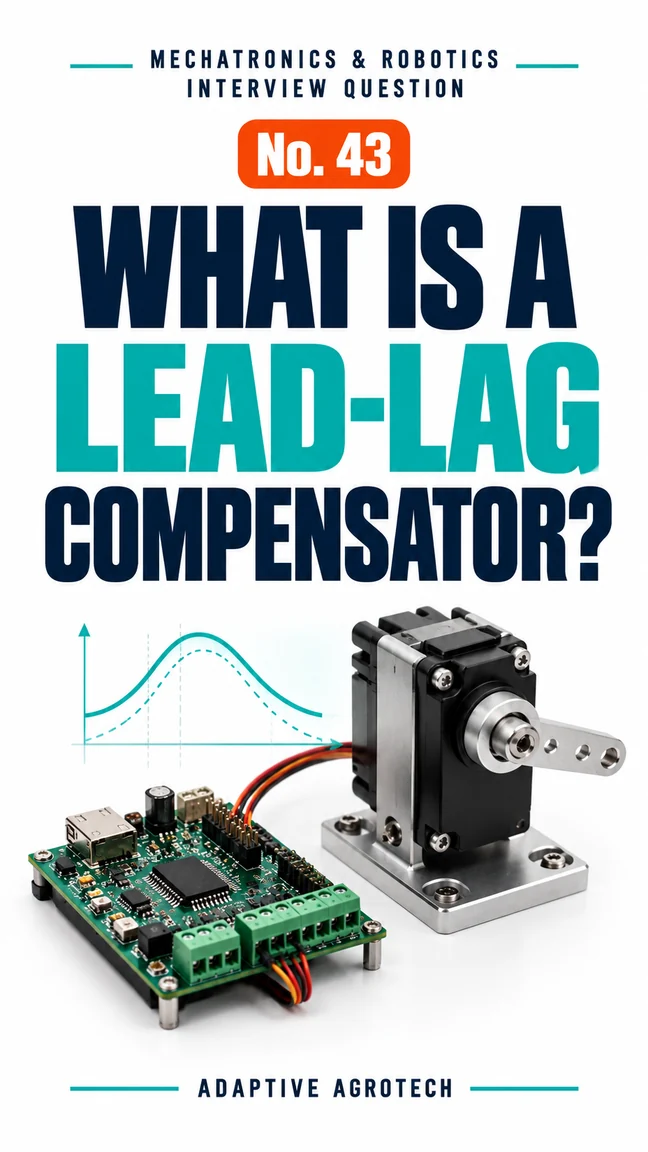
What is a Lead-Lag Compensator?

A lead-lag compensator shapes a servo's frequency response through coordinated filters. Lead adds phase and lag improves relative low-frequency gain, with combined stability margins and noise sensitivity determining the final design.

Watch & explore
Control systemsNo. 045

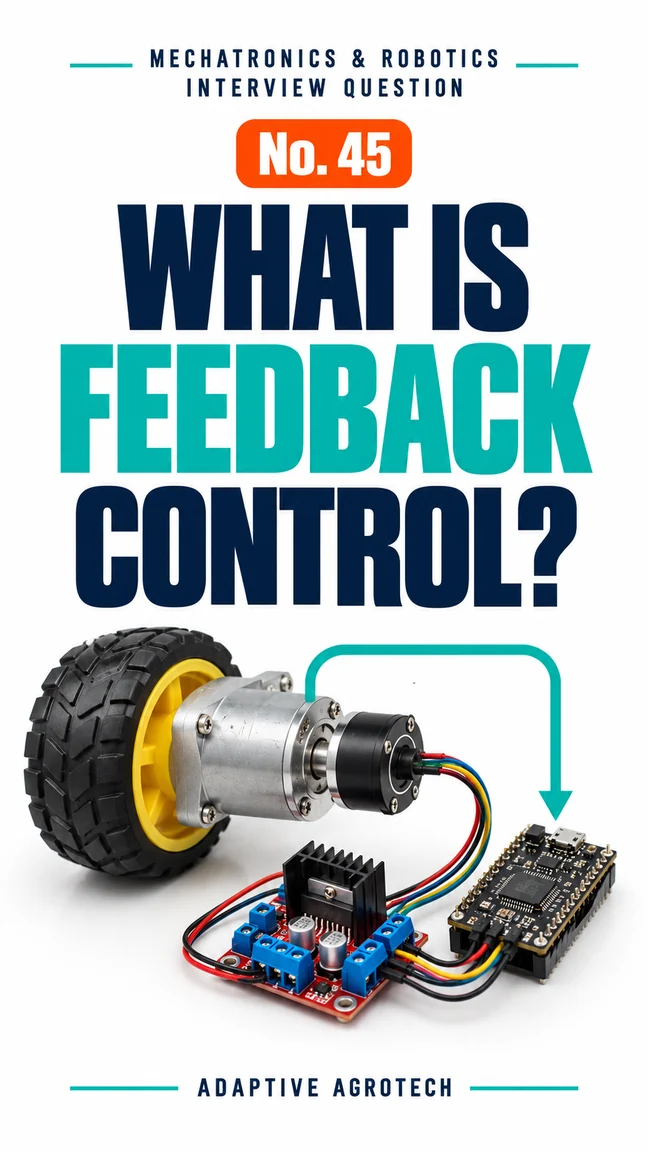
What is Feedback Control?

Feedback compares measured robot behavior with a target and changes the next command to reduce error. It can reject changing loads, while excessive gain, sensor noise, or timing delay can instead produce oscillation.

Watch & explore
Control systemsNo. 046

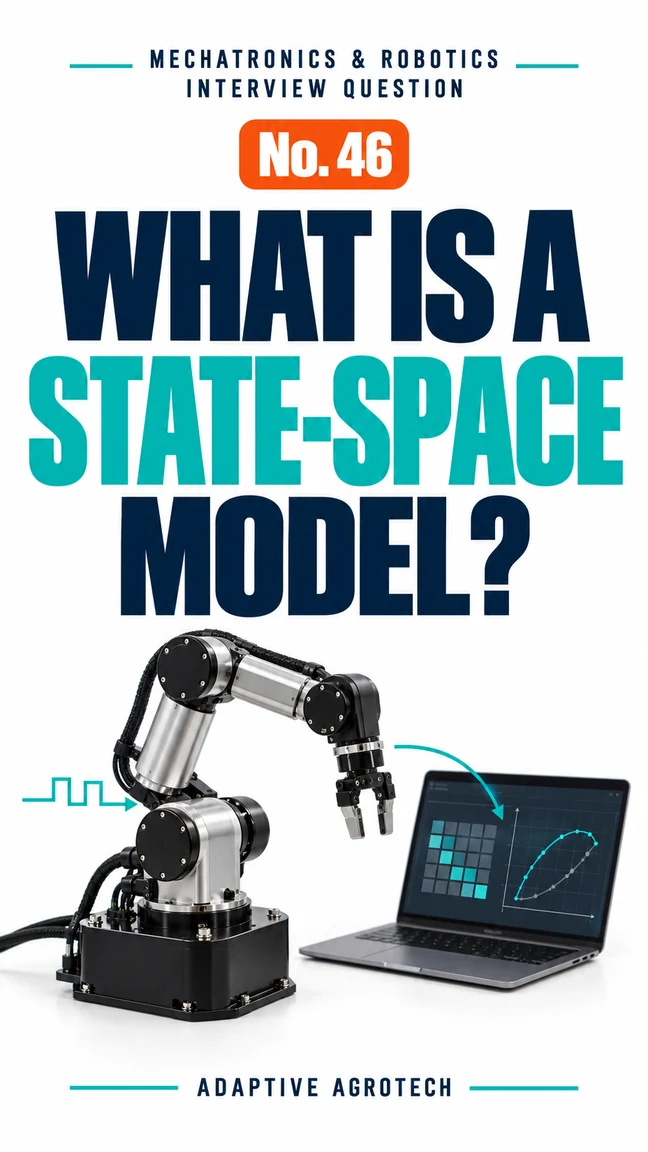
What is a State-Space Model?

A state-space model organizes internal states, inputs, and outputs to predict dynamics. Motor speed and current provide one example, while nonlinear robots may require nonlinear equations or locally valid linear approximations.

Watch & explore
Control systemsNo. 047

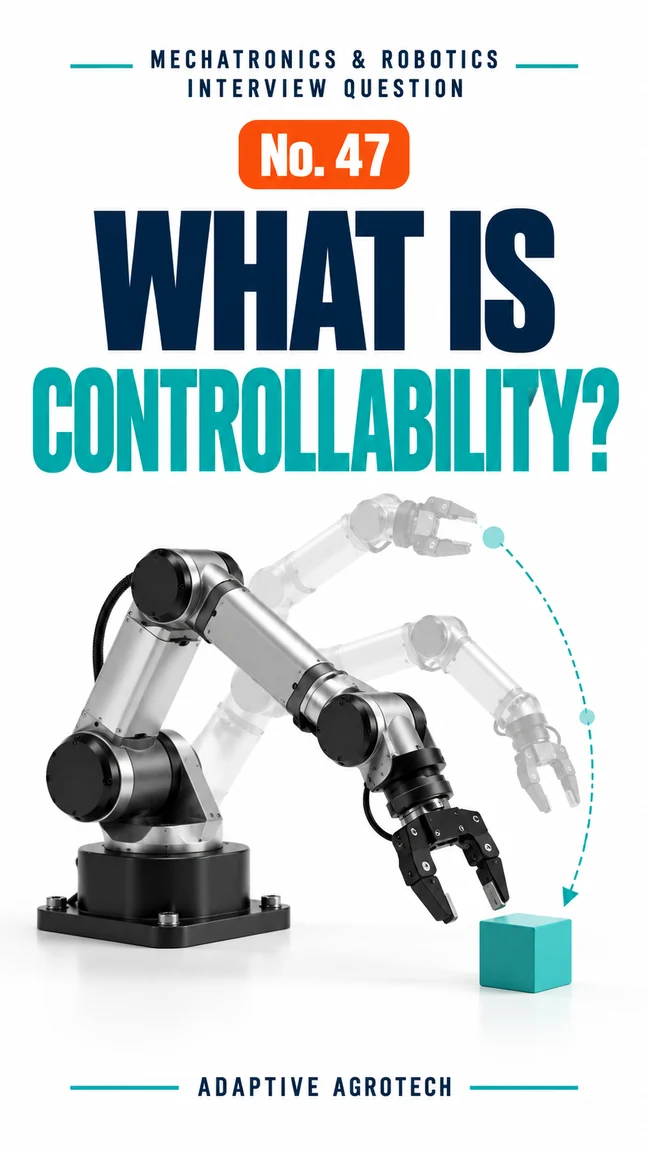
What is Controllability?

Controllability asks whether modeled inputs can move a system between arbitrary states in finite time. A full-rank linear test addresses mathematical actuation, while physical torque limits can still restrict real reachability.

Watch & explore