Why Does Transform Order Change a Robot’s Pose?
Rotations change the directions of a frame’s axes. A translation expressed in those axes can therefore produce different final positions depending on when the rotation occurs.
The key idea
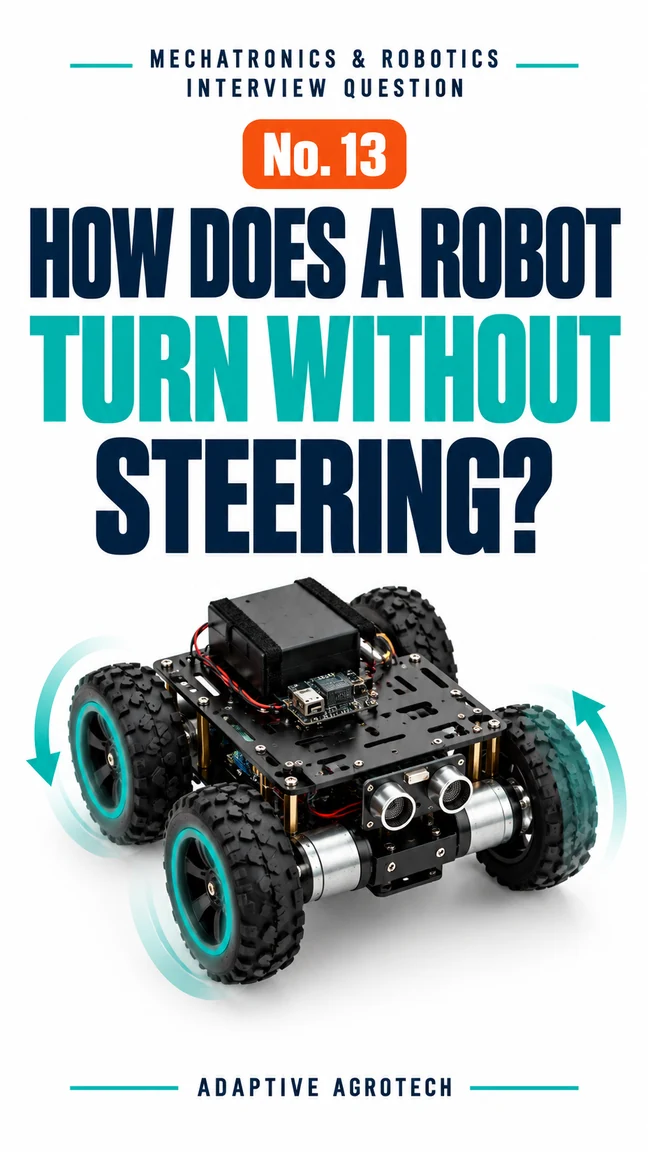
Imagine a mobile robot turning left and then moving forward. Moving forward first and turning left afterward leaves it at a different point, even though the two motions have the same magnitudes.
What to remember
- Label the reference frame for each translation and rotation.
- Compose transforms in the order implied by the frame chain.
Check your understanding
After a 90-degree turn, where does a forward motion take the robot?
Show the explanation
Along its new heading, which is perpendicular to the original forward direction.