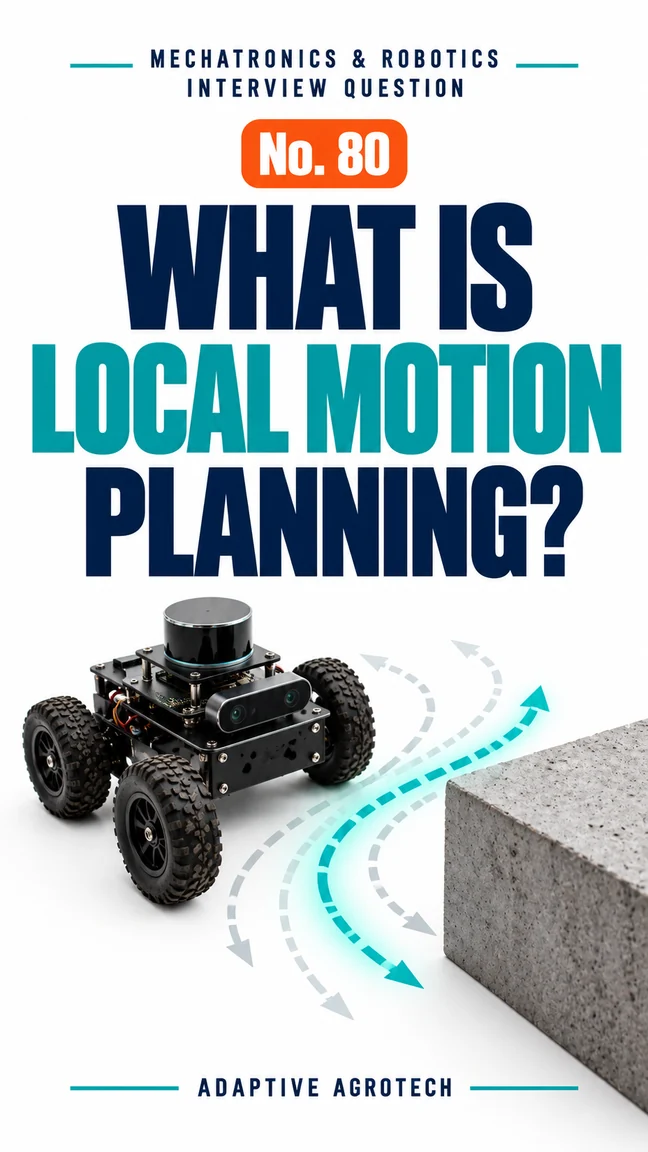
What is Local Motion Planning?
Local planning chooses feasible near-term motion using recent sensing, route guidance, and robot limits. Repeated updates handle nearby changes, while short-horizon traps and unavailable safe motion require global guidance and stopping.
The key idea
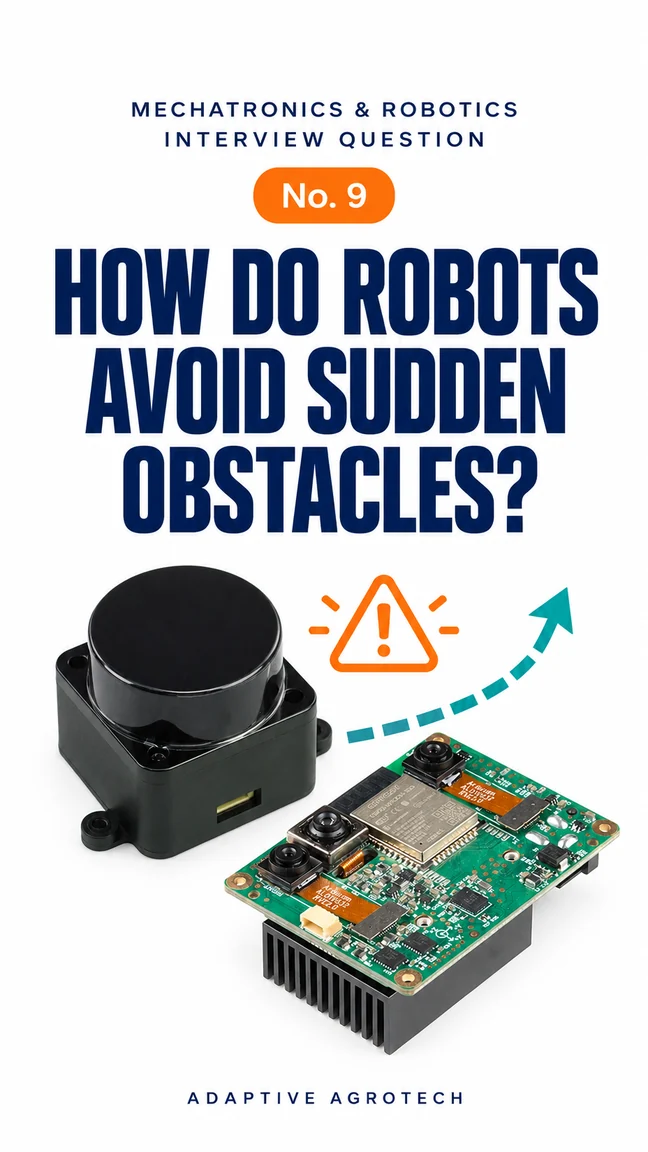
Local motion planning decides what the robot should do next near its current pose. It combines recent sensor data, a guiding route, and motion limits to select a feasible short trajectory. If a person enters a warehouse aisle, the global route can remain useful while the local planner slows the robot or chooses an avoidance arc. This decision is repeated as fresh observations arrive. A short view can still lead into traps, so local decisions need broader route guidance. When no valid motion is available, the appropriate response is a safe stop rather than forcing progress.
What to remember
- Recent observations and motion limits shape short trajectories.
- Local responses can adapt without discarding a useful global route.
- No valid motion calls for a safe stop.
Check your understanding
Can local planning respond to an obstacle while retaining the global route?
Show the explanation
Yes. It can slow or choose a short avoidance trajectory while the wider route remains useful.