Skip to content
Adaptive AgroTech NetworkUniversity of Southern Denmark · SDU Drone Center
Robotics · Mechatronics · Intelligent systems

Short videos.
Lasting understanding.

Explore one engineering idea at a time. Watch a short lesson, read the key concepts and test your understanding before your next interview, project or class.

25 topics to explore

Video · Key ideas · Check your understanding

Motion planningNo. 077

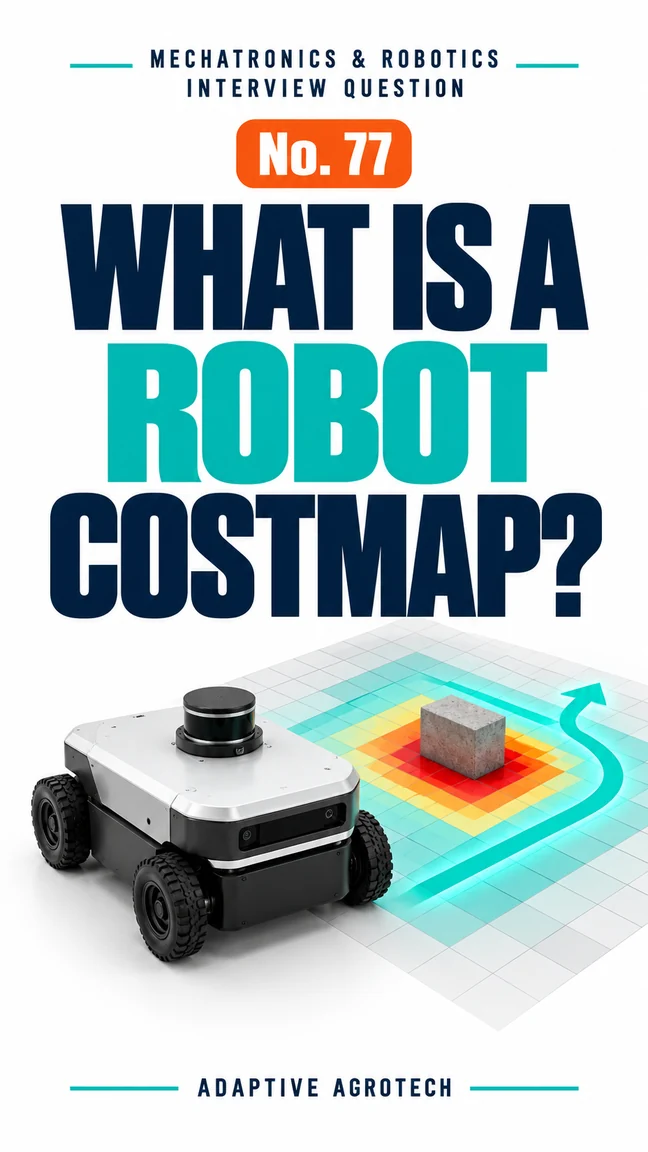
What is a Robot Costmap?

A costmap assigns travel costs that guide route choice and clearance. Obstacle inflation discourages paths near walls, while footprint geometry and fresh updates prevent point-based routes from hiding physical collisions.

Watch & explore
Motion planningNo. 078

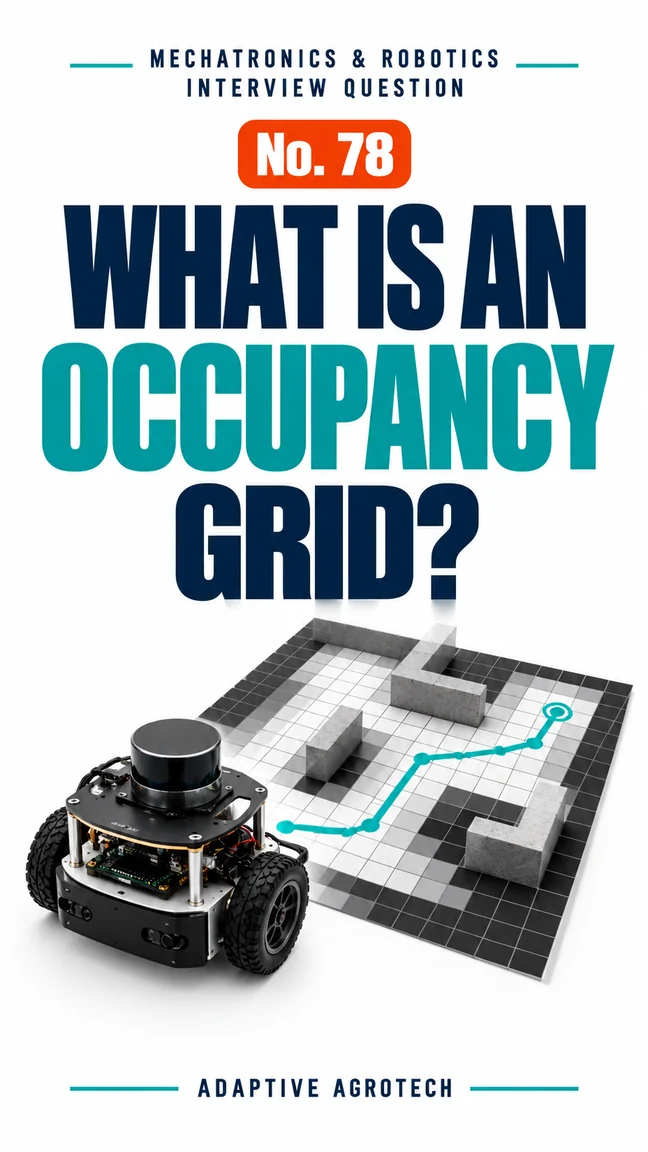
What is an Occupancy Grid?

An occupancy grid divides space into cells that express obstacle belief. Laser evidence updates free and occupied regions, while unknown cells require an explicit navigation policy instead of being treated as clear.

Watch & explore
Motion planningNo. 079

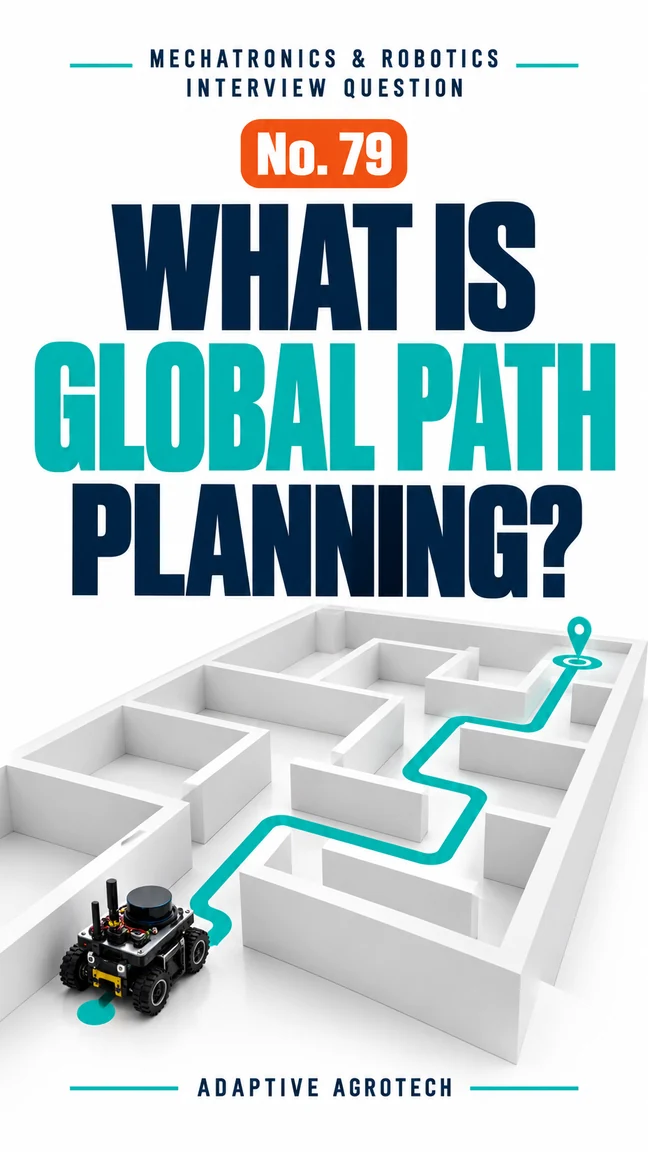
What is Global Path Planning?

Global planning uses a map and costs to connect the robot with a distant goal. The selected graph defines the preferred route, which still requires local motion control and replanning when conditions change.

Watch & explore
Motion planningNo. 080

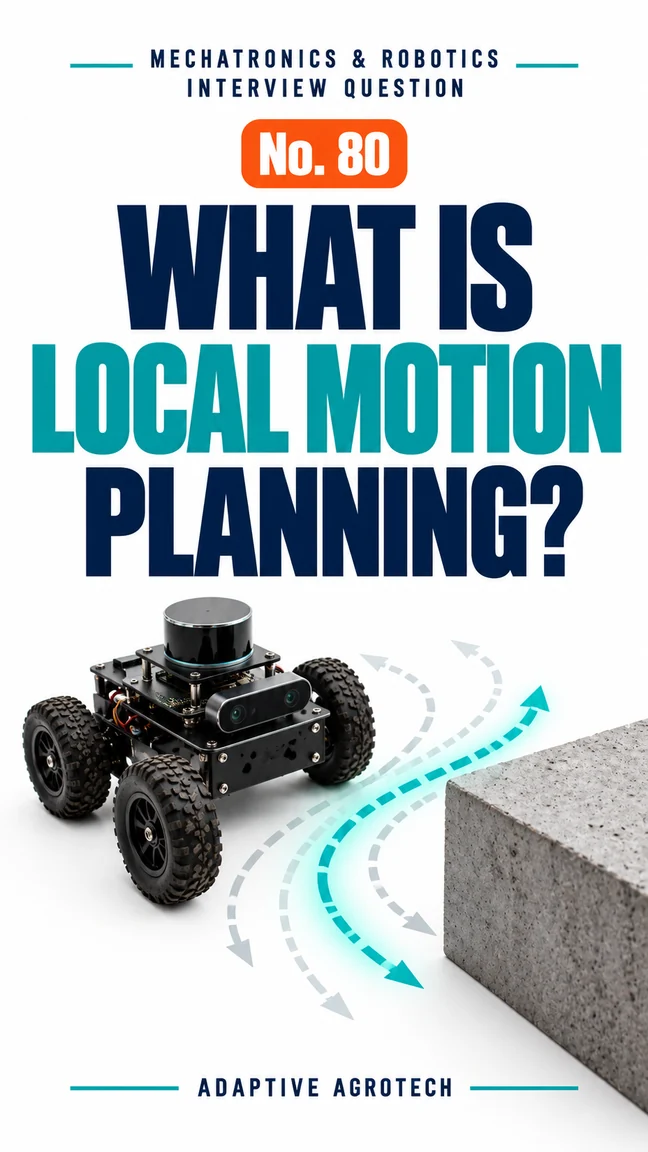
What is Local Motion Planning?

Local planning chooses feasible near-term motion using recent sensing, route guidance, and robot limits. Repeated updates handle nearby changes, while short-horizon traps and unavailable safe motion require global guidance and stopping.

Watch & explore
Motion planningNo. 081

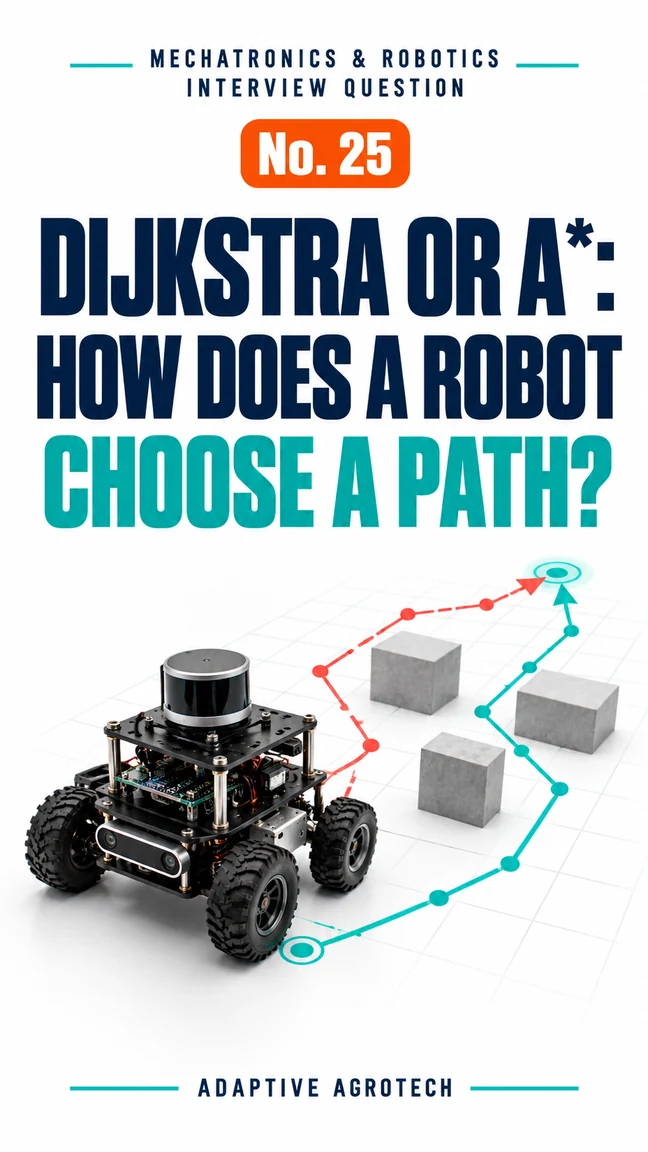
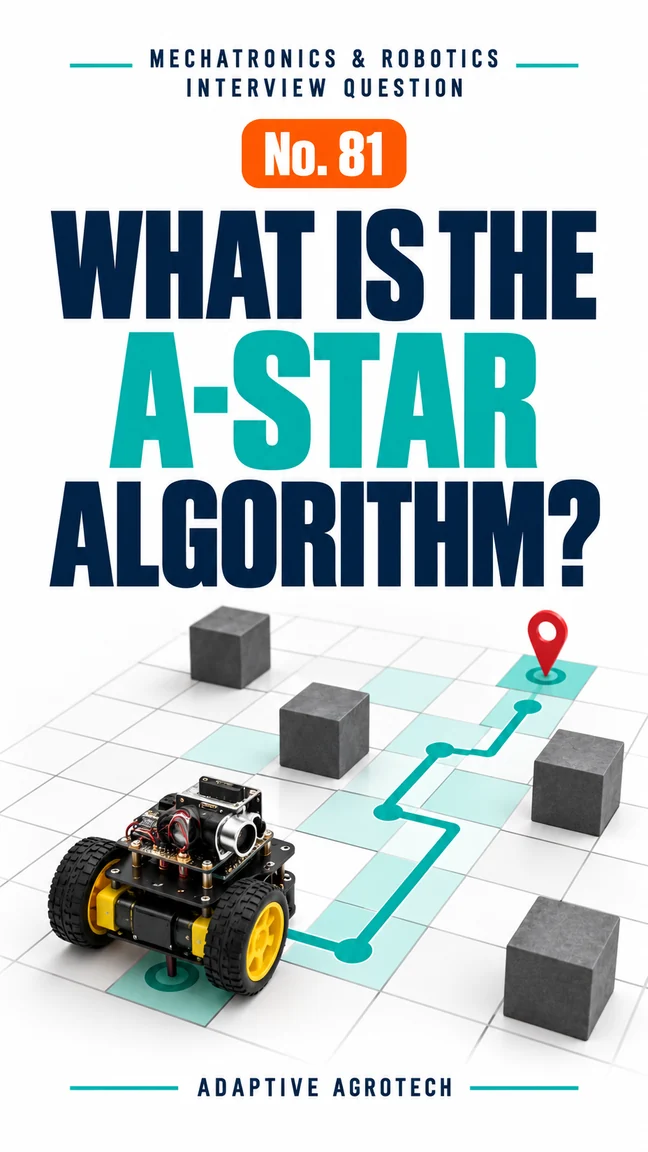
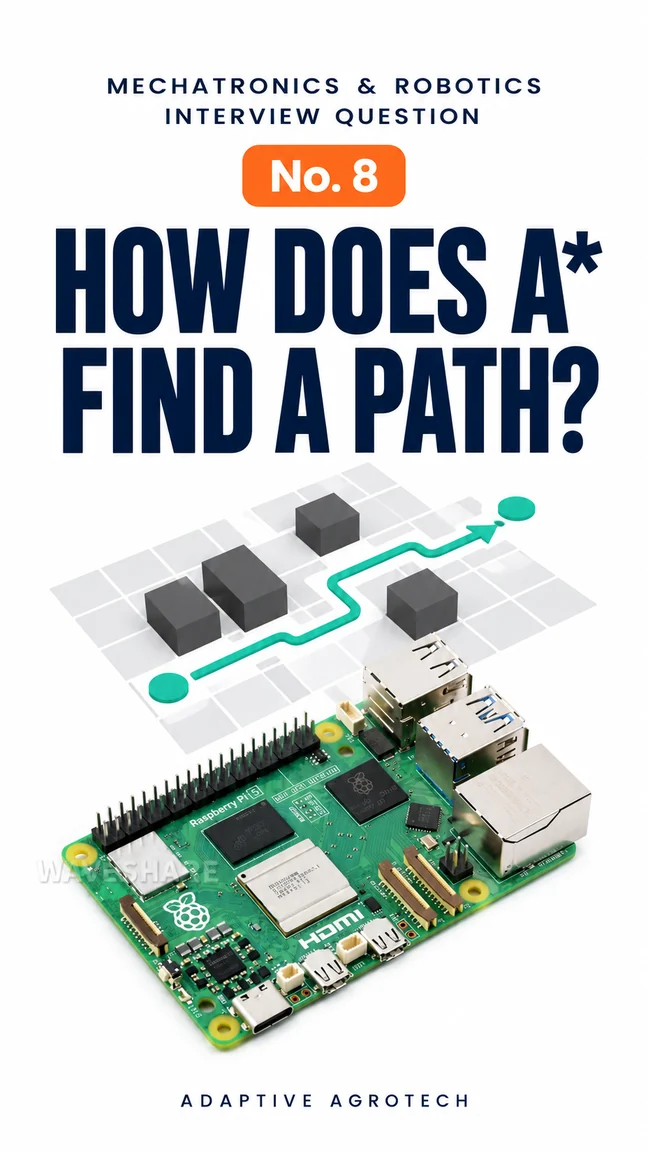
What is the A-Star Algorithm?

A* searches a graph by combining the cost already accumulated with an estimate of the remaining cost. Its heuristic focuses exploration, while optimality depends on the graph, edge costs, and heuristic properties.

Watch & explore
Motion planningNo. 082

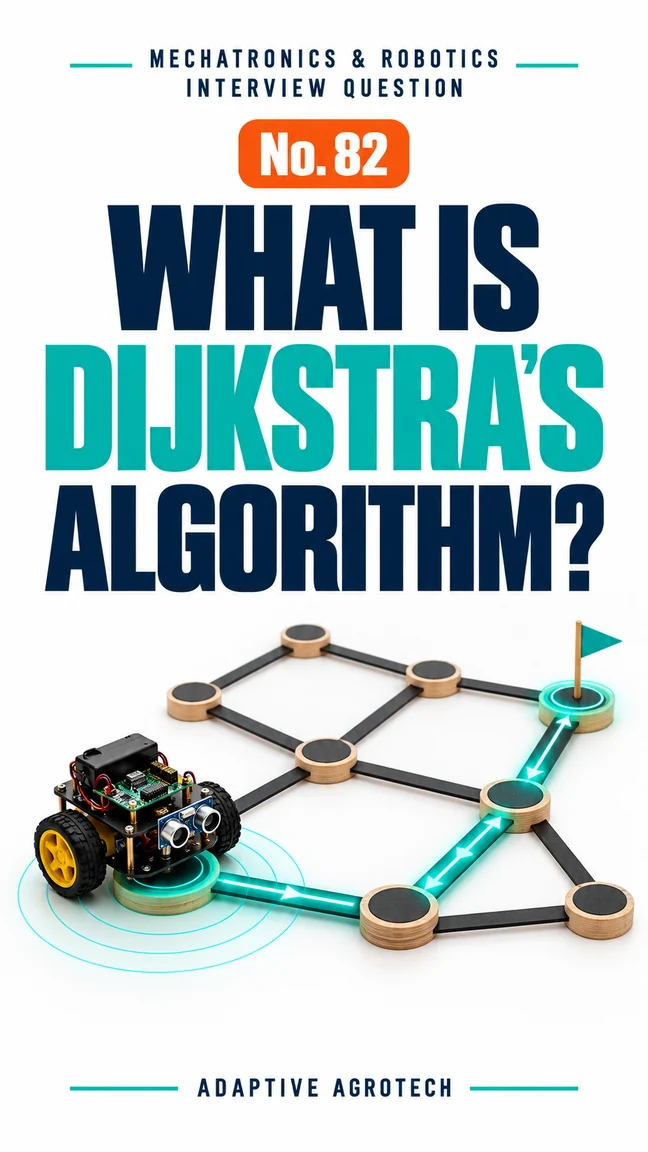
What is Dijkstra’s Algorithm?

Dijkstra’s algorithm finds least cost graph paths by expanding the smallest known cost from the start. It updates cheaper connections and reconstructs routes through parent links, without using a goal heuristic.

Watch & explore
Motion planningNo. 084

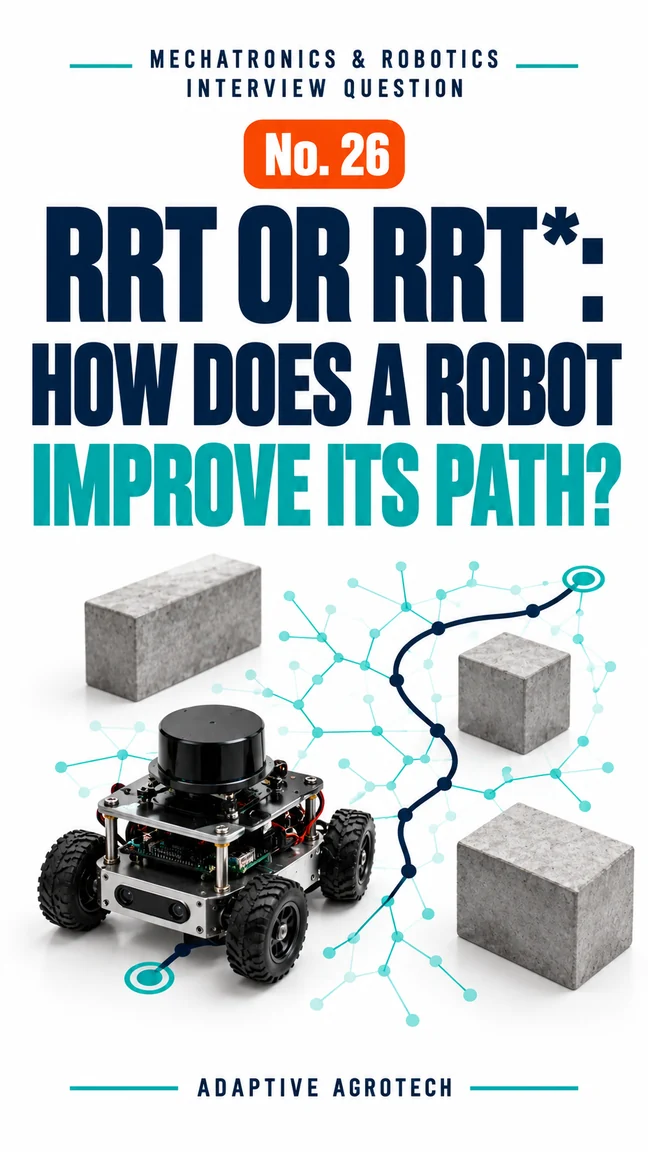
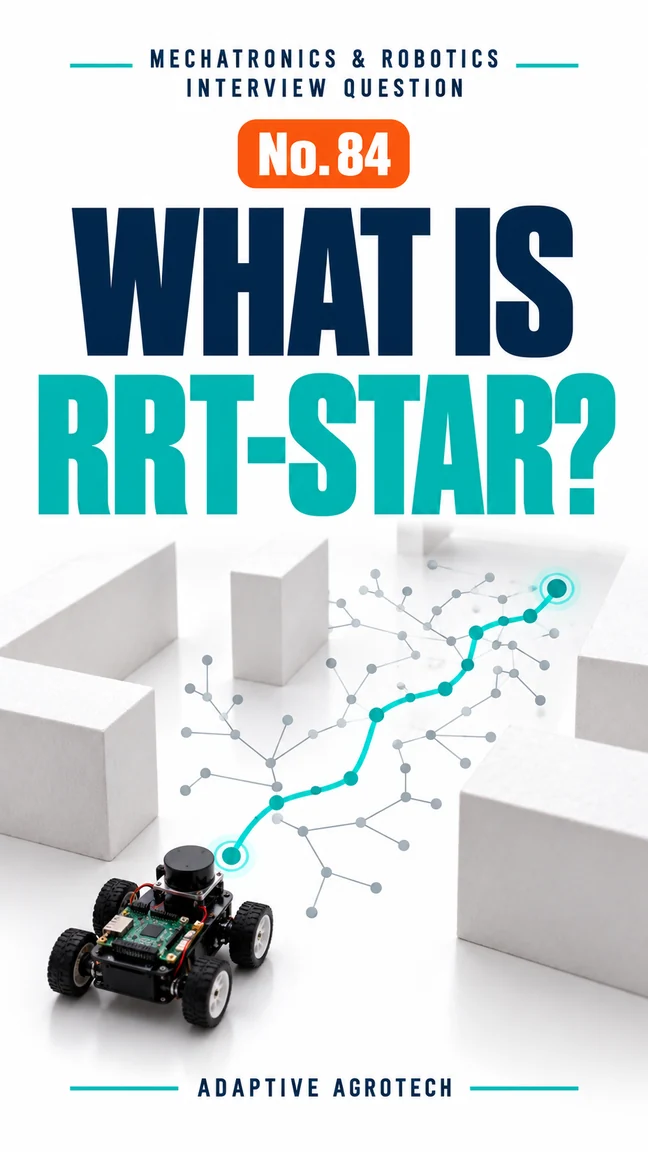
What is RRT-Star?

RRT* improves a sampled search tree by choosing lower cost parents and rewiring nearby connections. Continued search can reduce path cost, while asymptotic optimality does not guarantee an exact optimum in a short run.

Watch & explore
Motion planningNo. 085

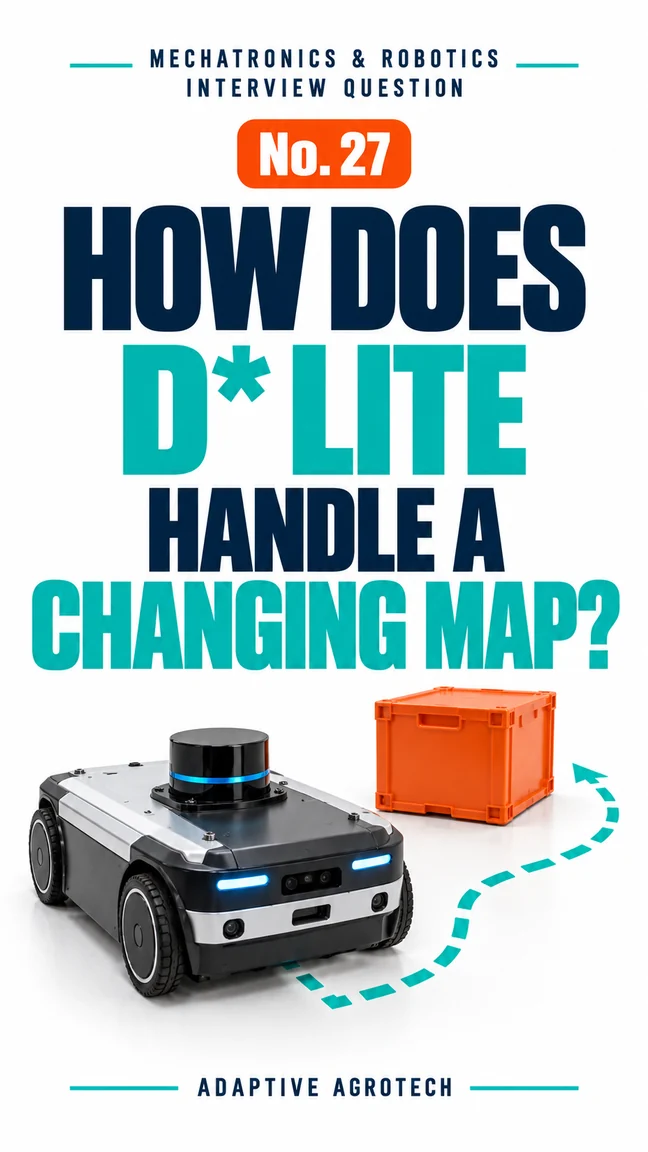
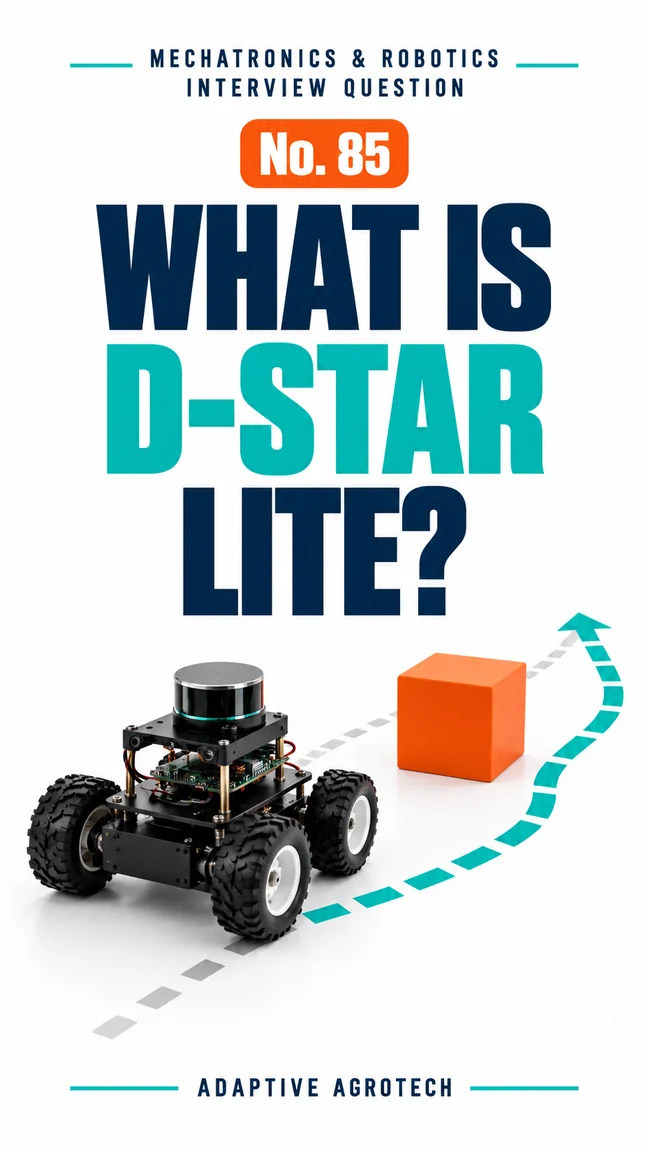
What is D-Star Lite?

D* Lite replans on a graph by reusing earlier search information when travel costs change. It repairs affected values and updates the route, while still relying on current sensing and appropriate motion control.

Watch & explore
Motion planningNo. 086

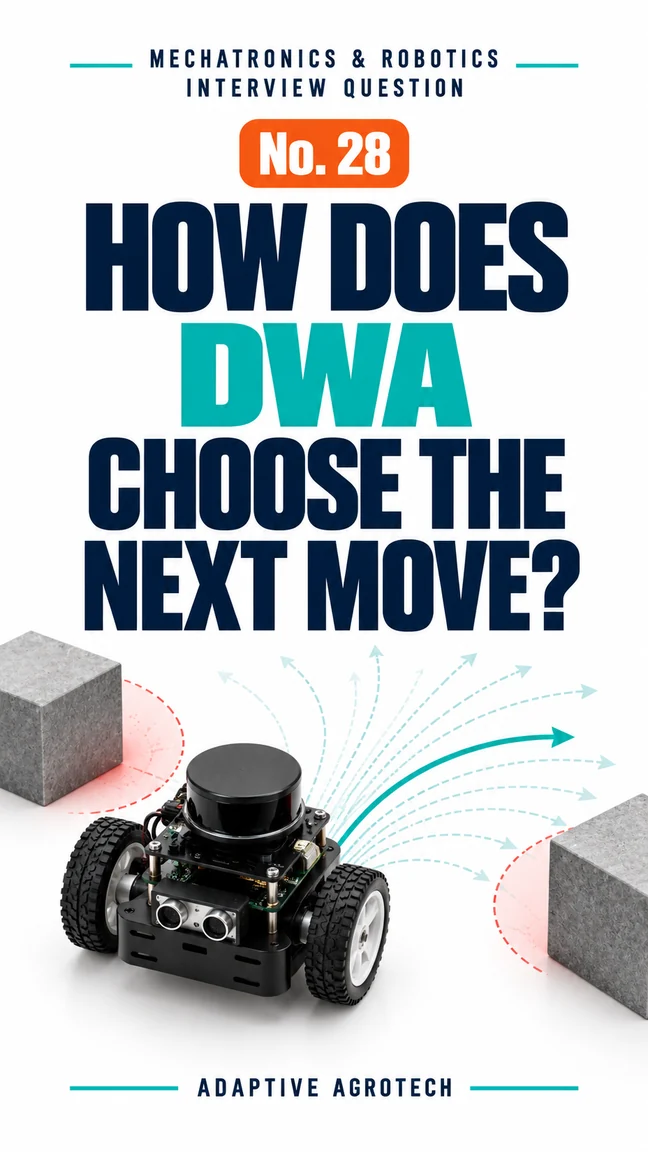
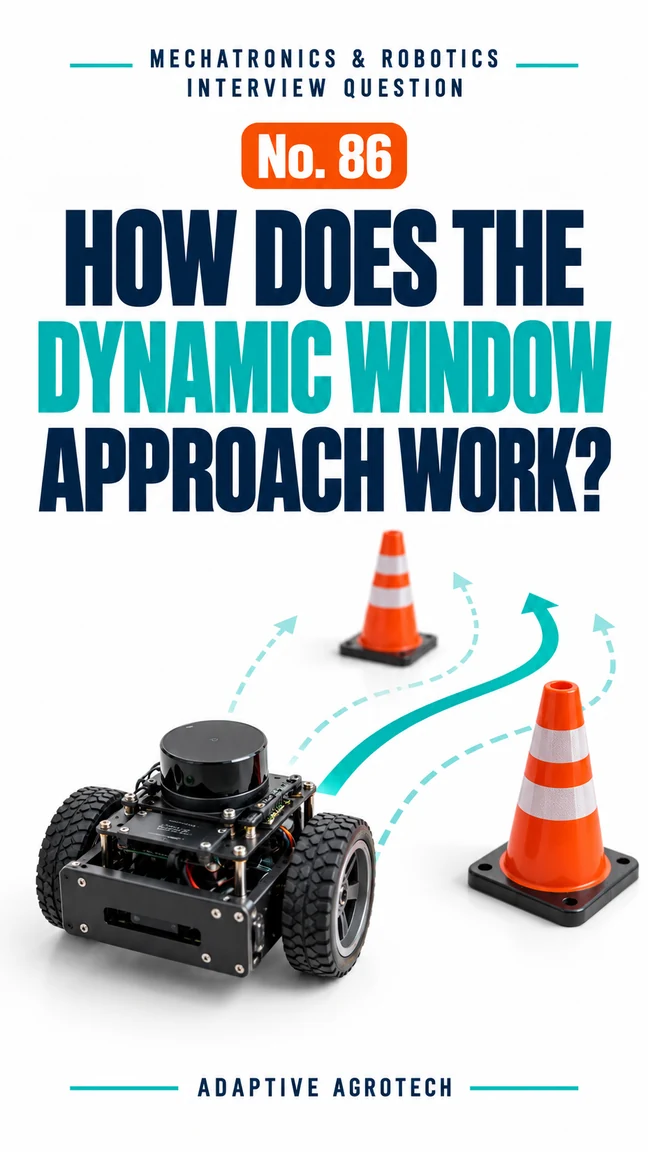
What is the Dynamic Window Approach?

The dynamic window approach selects a reachable speed and turn rate by predicting short trajectories. It rejects commands that cannot stop before obstacles, then scores remaining candidates for progress and clearance.

Watch & explore
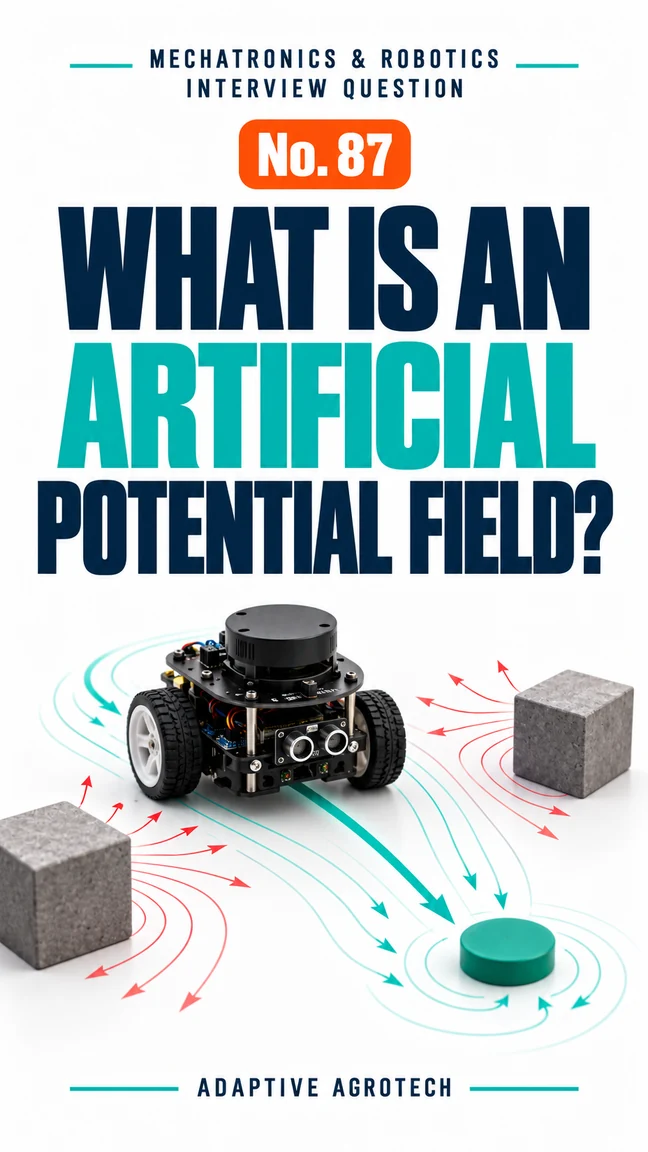
Motion planningNo. 087

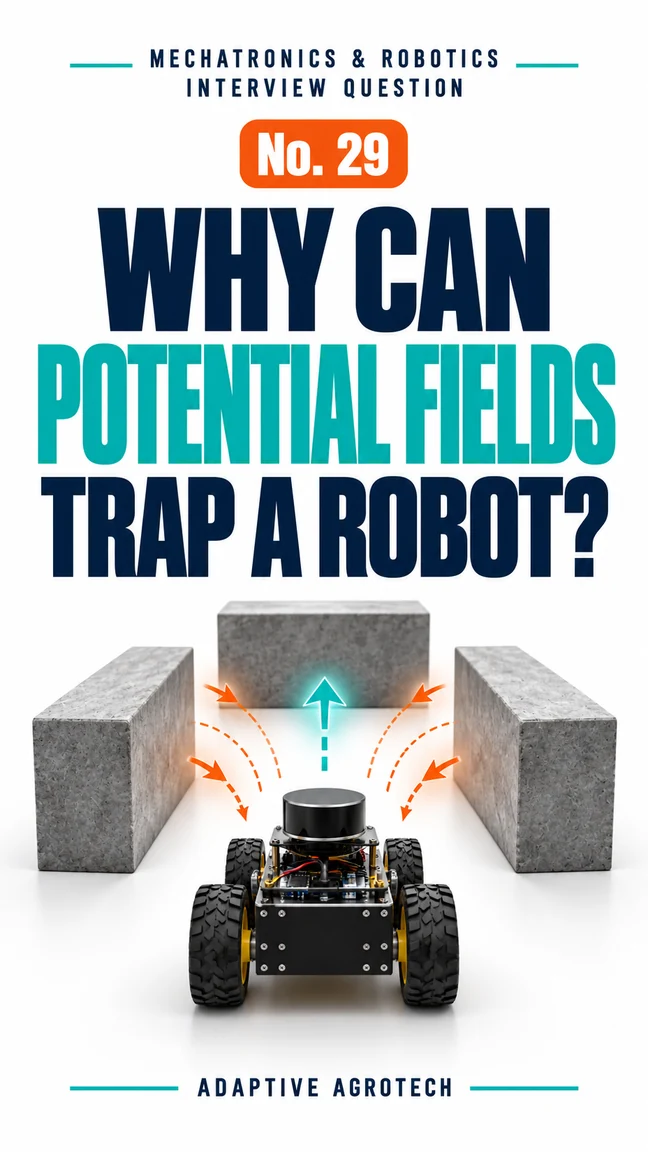
What is an Artificial Potential Field?

Artificial potential fields combine attraction toward a goal with repulsion from nearby obstacles. Following the resulting descent direction gives reactive motion, but opposing effects can cancel at a local minimum before the goal.

Watch & explore
Motion planningNo. 088

What is a Velocity Obstacle?

A velocity obstacle identifies robot velocities that predict collision with a moving object. Relative geometry and assumed motion define the forbidden set; selected alternatives must also be reachable and updated as motion changes.

Watch & explore
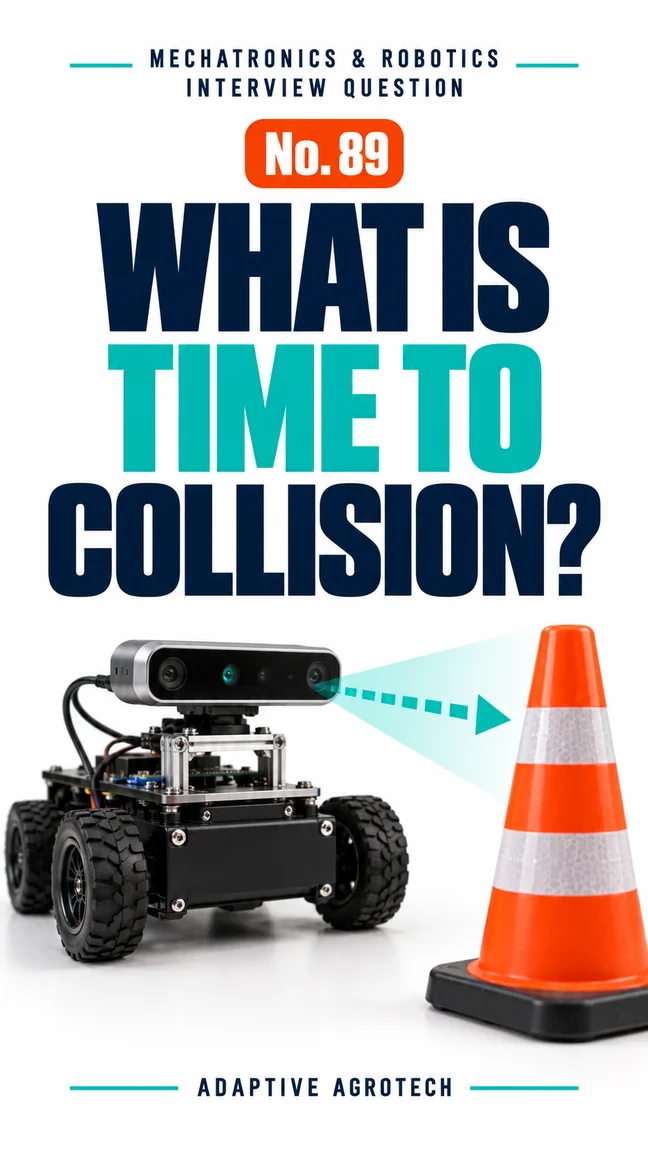
Motion planningNo. 089

What is Time to Collision?

Time to collision predicts the time remaining before contact under an assumed motion model. Straight closing motion permits clearance divided by closing speed, while crossing trajectories require geometry and uncertainty to be considered.

Watch & explore
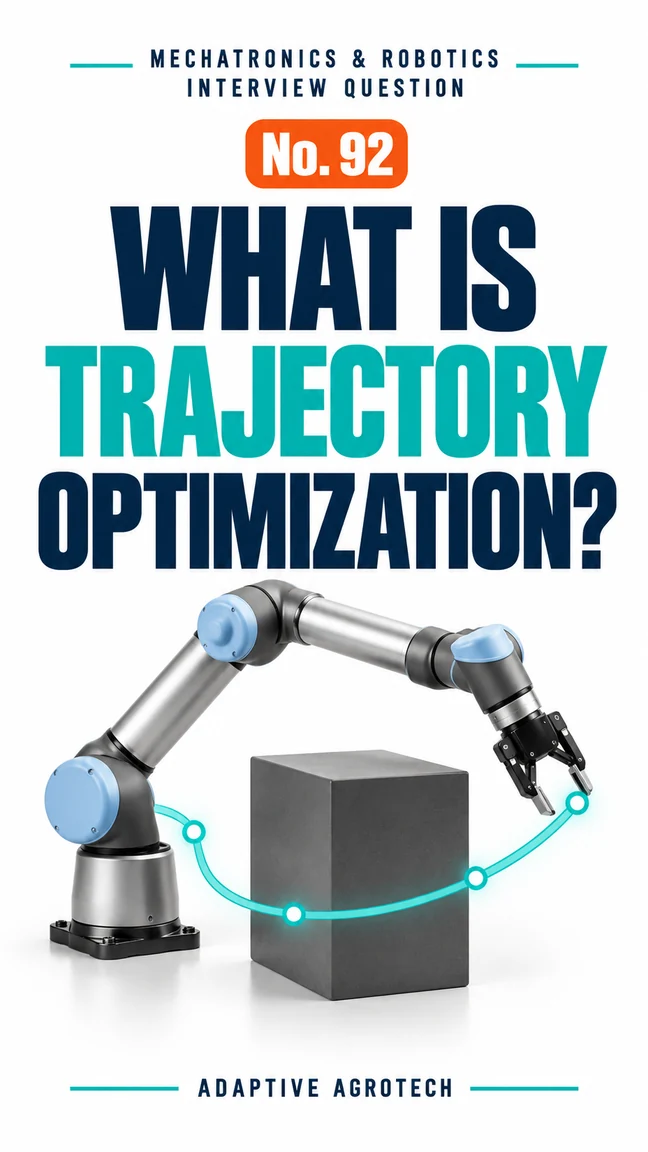
Motion planningNo. 092

What is Trajectory Optimization?

Trajectory optimization adjusts robot states and commands to improve a chosen objective while satisfying constraints. Solver results depend on initialization, and a locally optimal sampled trajectory still needs continuous motion clearance checks.

Watch & explore
Motion planningNo. 143

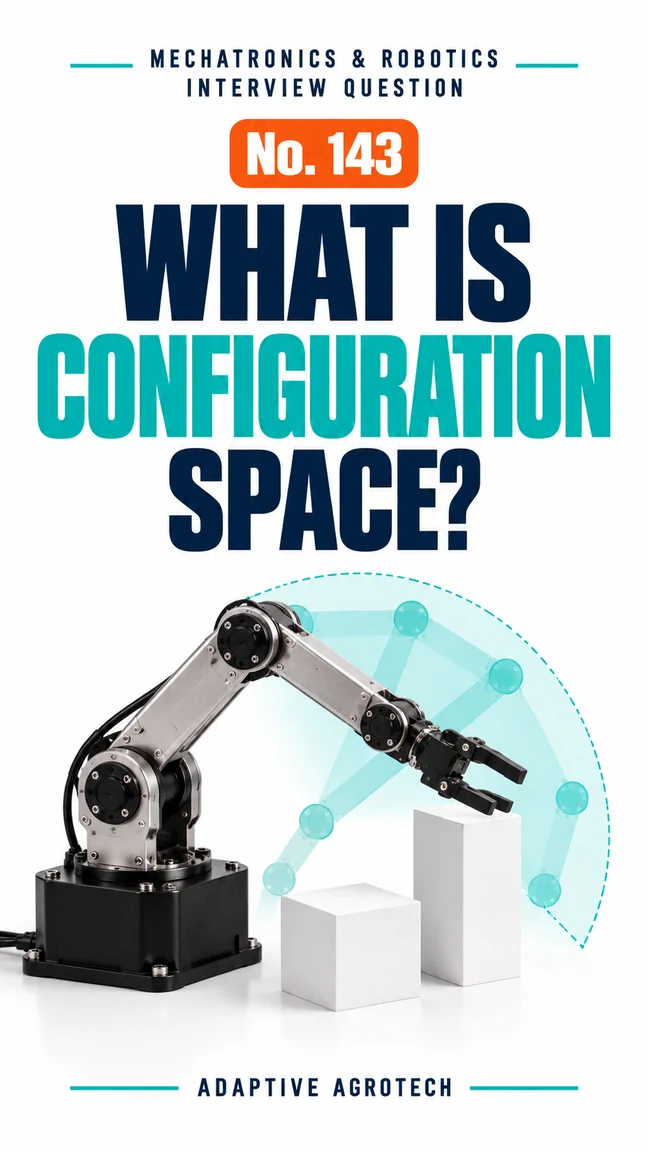
What Is Configuration Space in Robotics?

Configuration space represents the entire robot as a point whose coordinates locate its moving parts. Workspace obstacles become forbidden configuration regions, with joint limits and angular wrapping shaping the available planning space.

Watch & explore