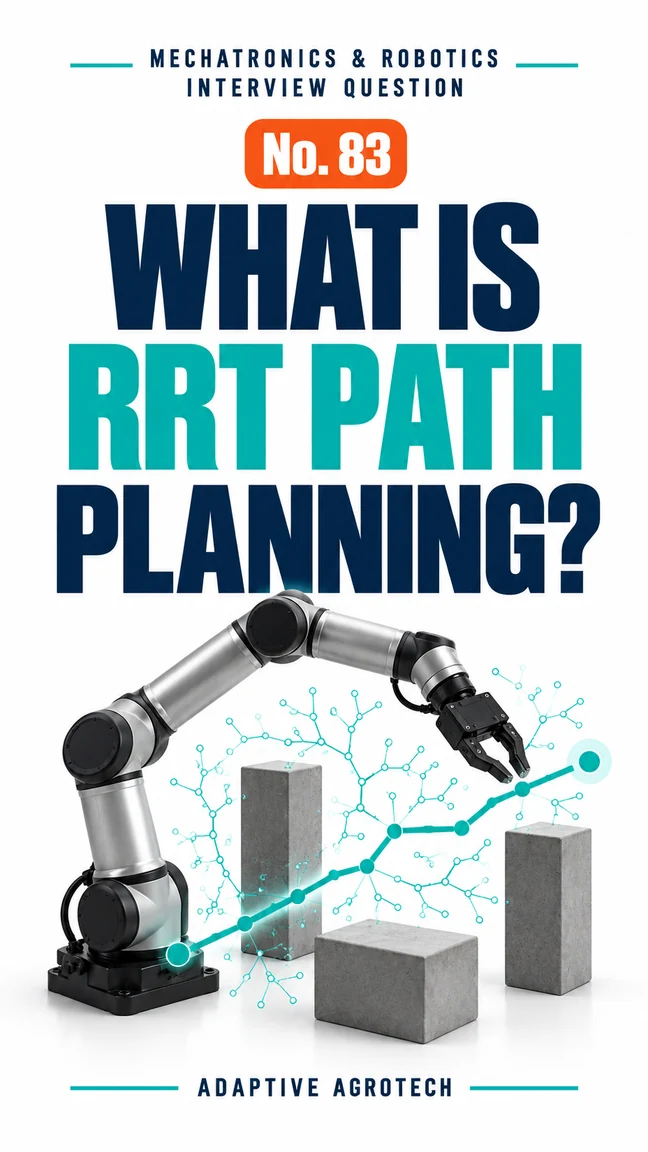
What is Rapidly Exploring Random Tree Planning?
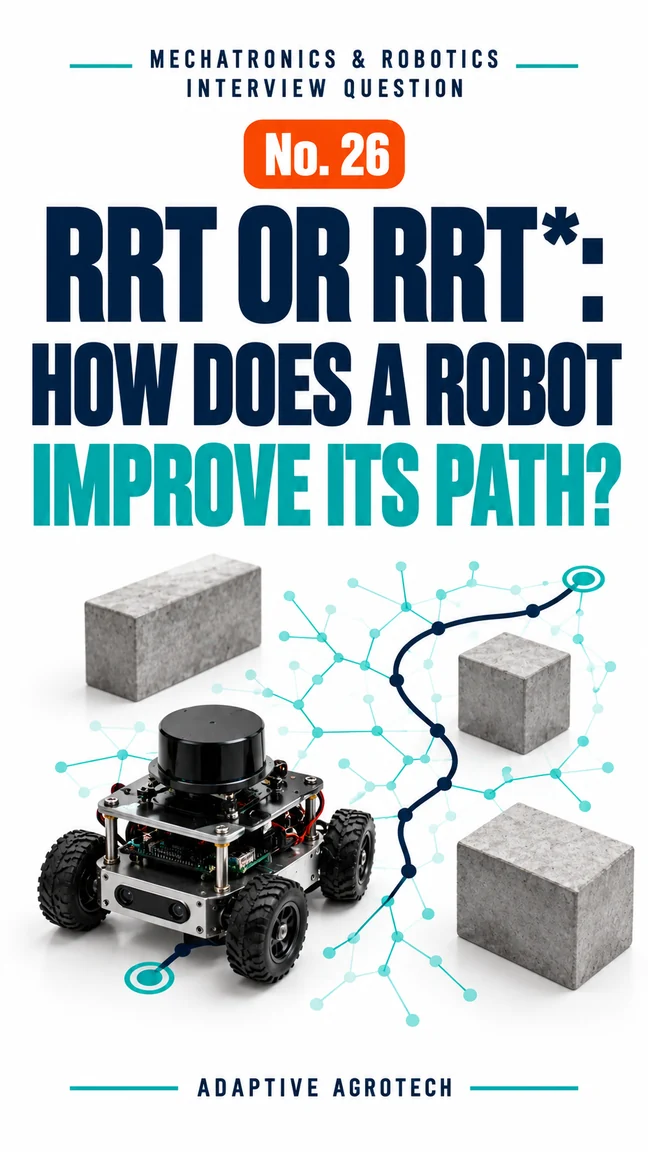
Rapidly exploring random trees build motion plans through sampled states and short checked extensions. They suit spaces with many joints or motion variables, but an initial feasible route can be rough or unnecessarily long.
The key idea
An RRT grows a search tree through free space by drawing a sample, finding a nearby existing node, and attempting a short extension toward the sample. The new motion enters the tree only after the required checks pass. This sampling approach helps explore problems with many robot joint angles or motion states, such as moving an arm around equipment. Finding a first route establishes feasibility only within the checked model. That route may still be long or rough, so the full motion needs checking and may benefit from further improvement.
What to remember
- Sample a state and extend from a nearby tree node.
- Accept extensions only after required checks.
- A first feasible route need not be efficient.
Check your understanding
Why might an RRT path need further work?
Show the explanation
The initial feasible path can be rough or long, and its whole motion still needs validation.