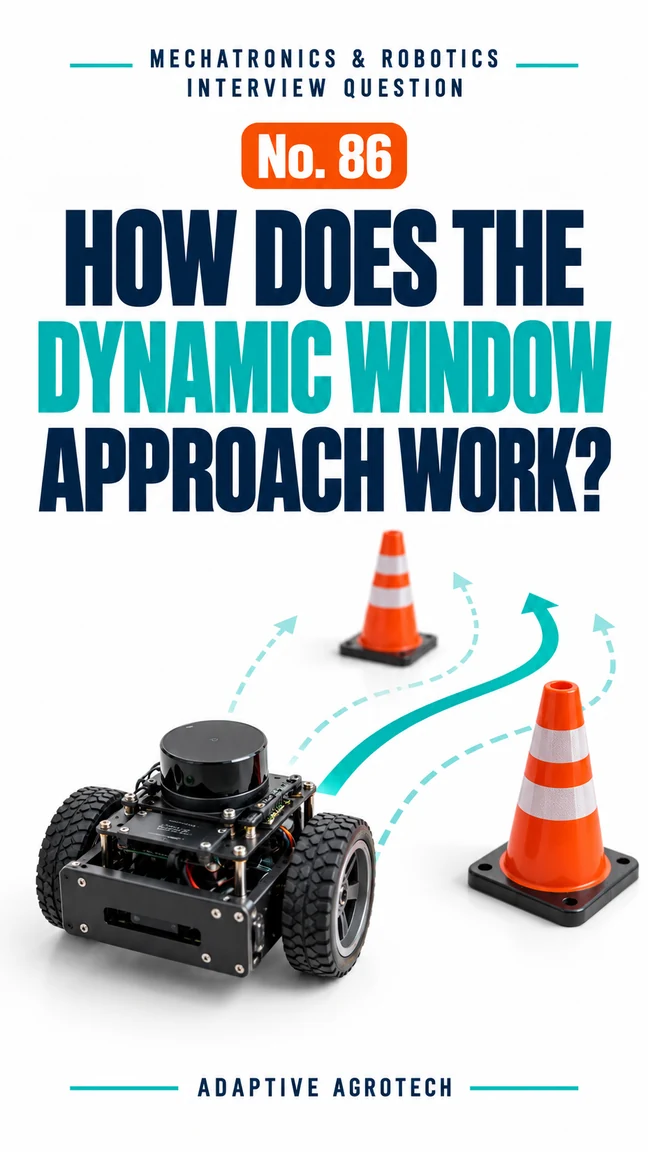
What is the Dynamic Window Approach?
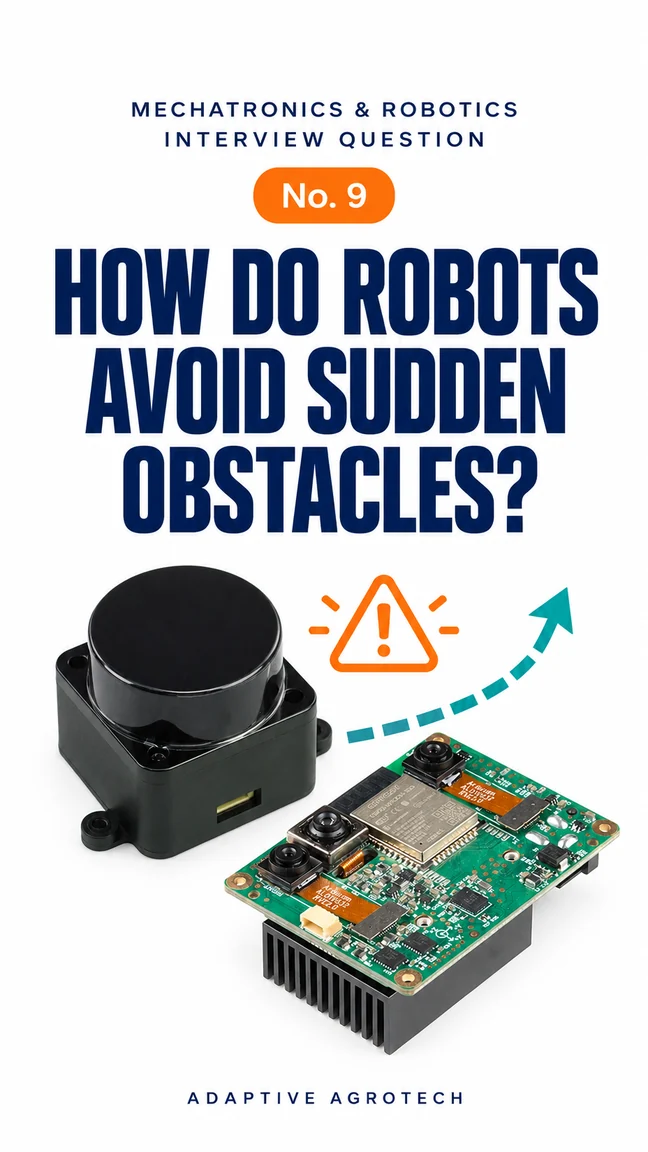
The dynamic window approach selects a reachable speed and turn rate by predicting short trajectories. It rejects commands that cannot stop before obstacles, then scores remaining candidates for progress and clearance.
The key idea
The dynamic window approach searches forward speed and turn rate commands that the robot can reach soon from its current motion, given acceleration limits. Each candidate produces a short predicted trajectory. A braking check rejects choices that cannot stop before an obstacle, while scoring compares the remaining options for goal progress and obstacle clearance. The selected command is applied briefly, and the process repeats with updated data. Performance depends on sensing, braking estimates, and scoring choices. This local decision process also benefits from global route guidance toward the destination.
What to remember
- Search speed commands reachable within acceleration limits.
- Reject candidates whose braking distance is unacceptable.
- Repeat prediction and scoring as measurements change.
Check your understanding
Why are some candidate commands rejected before scoring?
Show the explanation
The robot would be unable to stop before an obstacle along the predicted motion.