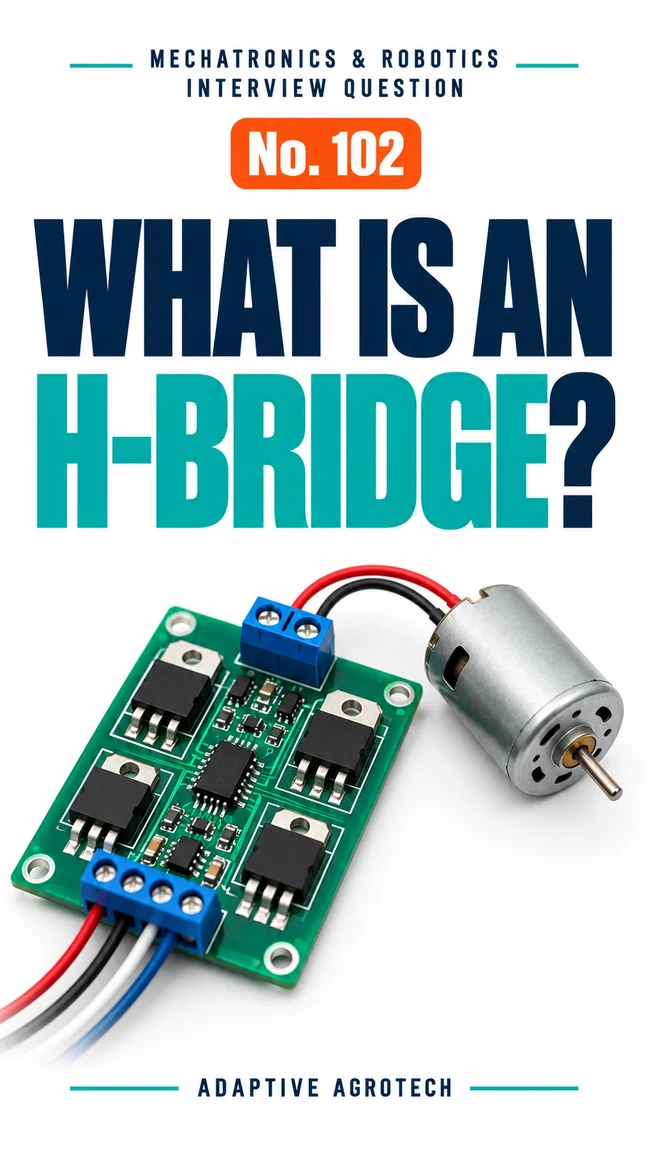
What is an H-Bridge?
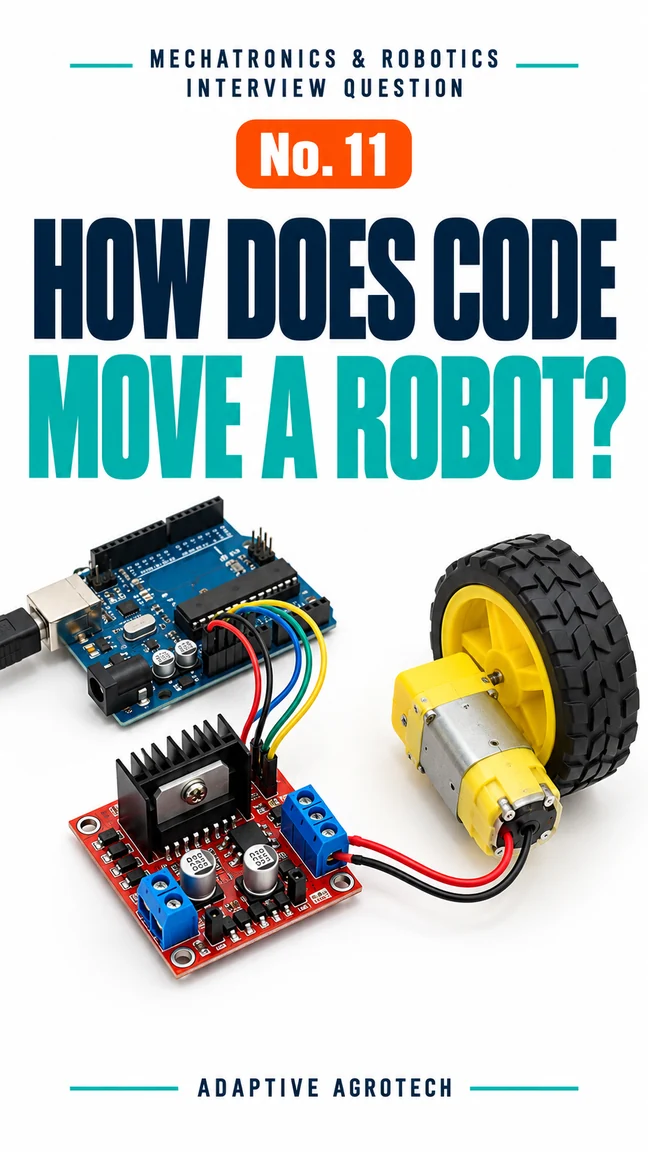
An H-bridge reverses motor current using four switches arranged around the motor. Diagonal pairs set direction, while timing, current limits, and recirculation paths prevent damaging supply shorts and manage winding current.
The key idea
An H-bridge places the motor between the middle nodes of two switching legs. Turning on one diagonal pair drives current one way; the opposite diagonal pair reverses it and therefore reverses torque. PWM can control the drive level, and suitable switching states provide coasting or electrical braking. Both switches in a single leg must never conduct together because that creates a short across the supply. Practical robot drives use correct switching timing, including dead time, along with current limits and a suitable path for the motor winding current during switching.
What to remember
- Diagonal switch pairs choose motor current direction.
- PWM and other states control drive, coast, or braking.
- Prevent simultaneous conduction within one bridge leg.
Check your understanding
What is shoot-through in an H-bridge?
Show the explanation
Both switches in one leg conduct together, shorting the supply.