What is a Flyback Diode?
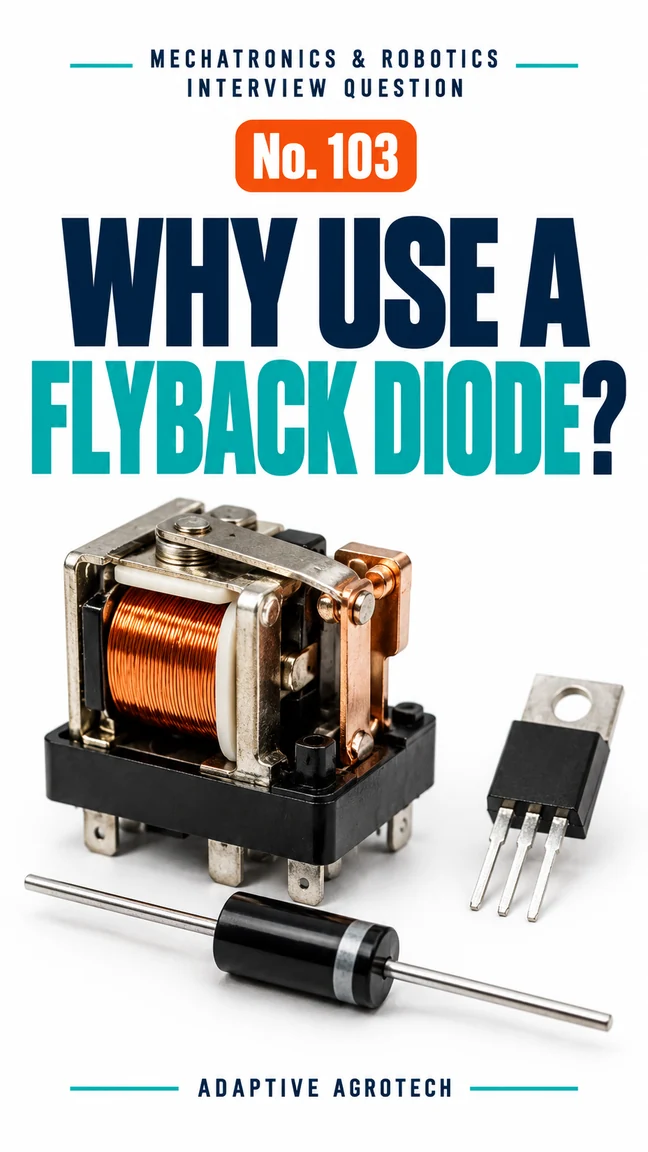
A flyback diode provides a path for inductive coil current after switch-off, limiting the resulting voltage spike. A simple relay connection slows release and should not be copied directly into a bidirectional motor bridge.
The key idea
An inductor resists an abrupt reduction in current, so opening a coil’s switching path can produce a large voltage spike. In a simple relay circuit, a diode placed across the coil with its cathode toward the positive supply is normally blocking. After switch-off, the coil current circulates through the diode while the stored magnetic energy decays. This protects the switch but also makes the relay release more slowly. Voltage and current ratings need checking. A bidirectional motor driver requires its own appropriate current recirculation arrangement rather than this simple relay wiring.
What to remember
- A switched coil needs a path for stored energy.
- A relay flyback diode blocks during normal energization.
- Diode protection changes release time and requires correct ratings.
Check your understanding
Why does a flyback diode make a relay release more slowly?
Show the explanation
It lets winding current continue while the stored magnetic energy decays.