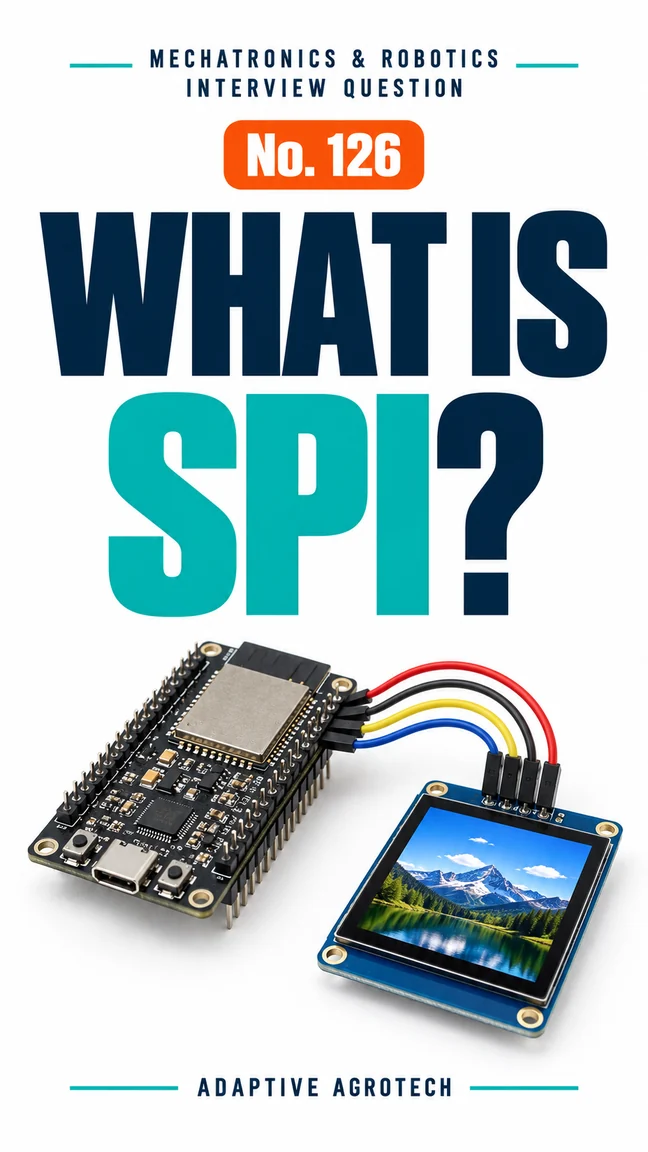
What is SPI?
SPI is a clocked interchip interface with controller supplied clock, target selection, and separate data directions. Correct transfers require matching clock polarity, phase, select timing, and each target device’s timing specification.
The key idea
SPI connects chips using a controller supplied clock, a target select signal, and separate wires for data in each direction. Bits shift or are sampled on clock edges, so the controller’s polarity and phase settings must agree with the selected device. Chip select identifies the intended transfer and must meet that device’s timing requirements. Robots can use SPI for fast sensor reads or memory writes. Multiple targets can share a clock, but usually require additional select wires, and sharing the bus does not remove the need to respect every target’s compatible timing.
What to remember
- The controller supplies clock and selects a target.
- Match clock polarity, phase, and select timing.
- Multiple targets usually need separate select signals.
Check your understanding
Which clock settings must match the SPI target?
Show the explanation
Clock polarity and phase, along with the specified timing.