Skip to content
Adaptive AgroTech NetworkUniversity of Southern Denmark · SDU Drone Center
Robotics · Mechatronics · Intelligent systems

Short videos.
Lasting understanding.

Explore one engineering idea at a time. Watch a short lesson, read the key concepts and test your understanding before your next interview, project or class.

15 topics found

Video · Key ideas · Check your understanding

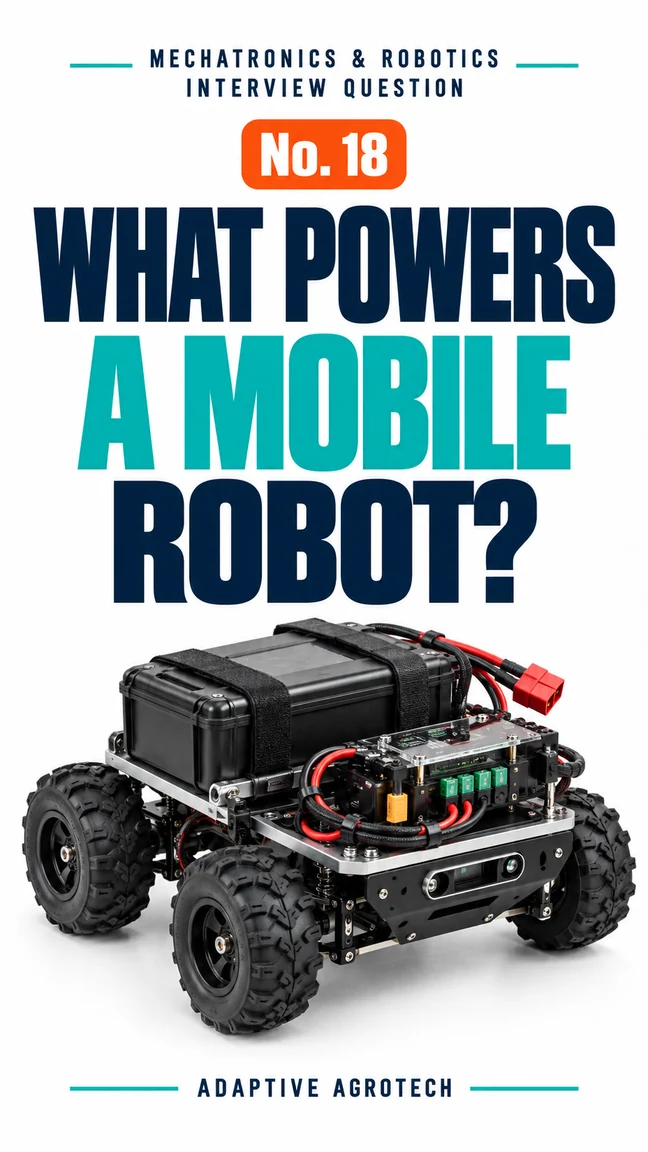
Embedded electronicsNo. 018

What Powers a Mobile Robot?

Reliable robot power depends on compatible voltage, usable energy, protection, and peak current. Runtime follows average demand, while motor surges and voltage drop can interrupt operation despite remaining battery capacity.

Watch & explore
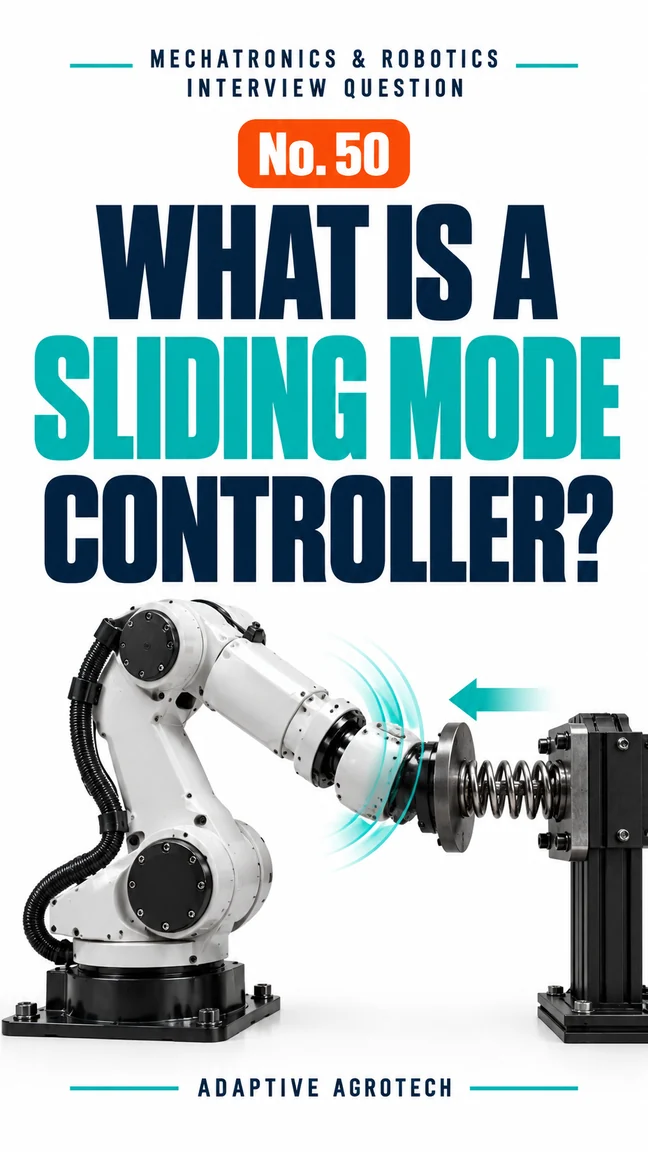
Control systemsNo. 050

What is a Sliding Mode Controller?

Sliding mode control drives state toward a designed tracking surface using a switching term. It can address certain bounded uncertainties, but chattering and finite actuator effort require attention when realizing the design.

Watch & explore
Control systemsNo. 051

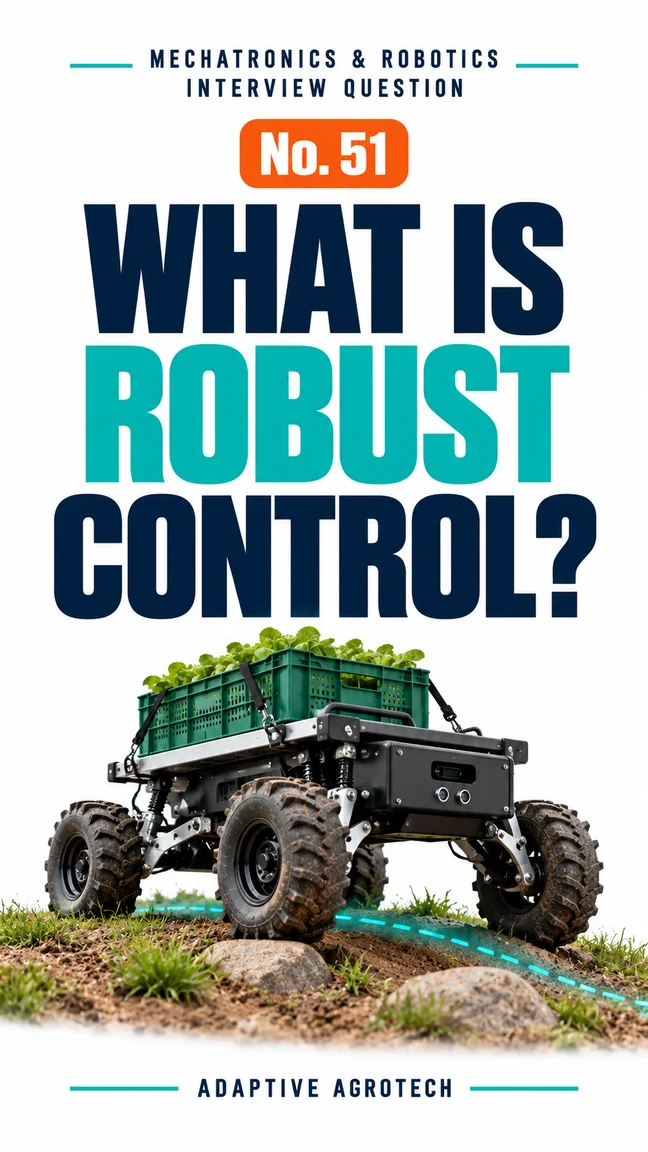
What is Robust Control?

Robust control includes a specified uncertainty set in its design and checks performance across a family of plants. Any guarantee remains limited to that set rather than covering all possible hardware differences.

Watch & explore
Localization & estimationNo. 065

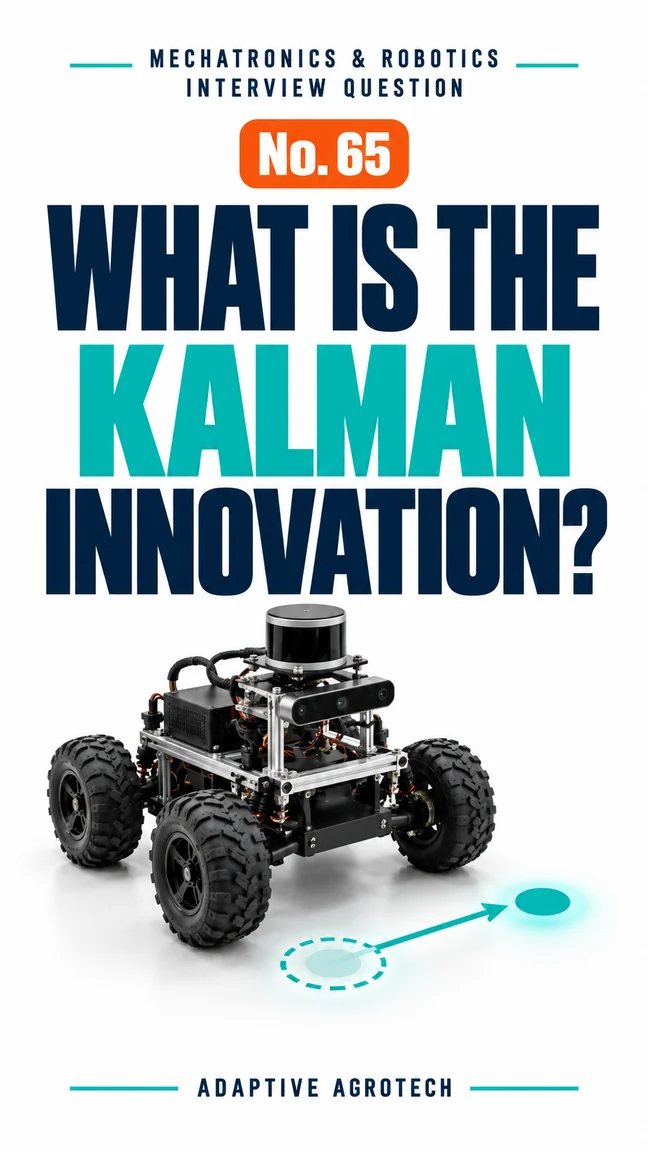
What is the Kalman Innovation?

Kalman innovation is the difference between an actual reading and its prediction. Interpreting it against expected uncertainty helps reveal timing, calibration, and model problems that smooth output alone can conceal.

Watch & explore
Embedded electronicsNo. 103

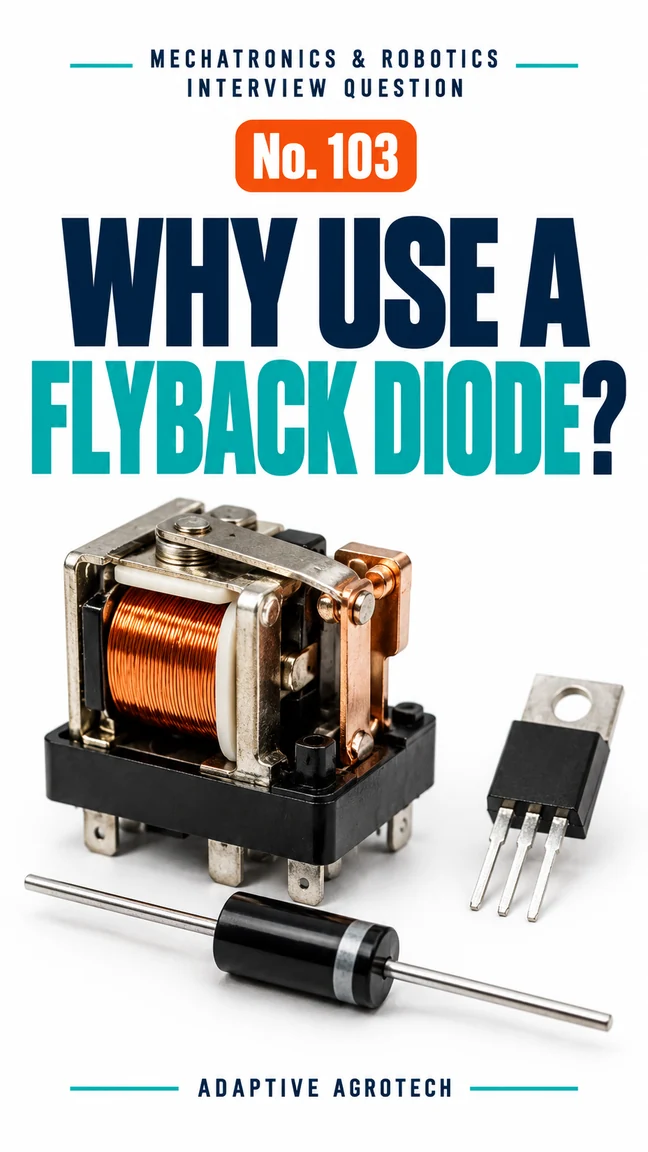
What is a Flyback Diode?

A flyback diode provides a path for inductive coil current after switch-off, limiting the resulting voltage spike. A simple relay connection slows release and should not be copied directly into a bidirectional motor bridge.

Watch & explore
Embedded electronicsNo. 104

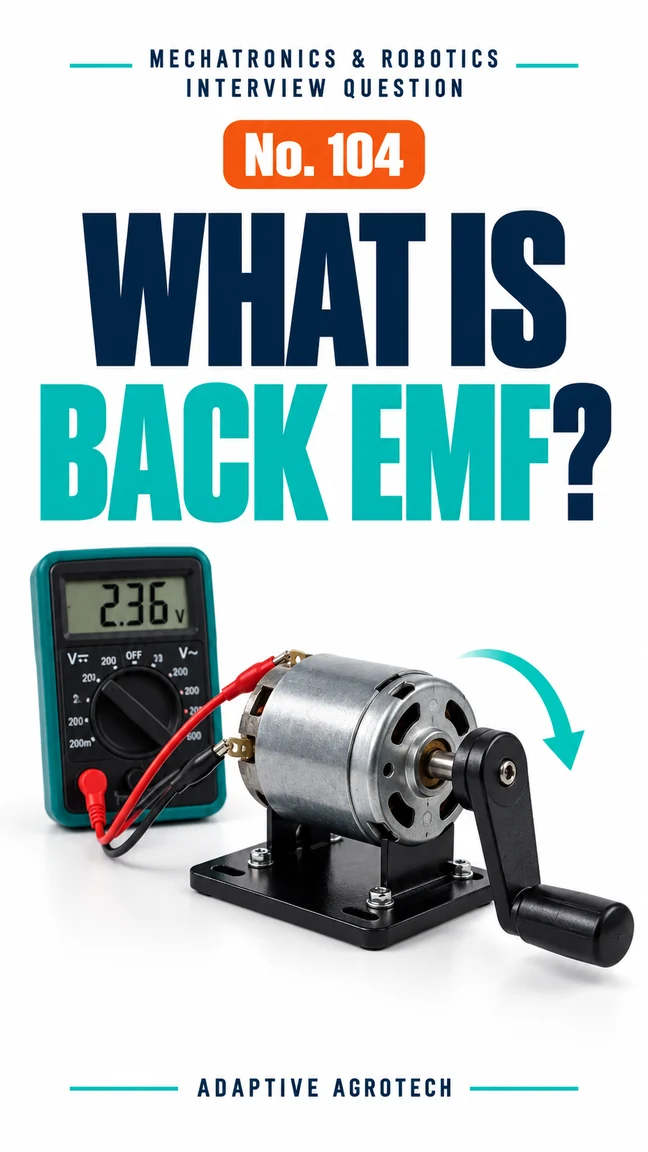
What is Back EMF?

Back EMF is the voltage generated by a spinning motor that opposes its drive voltage. In a simple steady model it reduces winding current, explaining why a slowing or jammed wheel can draw more current.

Watch & explore
Communication & networksNo. 126

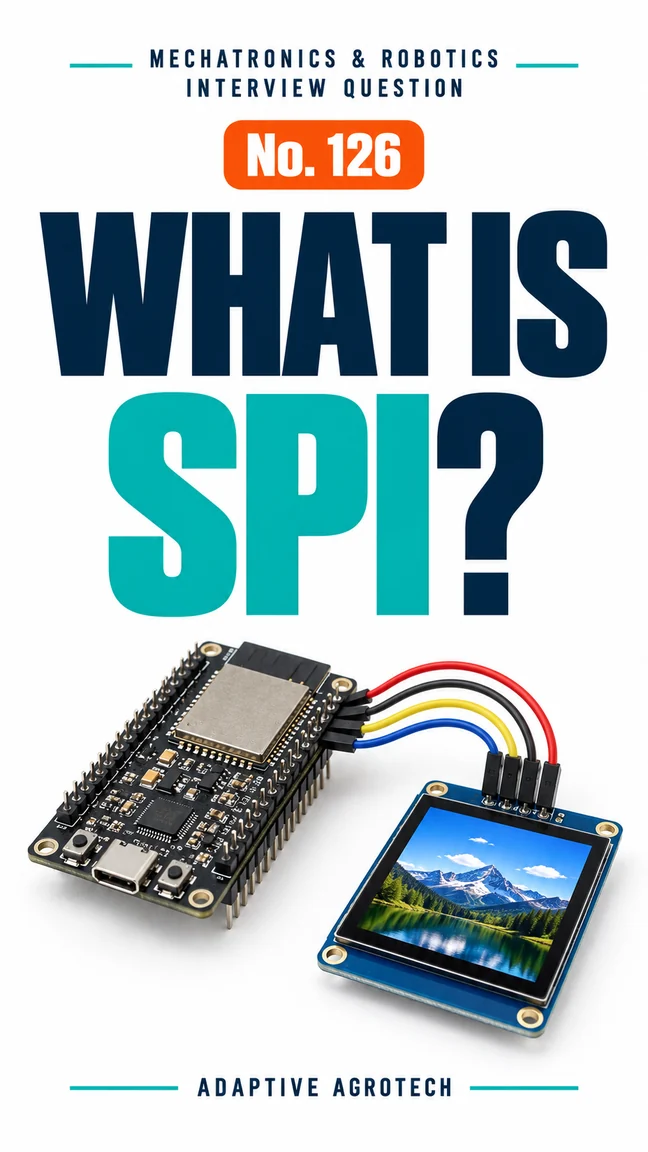
What is SPI?

SPI is a clocked interchip interface with controller supplied clock, target selection, and separate data directions. Correct transfers require matching clock polarity, phase, select timing, and each target device’s timing specification.

Watch & explore
Communication & networksNo. 128

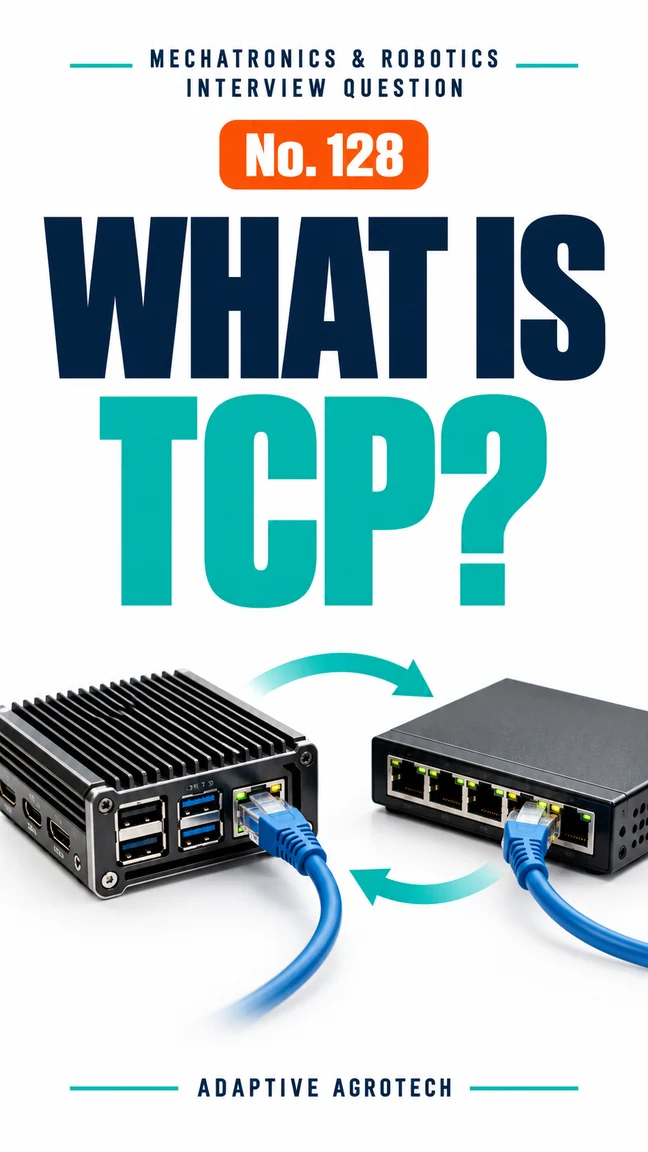
What is TCP?

TCP offers reliable ordered bytes through acknowledgements and retransmission. Applications must define their own message boundaries and timeouts, and retransmission can delay later data despite the transport’s reliability guarantees.

Watch & explore
Robot kinematicsNo. 140

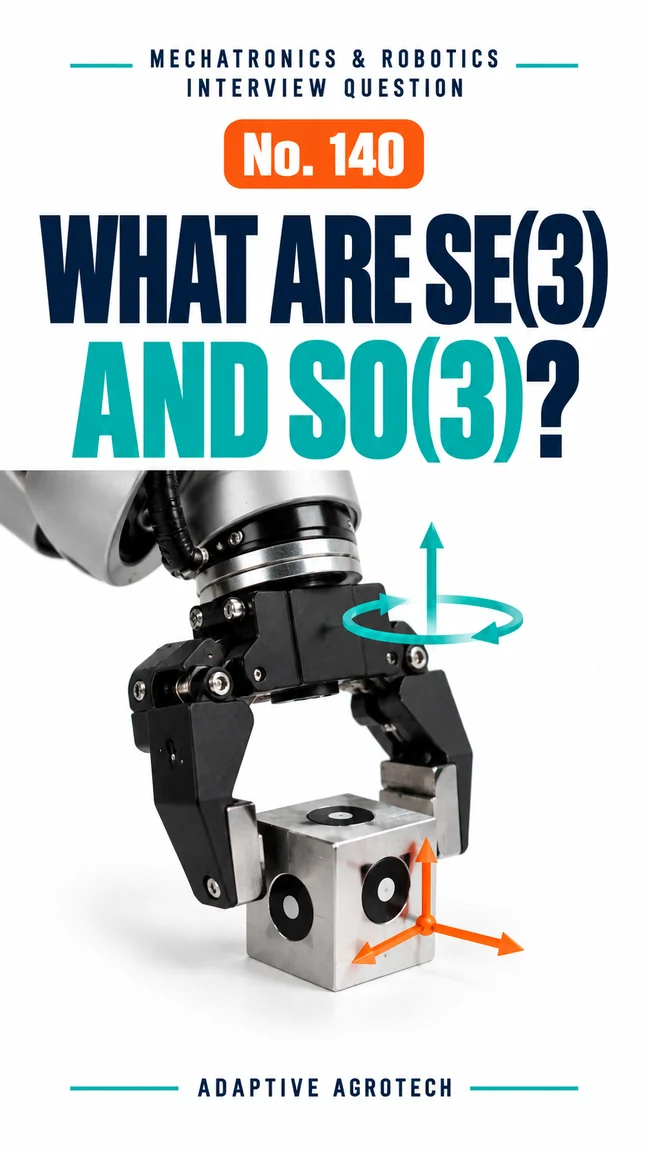
What Are SE(3) and SO(3) in Robotics?

SO(3) contains valid three dimensional rotations, while SE(3) contains rigid poses with rotation and translation. Their stored matrices obey constraints, excluding scaling, shear, and reflections despite containing more entries than independent degrees of freedom.

Watch & explore
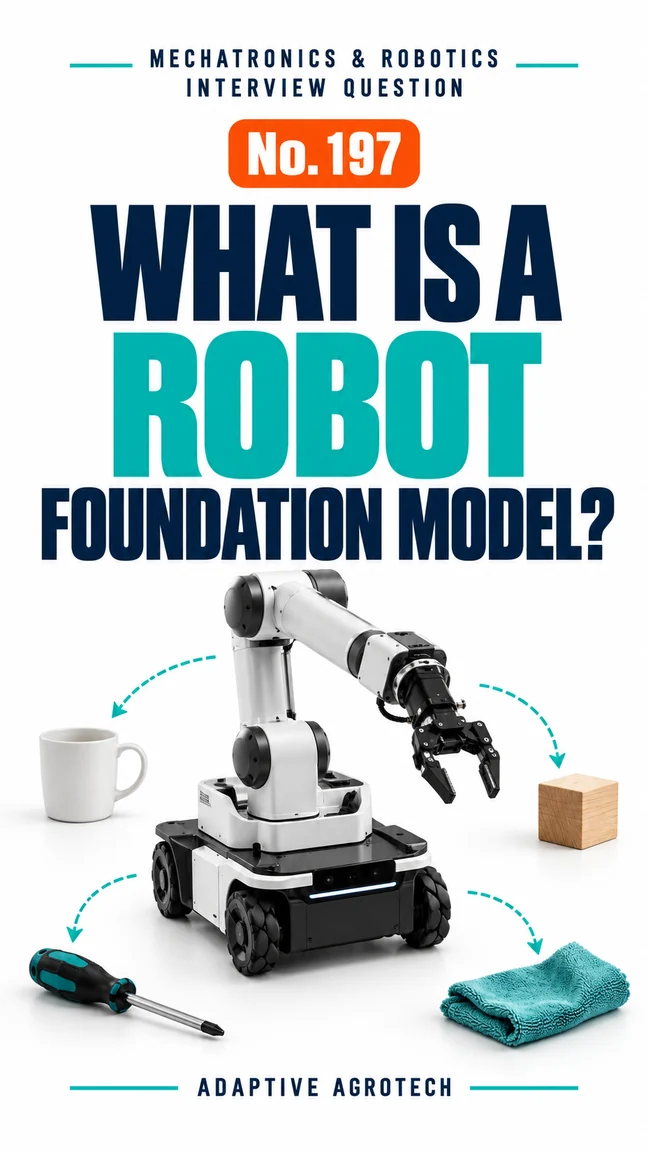
AI & machine learningNo. 197

What Is a Robot Foundation Model?

A robot foundation model is a model trained on broad data so it can support multiple robot tasks. Instead of building every skill from scratch, engineers adapt a shared starting point to a particular robot and job.

Watch & explore
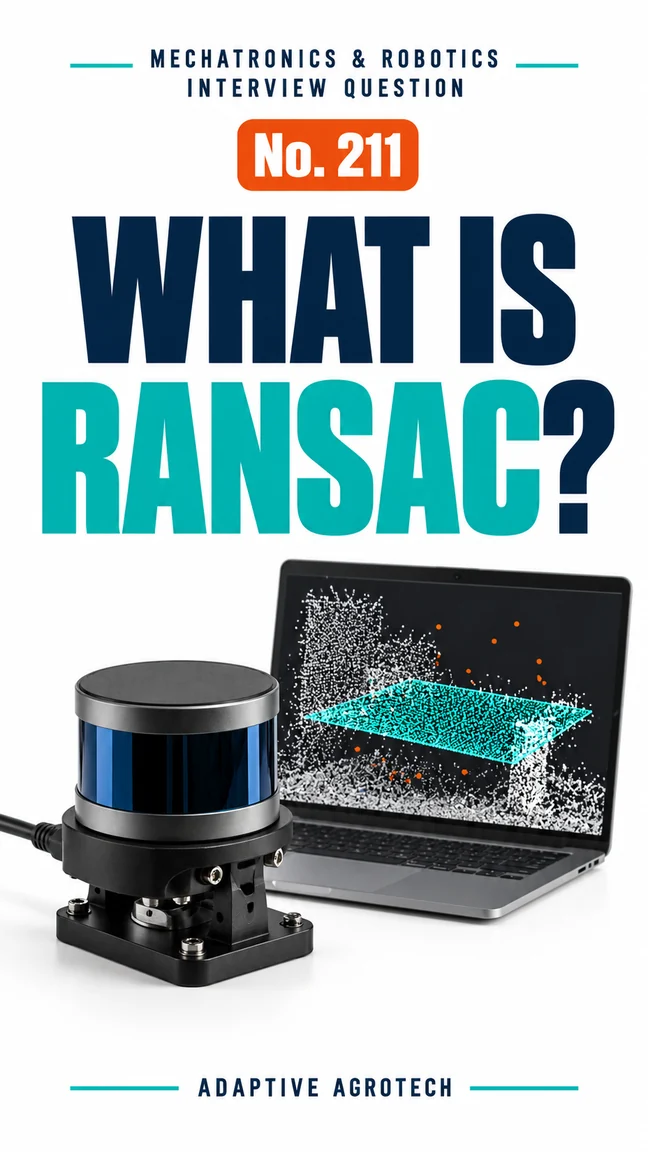
Computer visionNo. 211

What Is RANSAC, and Why Do Robots Use It?

RANSAC means random sample consensus. It repeatedly fits a candidate model to small random subsets, then counts measurements that agree within a chosen tolerance. It seeks a model supported by many inliers despite incorrect measurements in the data.

Watch & explore