What is a Real-Time Operating System?
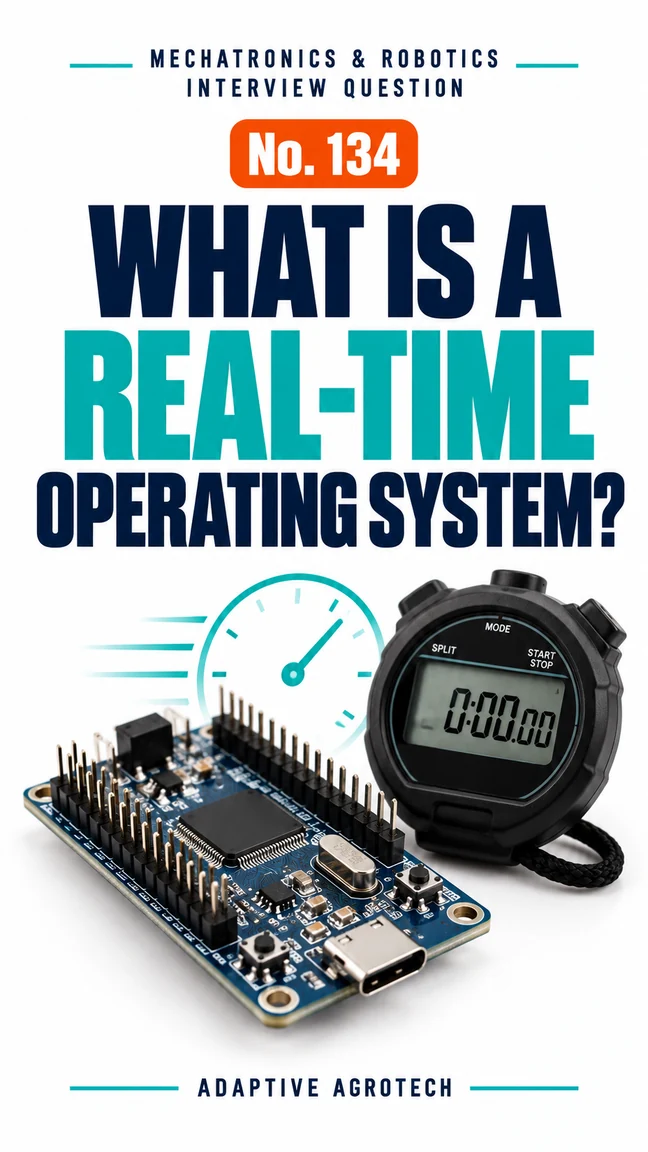
An RTOS schedules software around timing requirements, where a late result can be incorrect for the task. Priorities and sleeping tasks help, but complete deadlines still require execution and blocking analysis under load.
The key idea
A real-time operating system provides scheduling mechanisms for software that must meet timing requirements. On a robot, a correct calculation can become unusable if it arrives after its deadline. A priority scheduler can let an urgent control task interrupt lower priority logging, while waiting tasks can sleep instead of consuming processor time in a busy loop. The operating system alone does not guarantee all deadlines. Engineers must budget worst case computation, interrupt work, and shared resource delays, then measure the complete task path with the actual robot system operating under load.
What to remember
- Timing is part of task correctness.
- Priority scheduling lets urgent ready tasks run sooner.
- Budget execution, interrupt, and resource delays system wide.
Check your understanding
Why can a numerically correct control result still be wrong for its task?
Show the explanation
It may arrive too late to meet the required control deadline.