What Is the Difference Between Aleatoric and Epistemic Uncertainty?
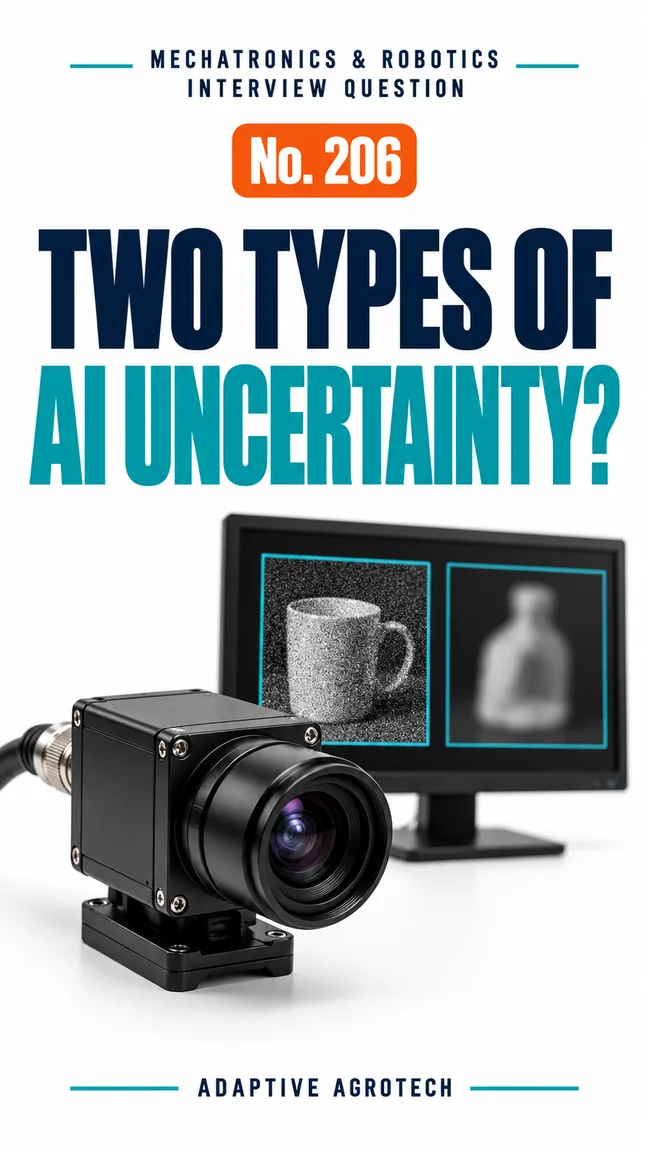
Aleatoric uncertainty comes from noise or ambiguity in observations. Epistemic uncertainty comes from limited knowledge of the model. These describe different reasons why a robot perception system cannot make a precise prediction from its available information.
The key idea
Aleatoric uncertainty comes from noise or ambiguity in observations. Epistemic uncertainty comes from limited knowledge of the model. These describe different reasons why a robot perception system cannot make a precise prediction from its available information.
A depth sensor can give scattered readings from a difficult surface even in a familiar room. That is an observation problem. A model facing a type of surface absent from training can also have uncertain knowledge.
Better measurements can reduce some aleatoric uncertainty. Relevant training data can reduce epistemic uncertainty. Neither estimate is automatically calibrated, and a confident output can still be wrong. Validate uncertainty against errors on realistic robot data.
What to remember
- Observation noise and model uncertainty are different
- Better sensing and more representative data help differently
- Validate whether confidence tracks actual error
Check your understanding
Which type of uncertainty can more representative training data help reduce?
Show the explanation
It can reduce epistemic uncertainty from limited model knowledge. Aleatoric uncertainty reflects observational noise or ambiguity; both uncertainty estimates require calibration against real errors.