What Is Depth Completion in Robot Vision?
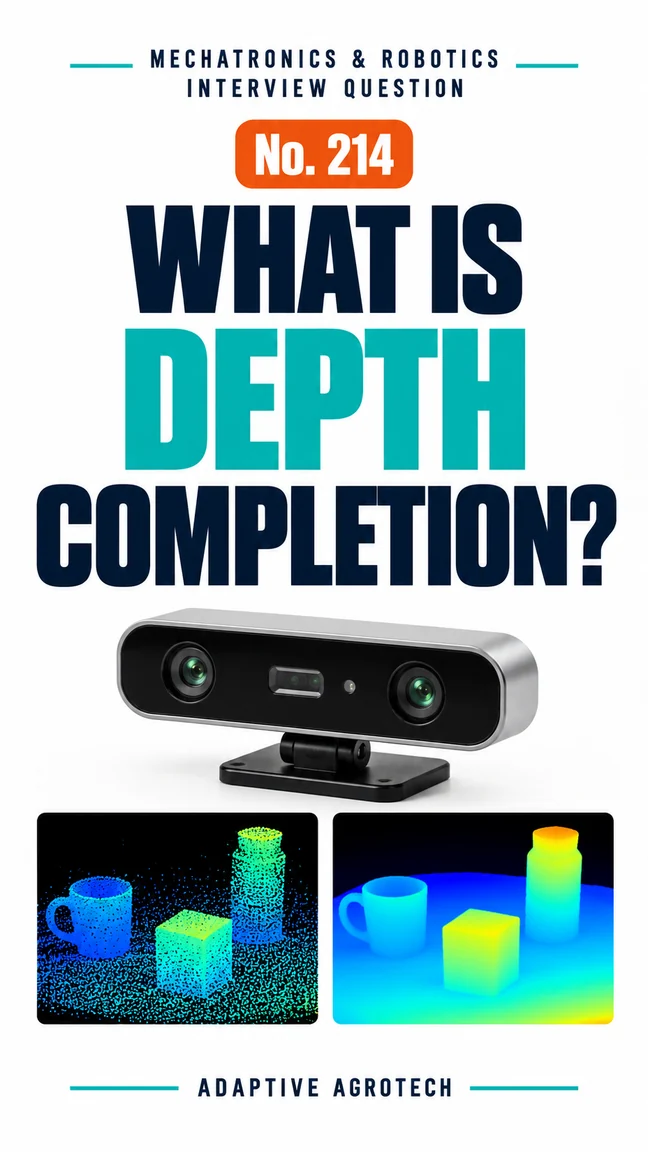
Depth completion predicts a dense depth map from incomplete depth measurements, often using an RGB image as additional input. Some pixels have measured ranges, while other pixels receive estimates based on surrounding evidence and learned visual patterns.
The key idea
Depth completion predicts a dense depth map from incomplete depth measurements, often using an RGB image as additional input. Some pixels have measured ranges, while other pixels receive estimates based on surrounding evidence and learned visual patterns.
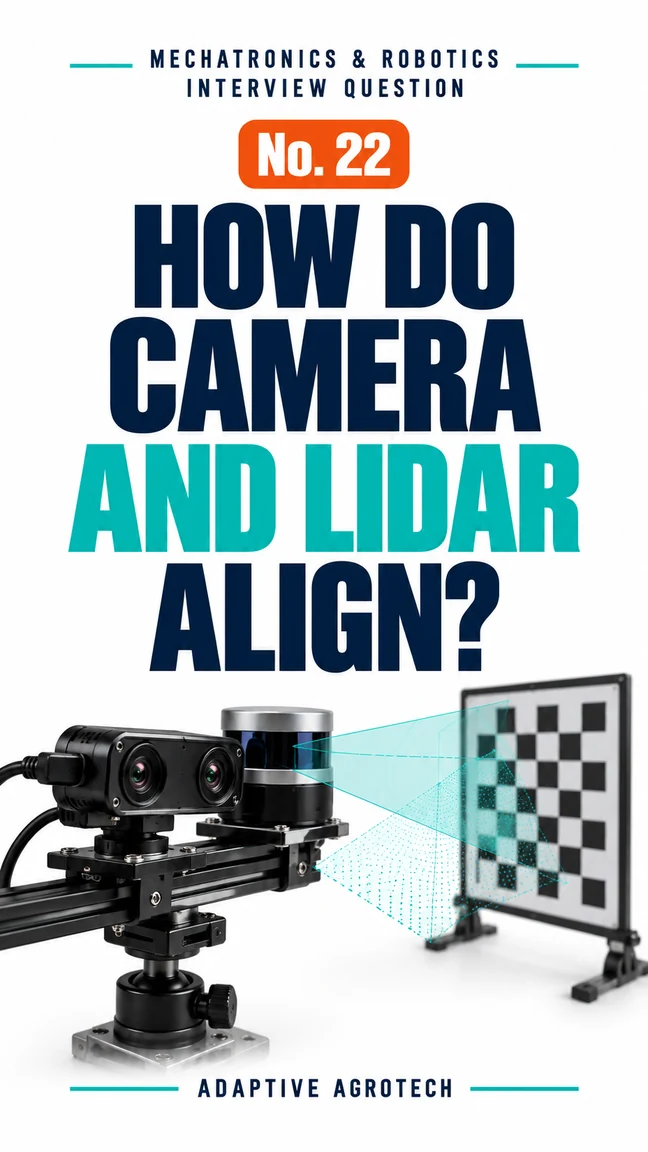
A sparse range sensor samples only a few locations on a scene. An image provides object boundaries and appearance. A completion model combines these inputs to estimate surfaces between the available measurements, producing a denser geometric representation.
Predicted depth can be wrong near thin structures, occlusions, or unfamiliar materials. Dense output does not mean every pixel was measured. Keep confidence and invalid data information, especially when the map supports collision checking or close manipulation.
What to remember
- Measured ranges and inferred ranges are different
- Image boundaries can help guide depth estimates
- Dense predictions still contain inference uncertainty
Check your understanding
Why should completed depth maps preserve confidence and invalid-data information?
Show the explanation
Some dense pixels are predictions rather than direct measurements. Thin structures, occlusions and unfamiliar materials can produce incorrect inferred depth, which matters for collision checking.